

Home
Class 12
BIOLOGY
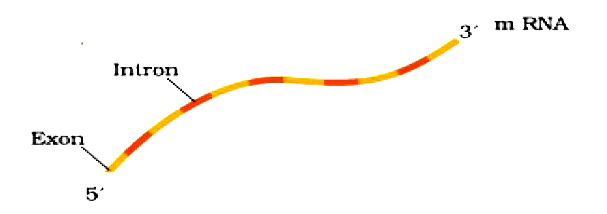
Observe the segment of mRNA given below....

Observe the segment of mRNA given below.

Gene encoding RNA Polymerase I and III have been affected by mutation in a cell. Explain its impact on the synthesis of polypeptide, stating reasons.

Promotional Banner

Topper's Solved these Questions

  • SAMPLE PAPER 2023 TERM I

    CBSE MODEL PAPER|Exercise SECTION - D|8 Videos
  • SAMPLE PAPER 2022 TERM II

    CBSE MODEL PAPER|Exercise SECTION C|2 Videos
  • SAMPLE PAPER 2024

    CBSE MODEL PAPER|Exercise Question|2 Videos

Similar Questions

Explore conceptually related problems

Mutation in a gene which codes for RNA polymerase III makes it non functional which further affects the synthesis of

Transcription I. IS the coping of a complementary mRNA on a DNA strand II. Requires a template, activated precursors, a divalent metal ion and RNA polymerase III. Is the first step in activation of amino acid IV. Directs the order of specific amino acids to form a polypeptide or protein

Consider the statements (i) rRNA provides template for synthesis of proteins (ii) tRNA brings amino acids and reads genetic code (iii) RNA polymerase binds to promoter and initiates transcription (iv) A segment of DNA coding for polypeptide is called intron

Sickle cell anemia is a genetic disorder where the body produces an abnormal hemoglobin called hemoglobin S. Red blood cells are normally flexible and round, but when the hemoglobin is defective, blood cells take on a “sickle” or crescent shape. Sickle cell anemia is caused by mutations in a gene called HBB. It is an inherited blood disorder that occurs if both the maternal and paternal copies of the HBB gene are defective. In other words, if an individual receives just one copy of the defective HBB gene, either from mother or father, then the individual has no sickle cell anemia but has what is called “sickle cell trait”. People with sickle cell trait usually do not have any symptoms or problems but they can pass the mutated gene onto their children. There are three inheritance scenarios that can lead to a child having sickle cell anemia: - Both parents have sickle cell trait - One parent has sickle cell anemia and the other has sickle cell trait - Both parents have sickle cell anemia The following statements are drawn as conclusions from the above data (Kenya). I. Patients with SCD (Sickle Cell Disease) are less likely to be infected with malaria. II. Patients with SCD (Sickle Cell Disease) are more likely to be infected with malaria. III. Over the years the percentage of people infected with malaria has been decreasing. IV. Year 2000 saw the largest percentage difference between malaria patients with and without SCD. Choose from below the correct alternative.