
Home
Class 12
CHEMISTRY
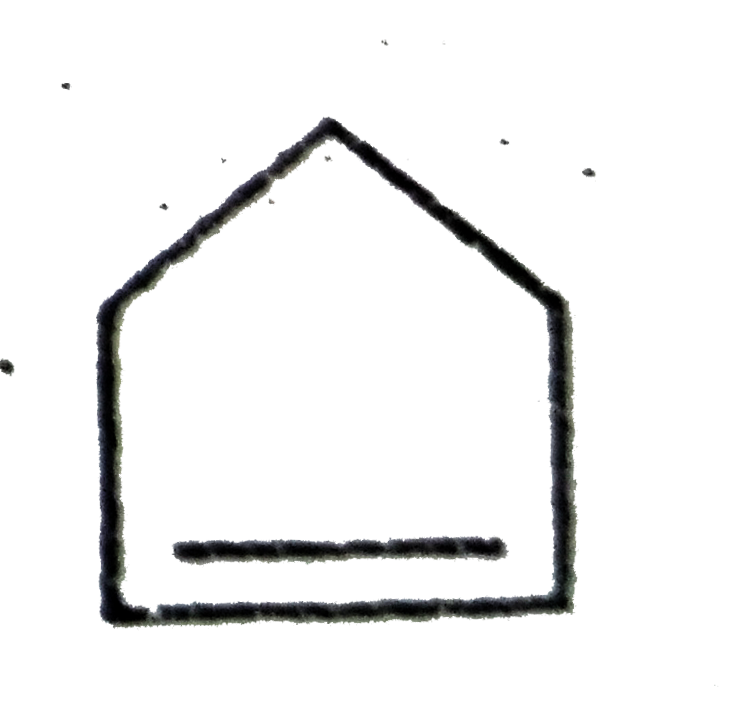
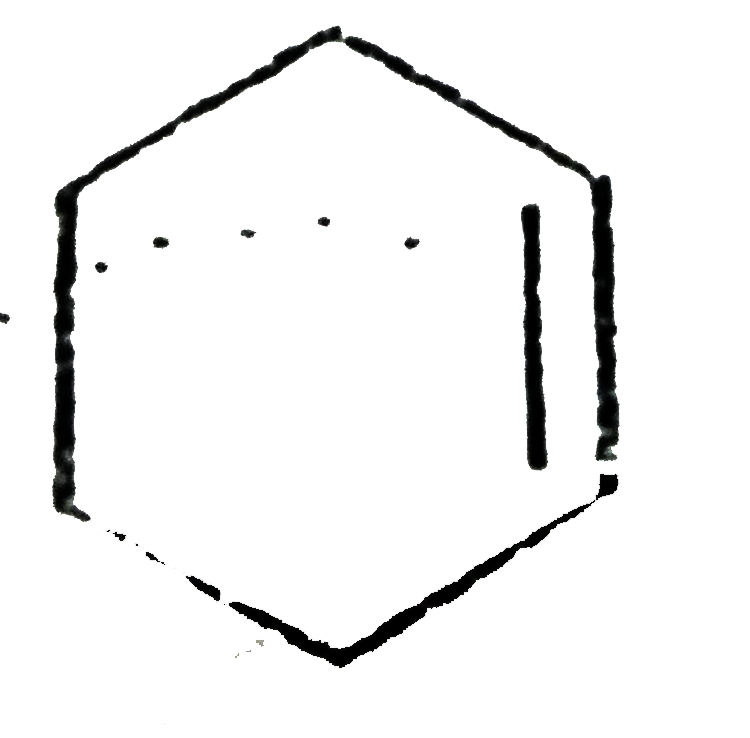
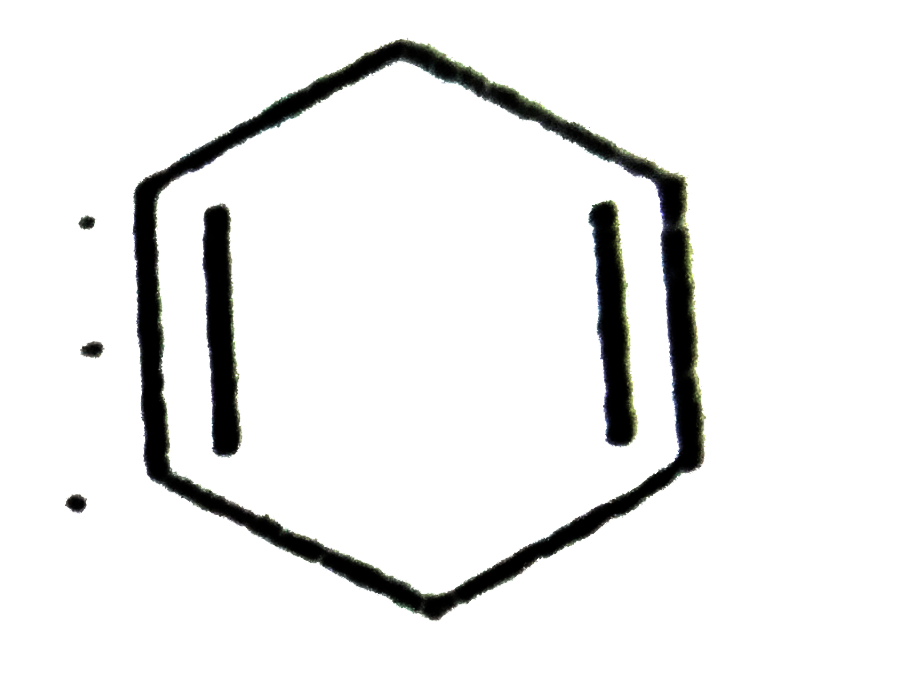
Point out A in the given reaction sequen...

Point out A in the given reaction sequence
`Aoverset(O_(3)//H_(2)O_(2))rarrBoverset(Delta)rarr2CH_(3)COOH+CO_(2)`

A

B

C

D

Text Solution

AI Generated Solution

The correct Answer is:

To determine the compound A in the given reaction sequence, we need to analyze the entire reaction process step by step. ### Step 1: Understanding the Reaction Sequence The reaction sequence is given as: \[ A \xrightarrow{O_3/H_2O_2} B \xrightarrow{\Delta} 2 \text{CH}_3\text{COOH} + \text{CO}_2 \] Here, A is a reactant that undergoes ozonolysis followed by a heating step that produces acetic acid (CH₃COOH) and carbon dioxide (CO₂). ### Step 2: Identifying the Type of Reaction The first part of the reaction involves ozonolysis, which is a reaction of alkenes with ozone (O₃) followed by a reductive workup (in this case, hydrogen peroxide, H₂O₂). Ozonolysis typically cleaves carbon-carbon double bonds (C=C) to form carbonyl compounds. ### Step 3: Analyzing the Product B The product B must be a compound that, upon heating, can decarboxylate to yield two moles of acetic acid (CH₃COOH) and one molecule of carbon dioxide (CO₂). This indicates that B must contain two carboxylic acid groups that can lose CO₂ upon heating. ### Step 4: Considering Possible Structures for A Since we are looking for a compound A that can yield the products mentioned, we need to consider alkenes that, when ozonolyzed, can produce a compound with two carboxylic acid groups. 1. **Cyclopentene**: Ozonolysis would yield butanoic acid, which does not match our product. 2. **Cyclohexene**: This could yield a structure that might not lead to the required products. 3. **Cyclohexa-1,4-diene**: This compound has two double bonds and can produce two moles of acetic acid upon ozonolysis and subsequent heating. 4. **Cyclobuta-1,3-diene**: This would yield oxalic acid, which does not match our product requirement. ### Step 5: Confirming the Correct Option After analyzing the options: - **Cyclohexa-1,4-diene** is the only compound that, upon ozonolysis, can yield a structure that can decarboxylate to form two moles of acetic acid and one molecule of carbon dioxide. ### Conclusion Thus, the compound A is **Cyclohexa-1,4-diene**.
Promotional Banner

Topper's Solved these Questions

  • HYDROCARBONS

    AAKASH INSTITUTE|Exercise SECTION-C OBJECTIVE TYPE QUESTIONS (MORE THAN ONE OPTIONS ARE CORRECT)|12 Videos
  • HYDROCARBONS

    AAKASH INSTITUTE|Exercise SECTION-D LINKED COMPREHENSION TYPE QUESTIONS|6 Videos
  • HYDROCARBONS

    AAKASH INSTITUTE|Exercise ASSIGNMENT SECTION-A COMPETITION LEVEL DIFFER BY|50 Videos
  • HALOALKANES AND HALOARENES

    AAKASH INSTITUTE|Exercise ASSIGNMENT SECTION -D|15 Videos
  • HYDROGEN

    AAKASH INSTITUTE|Exercise ASSIGNMENT (SECTION - D) (Assertion-Reason Type question)|15 Videos

Similar Questions

Explore conceptually related problems

Point out (X) in the given reaction sequence : (X) overset(O_(3)//H_(2)O)to (Y) overset(Delta)to 2CH_(3)COOH + CO_(2)

In the reaction sequence CH_3-CH_2-COOHoverset(H_2O_2)rarr[X]overset(Delta)rarr[Y] [Y] will be

In the reaction sequence CH_3CHOoverset(NH_2OH//overset(o+)H)rarr(A)overset(P_2O_5//Delta)rarr(B) , B will be

The end product in the reaction is: CH_(3)CONH_(2)overset(P_(2)O_(5))rarrBoverset(H_(2),Ni)rarrCoverset(HNO_(2))rarrDoverset(Cu)underset(300^(@))rarrE

In the following sequence of reaction, the end product is : HC-=CHoverset(Hg^(2+)//H_(2)SO_(4))rarr(A) overset(CH_(3)MgX)underset([H_(2)O])rarr(B)overset([O])rarr(C)

In the given reaction sequence C_(6)H_(5)-CH_(2)-NH_(2) overset(CHCl_(3)//Alc.KOH)underset(Delta)rarr [X] overset(H_(2)O //NaOH)rarr [Y],[Y] will be:

AAKASH INSTITUTE-HYDROCARBONS-SECTION-B OBJECTIVE TYPE QUESTIONS (ONE OPTION IS CORRECT)
  1. Consider the following reaction: CH(3)underset(D)underset(|)CH-under...

    Text Solution

    |

  2. In the given reaction CH(3)-overset(O)overset(||)(C)-C(2)H(5)overset...

    Text Solution

    |

  3. The most suitable sequence of reagents to perform this conversion is

    Text Solution

    |

  4. The compound having only primary hydrogen atoms is

    Text Solution

    |

  5. Which equation does not represent an example of Friedal-crafts reactio...

    Text Solution

    |

  6. In the reactions underset(CH2)overset(CH2)(||)underset"acid"overset"H...

    Text Solution

    |

  7. Arrange the following compounds in increasing order of reactivity towa...

    Text Solution

    |

  8. Among the following compounds, the decreasing order of reactivity towa...

    Text Solution

    |

  9. The alkene formed as a major product in the above elimination reaction...

    Text Solution

    |

  10. HBr reacts with CH(2)=CH-OCH(3) under anhydrous conditions at room tem...

    Text Solution

    |

  11. Colouration of Br(2)//C Cl(4) will be discharged by

    Text Solution

    |

  12. underset(Br)underset(|)(CH(2))-CH=CH-underset(Br)underset(|)(CH(2))ove...

    Text Solution

    |

  13. The ozonolysis product is

    Text Solution

    |

  14. Consider the following reaction The reactive intermediate invovled ...

    Text Solution

    |

  15. The intermediate during the addition of HCl to propene in the presence...

    Text Solution

    |

  16. Which of the following compound is most reactive towards an electrophi...

    Text Solution

    |

  17. The reaction is : CH(3)CHBr-CH(2)Br+2KOH("alc.")overset(Delta)rarr C...

    Text Solution

    |

  18. Which of the following alkene in acid catalysed hydration form 2-methy...

    Text Solution

    |

  19. The reaction of chlorine water with propene gives

    Text Solution

    |

  20. Point out A in the given reaction sequence Aoverset(O(3)//H(2)O(2))r...

    Text Solution

    |
