(a) (i) Resultant resistance, `R = R_(1)+R_(2)= 10+10=20 Omega`
`P_(1)=(V^(2))/(R)=((6)^(2))/(20)=(cancel(6)^(3)xx cancel(6)^(3))/(cancel(20)_(cancel(10)_(5)))=(9)/(5)`....(i)
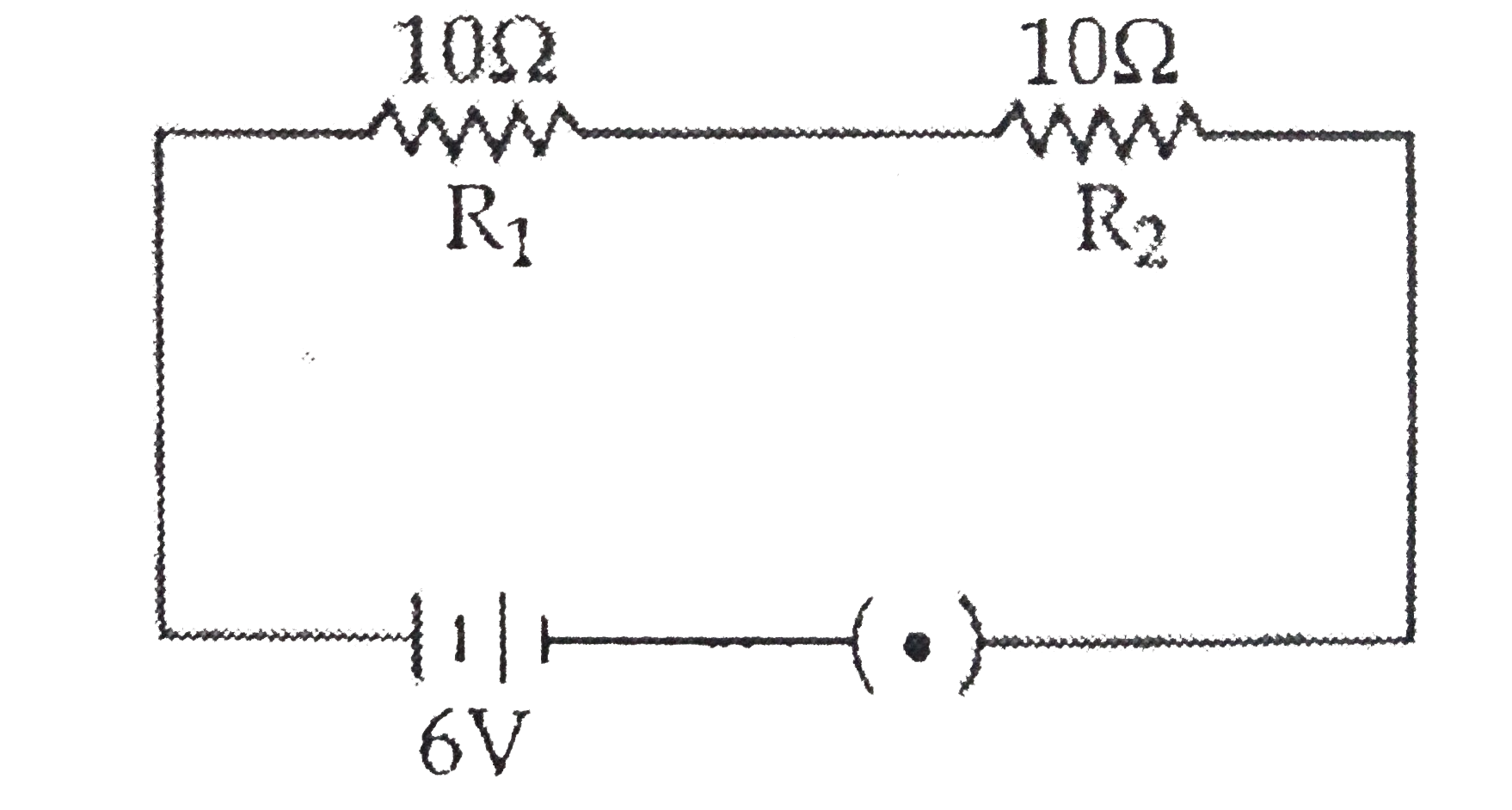
(ii) Resultant resistance ,`R=?`
`(1)/(R)=(1)/(R_(1))+(1)/(R_(2))=(1)/(10)+(1)/(10)=(cancel(2)^(1))/(cancel(10)_(5))=(1)/(5)`
`P_(2)=(V^(2))/(R)=((6)^(2))/(5)=(6xx6)/(5)=(36)/(5)` ....(ii)
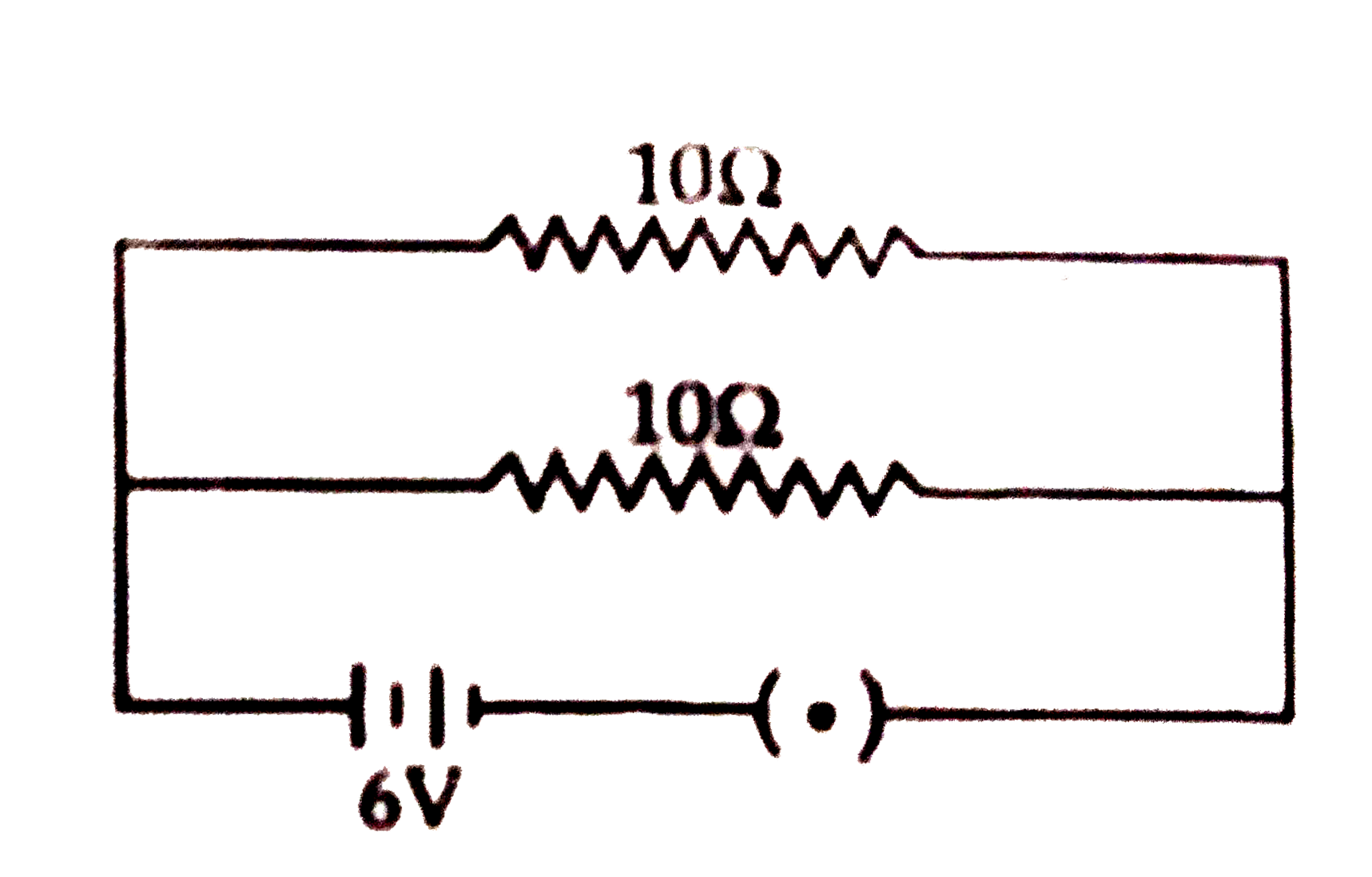
From (i) and (ii)
`(P_(1))/(P_(2))=((9)/(5))/((36)/(5))=(cancel(9))/(cancel(5))xx(cancel(5))/(cancel(36)_(4))=(1)/(4)`
`:. P_(1) : P_(2) : : 1:4`
(b) Relation between kilowatt-hour and joule (SI unit of energy ) `:`
1 kilowatt- hour is the amount of energy consumed at the rate of 1 kilowatt for 1 hour.
i.e., 1 kilowatt-hour = 1 kilowatt for 1 hour
or 1 kilowatt- hour `=1000` watts for 1 hour
But 1 watt `= ("1 joule ")/("1 second")`
`:. `1 kilowatt- hour `= ("1000 joules ")/("seconds")` for 1 hour
and, 1 hour `= 60 xx 60 ` seconds
` `:. ` 1 kilowatt - hour `= ("1000 joules")/("seconds") xx 60 xx 60` seconds
or 1 kilowatt-hour `= 36,00,000` Joules or `3.6 xx 10^(6) J`


