A
B
C
D
Text Solution
Verified by Experts
The correct Answer is:
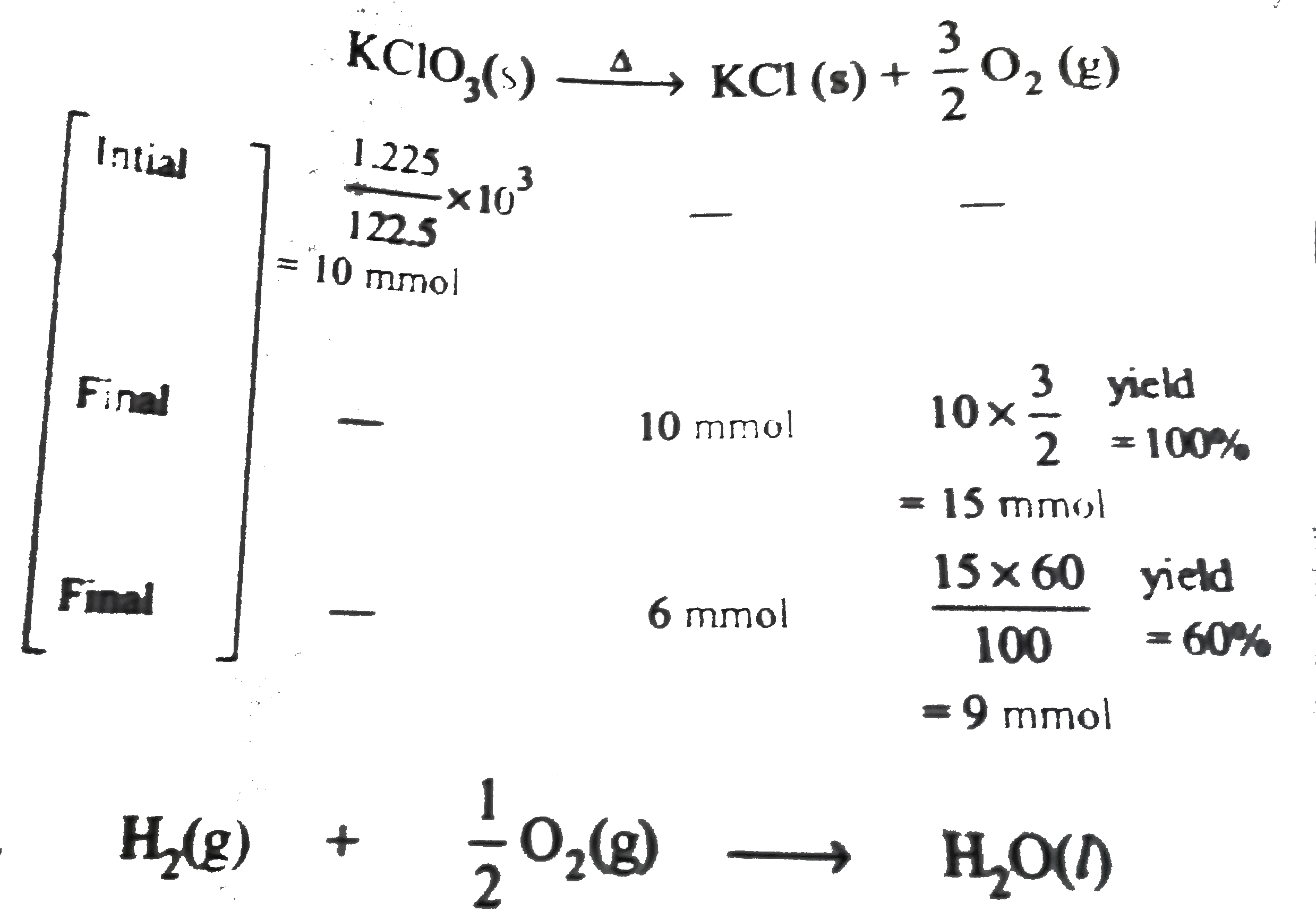



Topper's Solved these Questions
STOICHIOMETRY
CENGAGE CHEMISTRY|Exercise Exercises Single Correct|85 VideosSTOICHIOMETRY
CENGAGE CHEMISTRY|Exercise Exercises Assertion Reasoning|15 VideosSTOICHIOMETRY
CENGAGE CHEMISTRY|Exercise Exercises Linked Comprehension|42 VideosSTATES OF MATTER
CENGAGE CHEMISTRY|Exercise Exercises (Ture False)|25 VideosTHERMODYNAMICS
CENGAGE CHEMISTRY|Exercise Archives (Subjective)|23 Videos
Similar Questions
Explore conceptually related problems
CENGAGE CHEMISTRY-STOICHIOMETRY-Exercises Multiple Correct
- For the following balanced redox reaction: 2MnO(4)^(ɵ)+8H^(o+)+Br(2)...
Text Solution
|
- Which of the following statements is/are correct about the followig re...
Text Solution
|
- Which of the following statements is//are correct about 6.8% stregnth ...
Text Solution
|
- Which of the following reactions is/are not intermolecular redox react...
Text Solution
|
- 1 L sample of impure water containing sulphide ion is made ammoniacal ...
Text Solution
|
- Which of the following statements is/are correct about the reaction. ...
Text Solution
|
- Which of the following statements is/are correct in the following reac...
Text Solution
|
- In which of the reaction,oxygen is an oxidant.
Text Solution
|
- 56.0 g KOH, 138.0 g K(2)CO(3) and 100.0 g KHCO(3) is dissolved in wate...
Text Solution
|
- x g of H2O2 requires 100mL of M//5 KMnO4 in a titration in a solution ...
Text Solution
|
- A mixture of n(1) moles of Na(2)C(2)O(4) and NaHC(2)O(4) is titrated s...
Text Solution
|
- 100 " mL of " 0.2 M Kal(OH)(2)CO(3) solution is completely neutralised...
Text Solution
|
- Which of the following is/are correct about the redox reaction? MnO(...
Text Solution
|
- 20 " mL of " H(2)O(2) is reacted completely with acidified K(2)Cr(2)O(...
Text Solution
|
- Three different solution of oxidising agents. K(2)Cr(2)O(7),I(2), and ...
Text Solution
|
- Consider the following reaction: KClO(3)(s)overset(Delta)toKCl(s)+O(...
Text Solution
|
- 2.0 g of an elements is reacted with aqueous solution containing KOH a...
Text Solution
|
- Permanent hardness is due to CI^(ɵ) and SO4^(2-) of Mg^(2+) and Ca^(2+...
Text Solution
|
- The hardness of water due to HCO3 is 122 p p m. Select the correct sta...
Text Solution
|
- 18 " mL of " 1.0 M Br(2) solution undergoes complete disproportionatio...
Text Solution
|