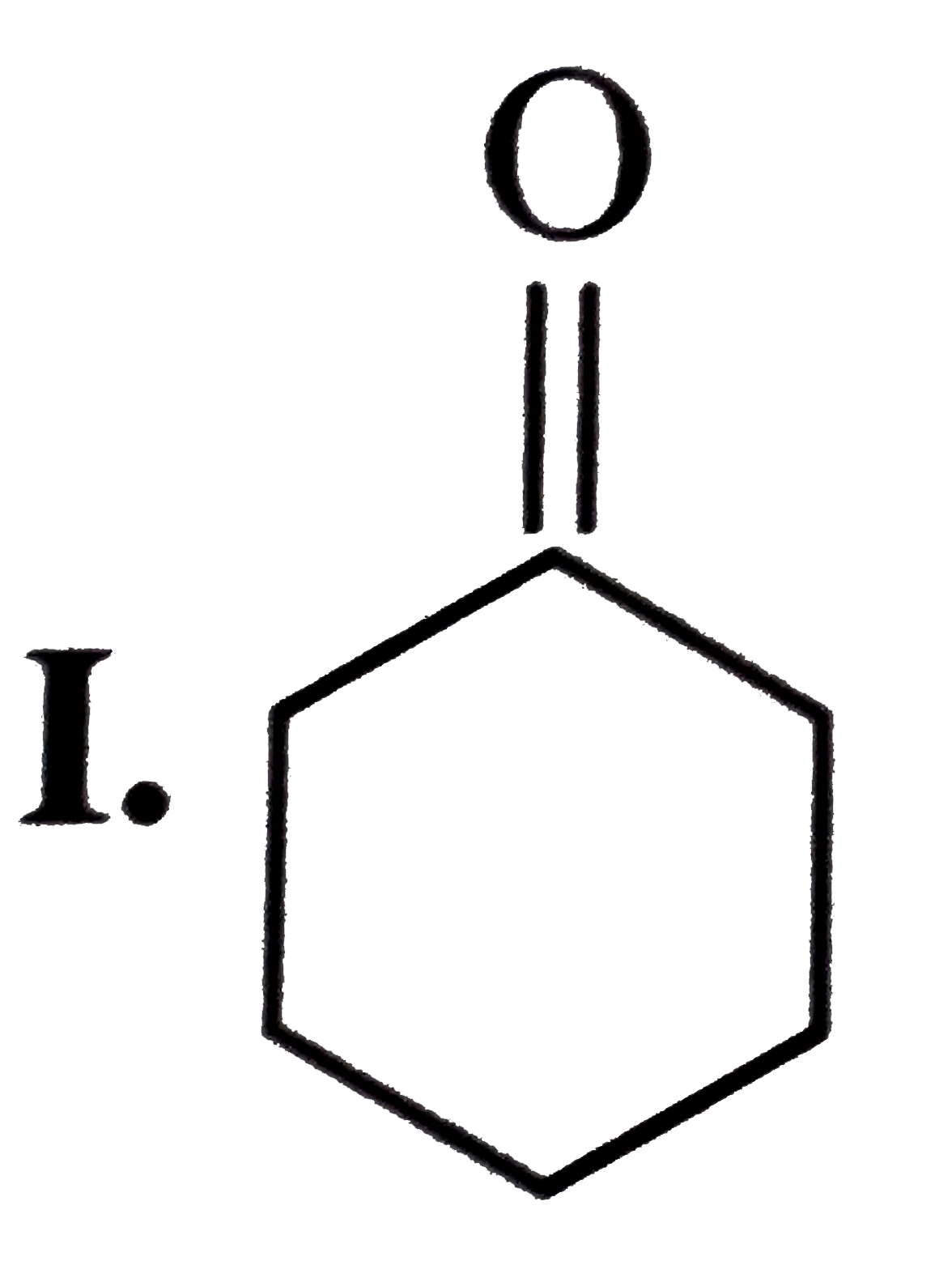
 , II.
, II. 
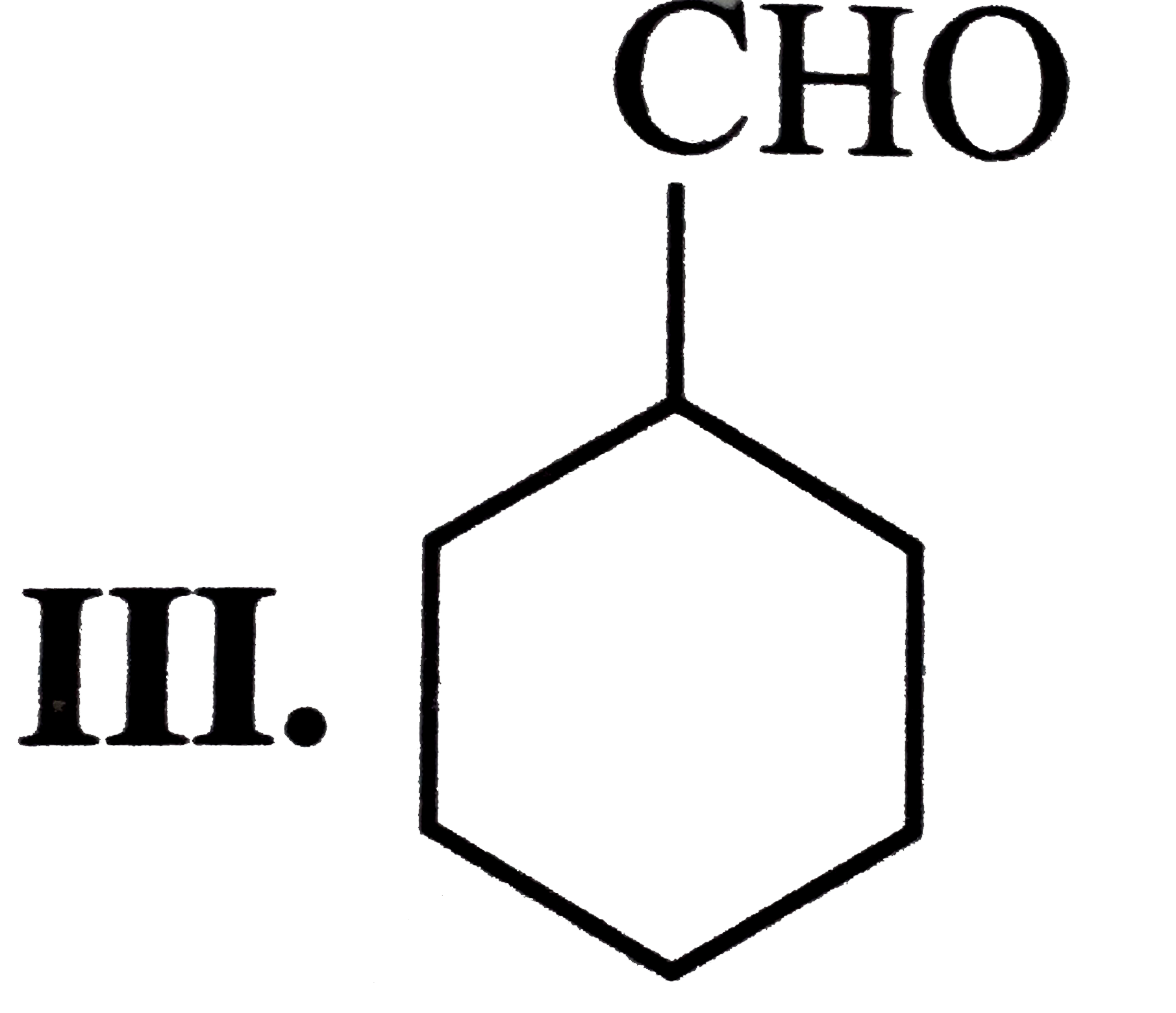 , IV.
, IV. 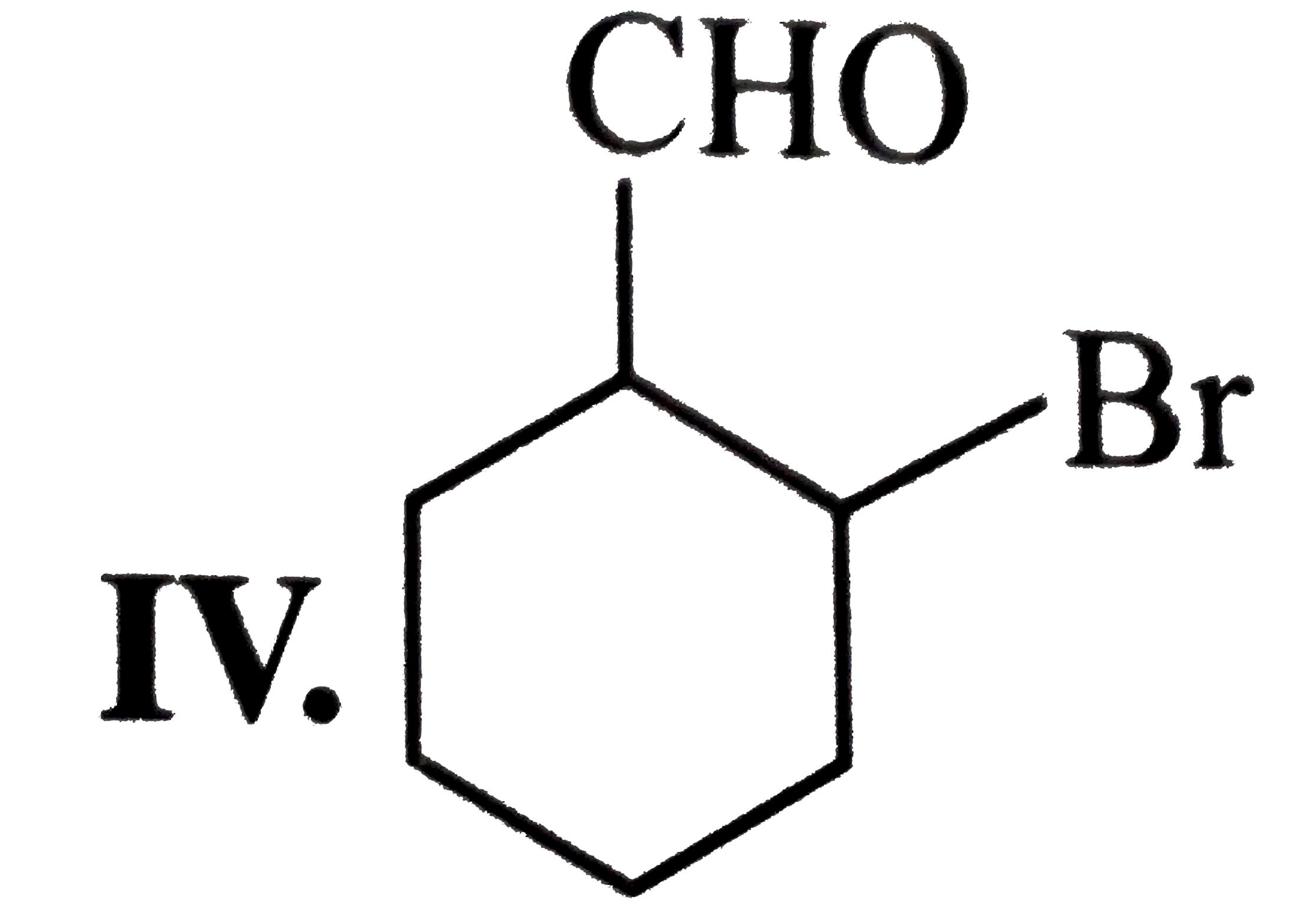
A
B
C
D
Text Solution
Verified by Experts
The correct Answer is:



Topper's Solved these Questions
ALIPHATIC AND AROMATIC ALDEHYDES AND KETONES
CENGAGE CHEMISTRY|Exercise Exercises Assertion-Reasoning|10 VideosALIPHATIC AND AROMATIC ALDEHYDES AND KETONES
CENGAGE CHEMISTRY|Exercise Archives Objective|10 VideosALIPHATIC AND AROMATIC ALDEHYDES AND KETONES
CENGAGE CHEMISTRY|Exercise Exercises Multiple Correct|40 VideosALCOHOL,PHENOL AND ETHERS
CENGAGE CHEMISTRY|Exercise Archives Analytical And Descriptive|15 VideosAMINES
CENGAGE CHEMISTRY|Exercise QUESTION BANK|1 Videos
Similar Questions
Explore conceptually related problems
CENGAGE CHEMISTRY-ALIPHATIC AND AROMATIC ALDEHYDES AND KETONES-Exercises Single Correct
- The major product of the reaction is:
Text Solution
|
- Which of the following reagents can be used for the given reaction ? ...
Text Solution
|
- Give the decreasing order of the following in the extent of hydration ...
Text Solution
|
- Give decreasing order of the following towards NA reaction. I. I...
Text Solution
|
- overset((i)Mg//ether(ii)PhCHO)underset((iii)H(3)O^(+))rarr Products
Text Solution
|
- When CH(3)CHO is reacted in the presence of a base with excess of HCHO...
Text Solution
|
- How will you distinguish the products proucts obtained by acidic hydro...
Text Solution
|
- Give the decreasing order of hydrate formation of the following. I. ...
Text Solution
|
- Ketone (A) overset(NH(2)OH.HCl)rarr (B) overset(H^(o+))rarr The k...
Text Solution
|
- Aldehyde (A) overset(NH(2)OH.HCl)rarr (B) overset(H^(o+))rarr Me NH(2)...
Text Solution
|
- Which oxime on acetylation followed by reaction with Na(2)CO(3) would ...
Text Solution
|
- Compounds (B) and (C ), respectively, are:
Text Solution
|
- overset(NaNO(2)+HCI)rarr (B) overset((i)Ac(2)O)underset((ii)H(2)O^(o+)...
Text Solution
|
- Me - -=-H overset(NaNH(2))underset(+liq.NH(3))rarr (C ) overset(H(3)O^...
Text Solution
|
- Compound (B) is:
Text Solution
|
- overset("High conc. of base")rarr ? + ? The products are:
Text Solution
|
- The products are:
Text Solution
|
- For the Cannizzaro reaction in which of the following statements is tr...
Text Solution
|
- For the Cannizzaro reaction in which of the statement is true regardin...
Text Solution
|
- Two moles of HCHO and 1 mol of PhCHO react with conc. NaOH. What are t...
Text Solution
|