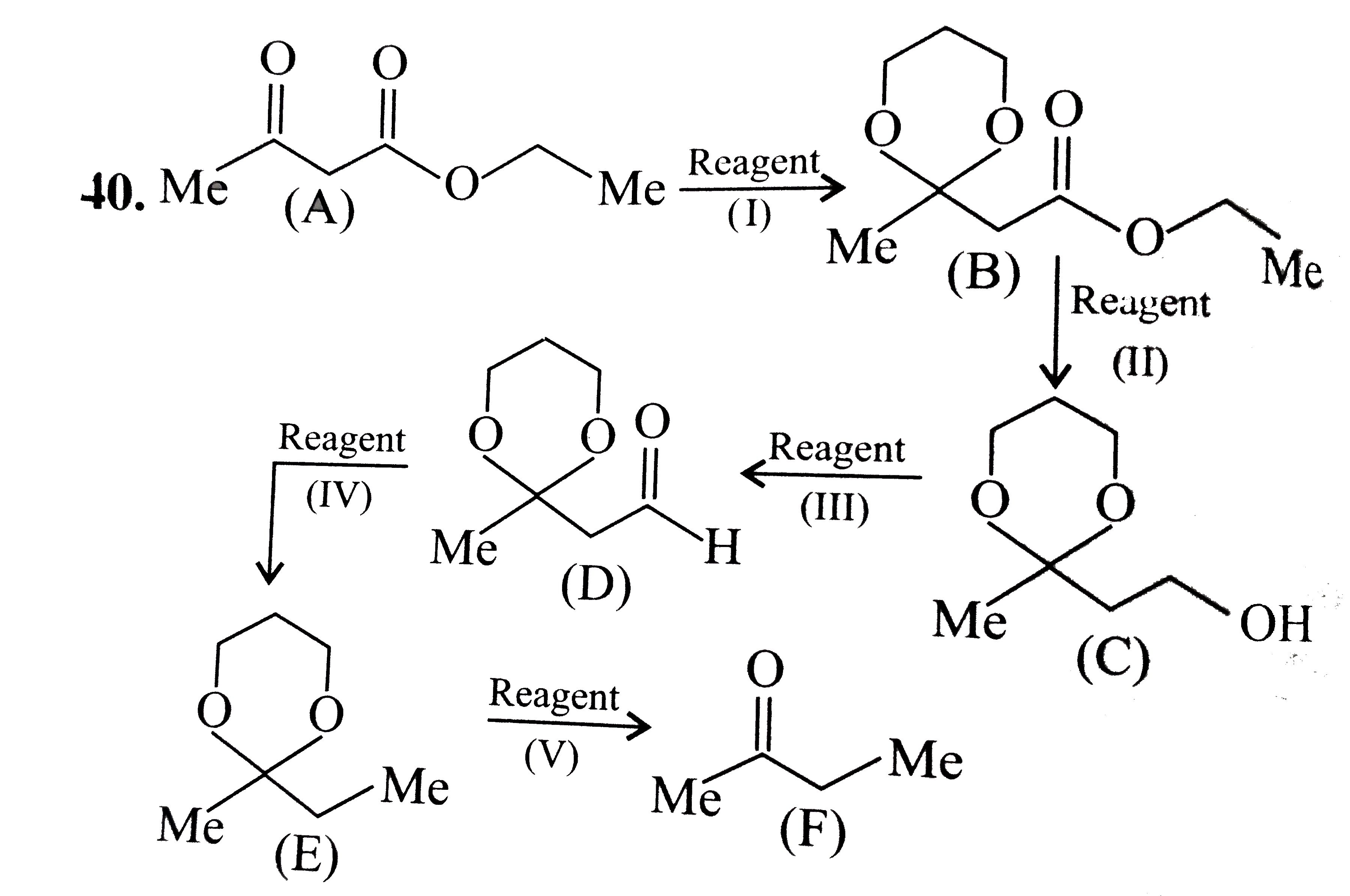
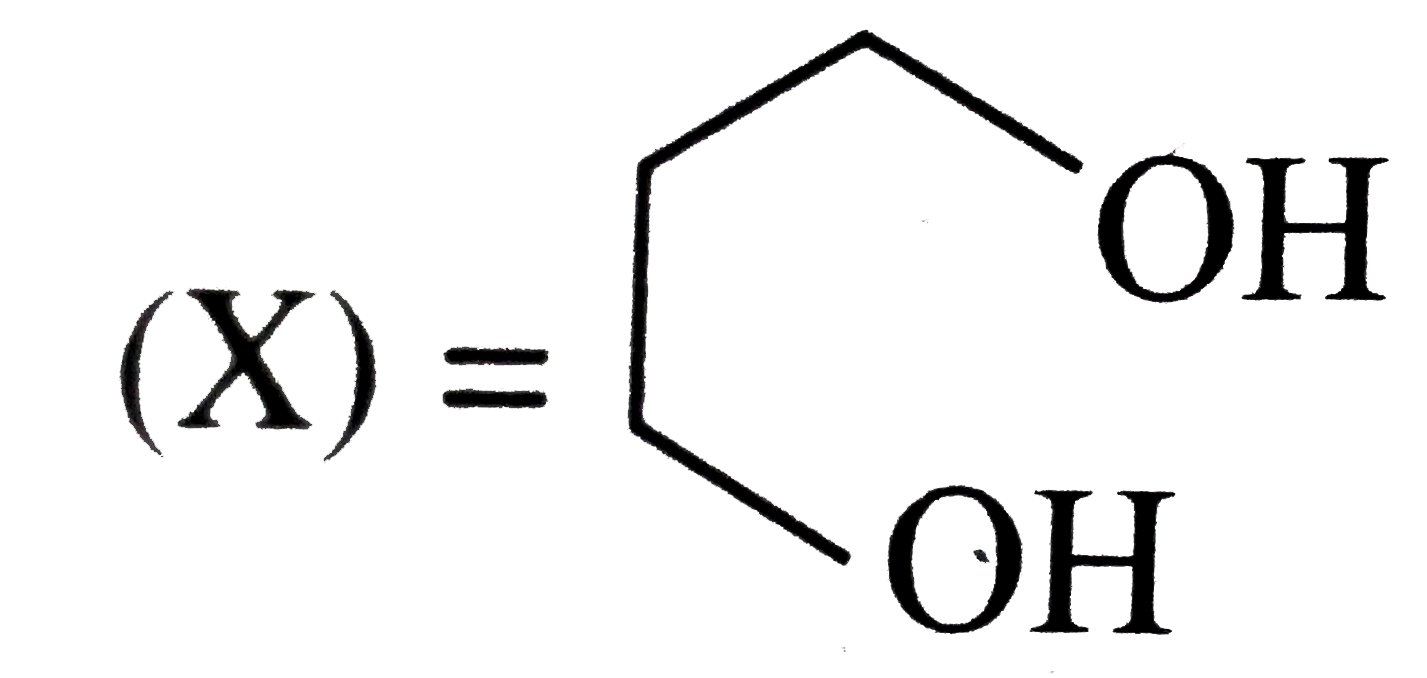
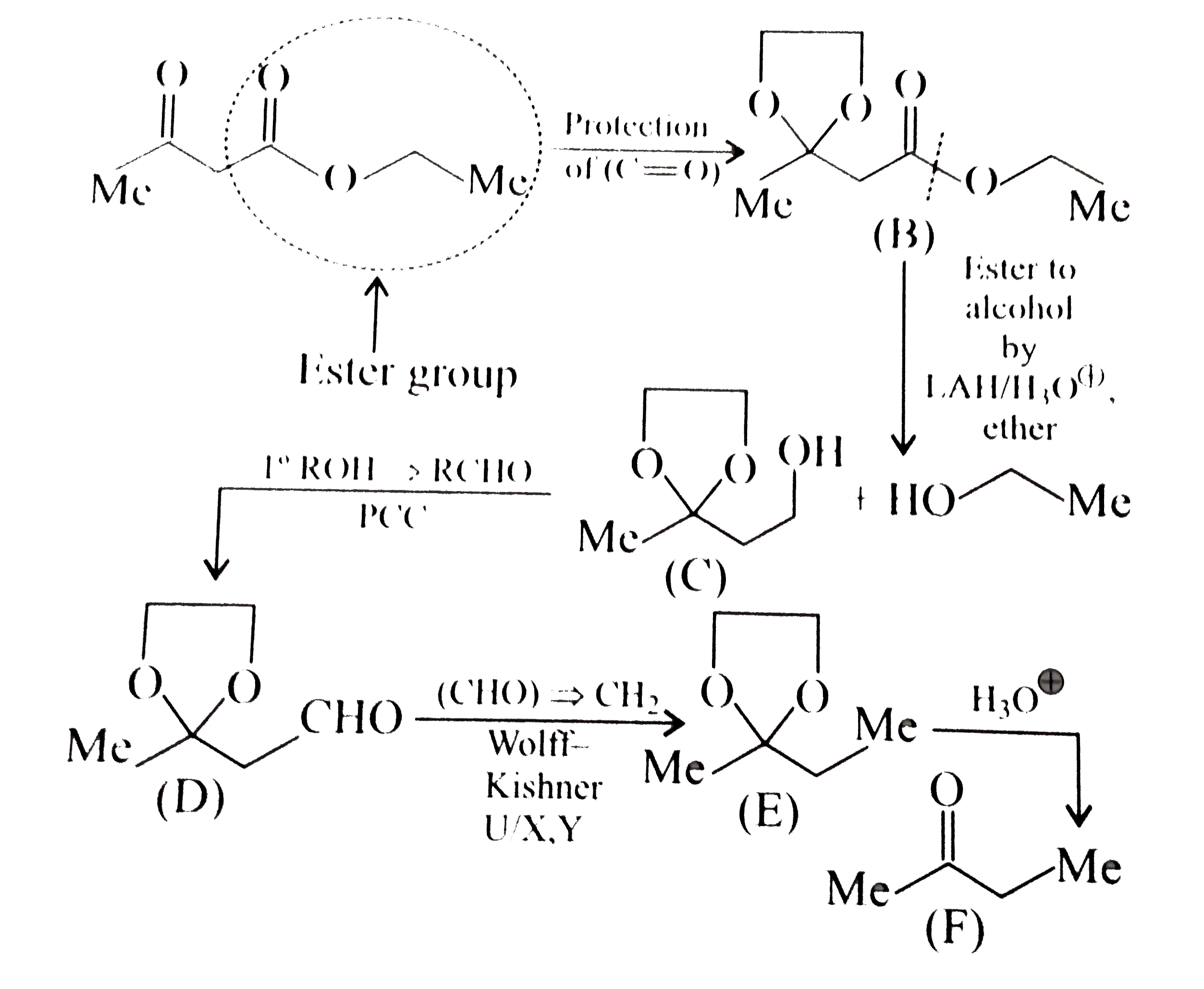
 (Y) `= NaOH,(Z)= LAH//H_(3)O^(+)`, ether Select the correct order in sequence in order to get the final product (E ).
 A
B
C
D
Text Solution
Verified by Experts
The correct Answer is:



Topper's Solved these Questions
ALIPHATIC AND AROMATIC ALDEHYDES AND KETONES
CENGAGE CHEMISTRY|Exercise Exercises Assertion-Reasoning|10 VideosALIPHATIC AND AROMATIC ALDEHYDES AND KETONES
CENGAGE CHEMISTRY|Exercise Archives Objective|10 VideosALIPHATIC AND AROMATIC ALDEHYDES AND KETONES
CENGAGE CHEMISTRY|Exercise Exercises Multiple Correct|40 VideosALCOHOL,PHENOL AND ETHERS
CENGAGE CHEMISTRY|Exercise Archives Analytical And Descriptive|15 VideosAMINES
CENGAGE CHEMISTRY|Exercise QUESTION BANK|1 Videos
Similar Questions
Explore conceptually related problems
CENGAGE CHEMISTRY-ALIPHATIC AND AROMATIC ALDEHYDES AND KETONES-Exercises Single Correct
- When (A) is refluxed in aq. HCI, the product (C ) is:
Text Solution
|
- Which method is feasible for the prepration of compound (X) only ?
Text Solution
|
- The different reagents are given as: (U) = NH(2)NH(2), (V) = H(3)O^(...
Text Solution
|
- The final product (E ) in the following reaction is:
Text Solution
|
- Which of the following is not the mechanism of Cannizzaro reaction ? ...
Text Solution
|
- Which of the following is not the mechanism of Cannizzaro reaction whe...
Text Solution
|
- Clemmensen's reduction will convert cyclohexanone into:
Text Solution
|
- CH-=CH overset(H(g)SO(4))underset(H(2)SO(4))rarr (X) overset(LiAIH(4))...
Text Solution
|
- Ethylidene chloride is hydrolysed with aqueous NaOH. The product forme...
Text Solution
|
- The vapours of ethyl alcohol are passed over red hot copper at 573 K t...
Text Solution
|
- (CH(3))(2)CHOH overset("Mild")underset("oxidation[O]")rarr (X) overset...
Text Solution
|
- The chemical reaction of acetaldehyde and ammonia results in:
Text Solution
|
- Which of the following ketone will not give yellow precipitate with Na...
Text Solution
|
- Which is the Wacker process ?
Text Solution
|
- 2-Propanone (acetone) can be obtained by Wacker's process starting wit...
Text Solution
|
- When diethyl cadmium [(C(2)H(5))(2)Cd] is treated with acetyl chloride...
Text Solution
|
- The following reaction is an example of: RCHOHR'+CH(3)COCH(3) overse...
Text Solution
|
- Which of the following reagents can give Urotropine, which is used as ...
Text Solution
|
- The reaction between carbonyl compound and alpha-bromoesters in the pr...
Text Solution
|
- Name the following reaction. C(6)H(5)-C-=N overset(SnCl(2)+HCl)rarr ...
Text Solution
|