Home
Class 12
CHEMISTRY
Convert the following: How will y...

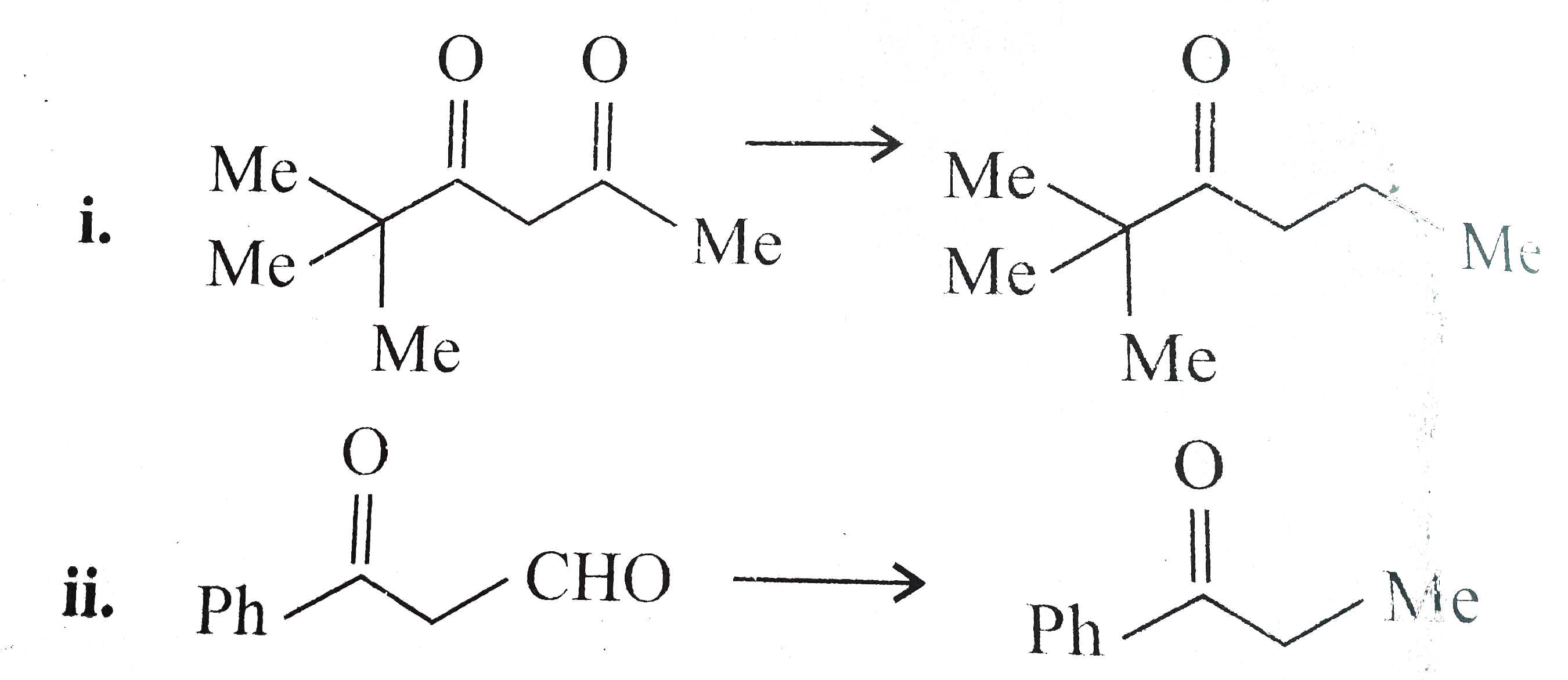
Convert the following:

How will you decide whether Clemmensen, Wolff-Kishner, or Raney Ni desulphurisation is the most efficacious for reducing a carbonyl compound?

Text Solution

Verified by Experts
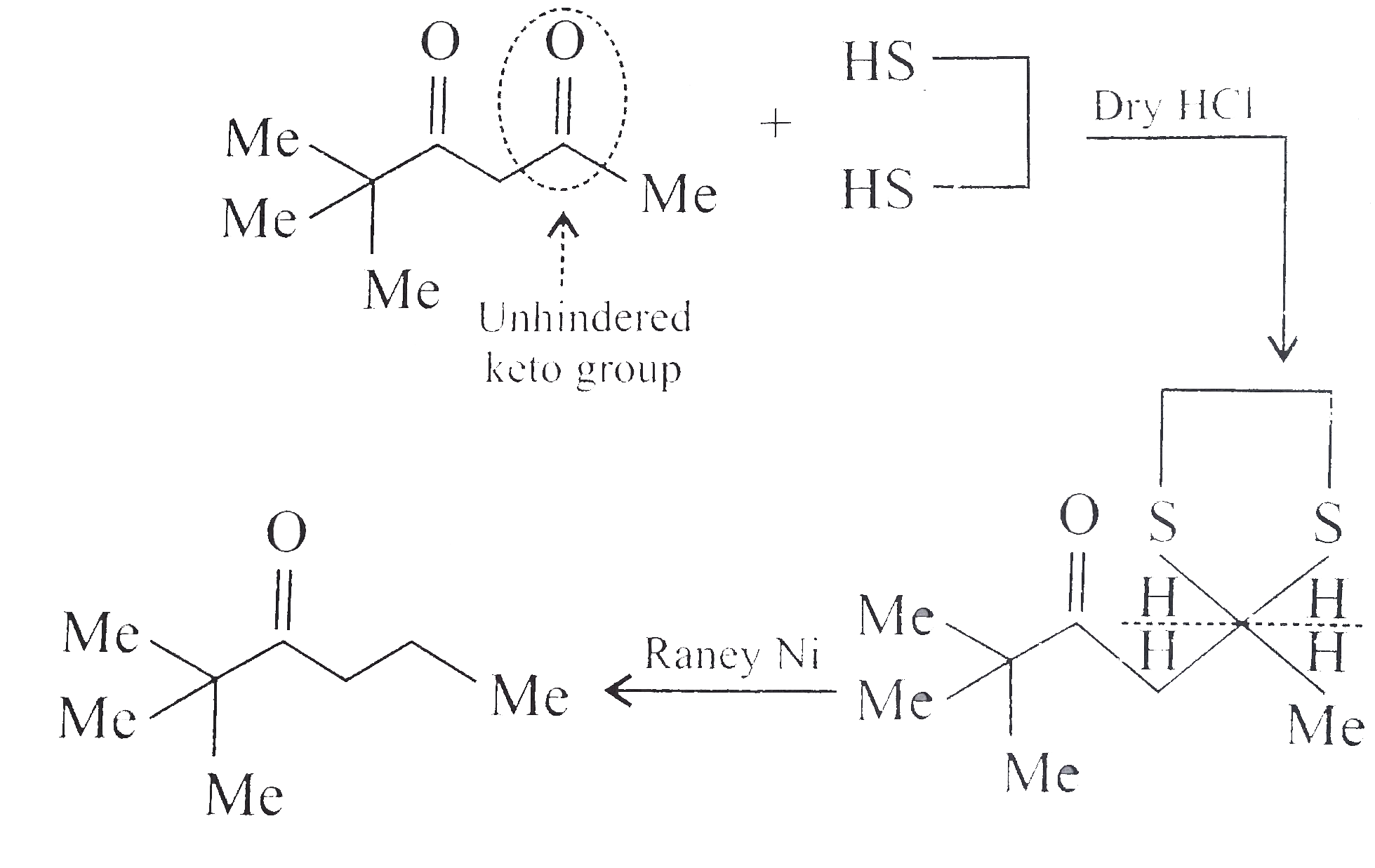
a. i. Unhindered keto group is converted to cyclic ketal and then followed by reduction with by reduction with Raney Ni.

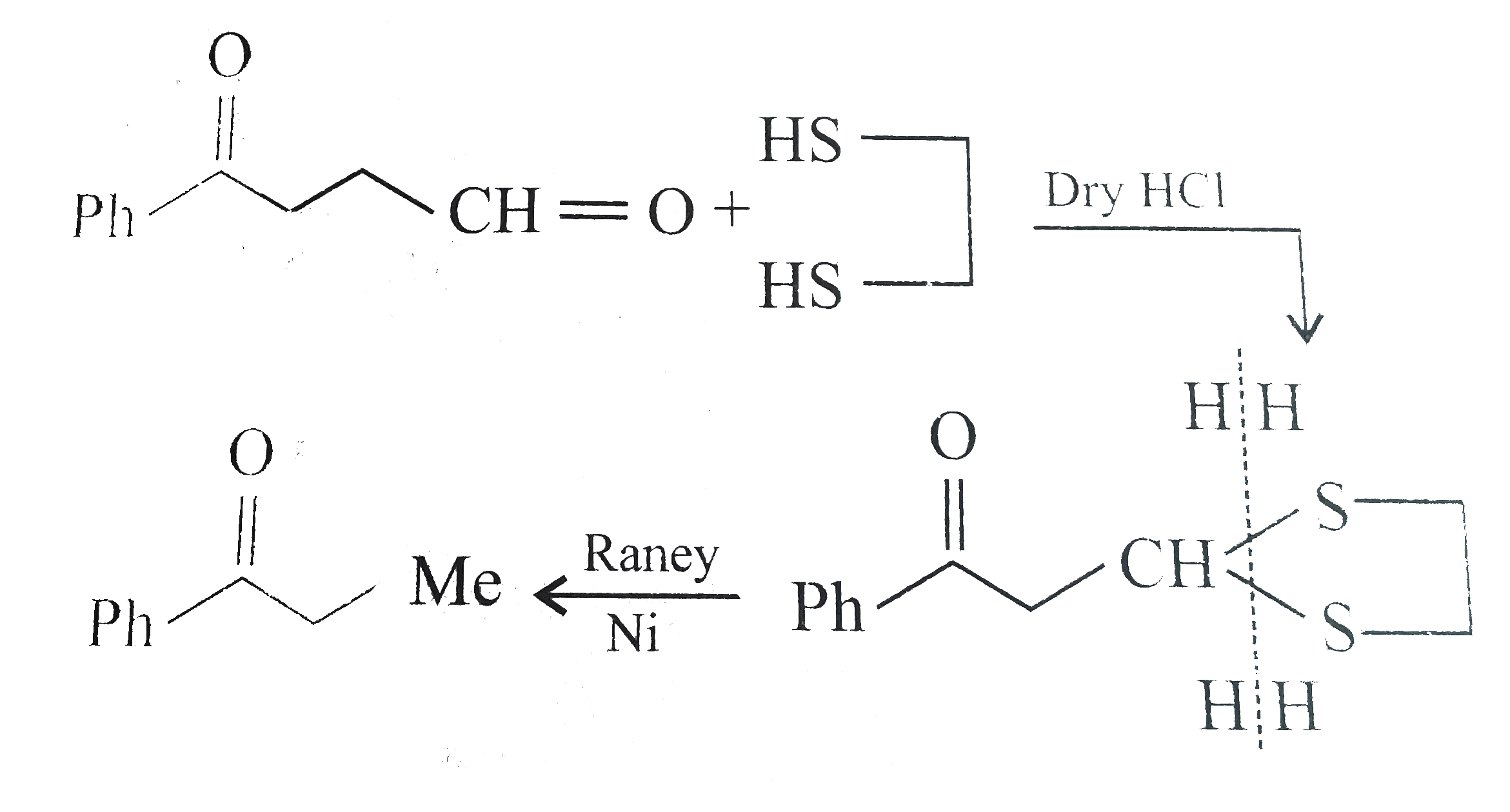
ii. A ldehyde is more reactive than the keto group and is converted to cyclic thio acetal and the reduction is effected with Raney Ni.

b.
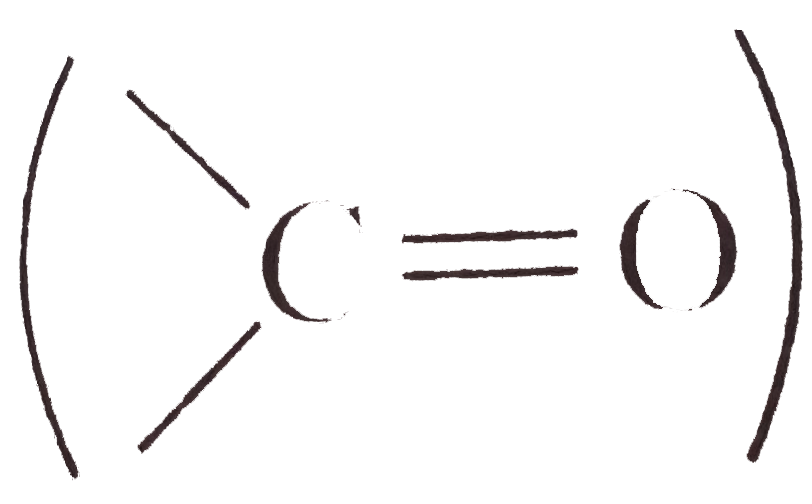
group together with other functional groups that react with strong base must be reduced by Clemmensen reduction, provided they are stable in acid. If they are sensitive to acid and stable in base W.K. method should be used . Raney Ni desulphurisation occurs under neutral conditions, but it cannot be used with reactions with good leaving groups (such as `I^(ɵ)`) because (-SH) group is an excellent nucleophilic group.
Promotional Banner

Topper's Solved these Questions

  • REDUCTION AND OXIDATION REACTION OF ORGANIC COMPOUNDS

    CENGAGE CHEMISTRY|Exercise Solved Example|6 Videos
  • REDUCTION AND OXIDATION REACTION OF ORGANIC COMPOUNDS

    CENGAGE CHEMISTRY|Exercise EXAMPLE|1 Videos
  • QUALITATIVE INORGANIC SALT ANALYSIS

    CENGAGE CHEMISTRY|Exercise Viva Voce Questions And Part-C (Analysis Of Cations)|42 Videos
  • SOLID STATE

    CENGAGE CHEMISTRY|Exercise Ex 1.2 (Objective)|9 Videos

Similar Questions

Explore conceptually related problems

(a) How do you convert the following (i) Ethanal to propanone (ii ) Toluene to benzoic acid (b) (A),(B ) and (C ) are three non cyclic functional isomers of a carbonyl compound with molecular formula C_4H_8 O . isomers (A) and (C) give positive Tollen's test whereas isomers (B) does not give Tollen's test but gives positive iodoform test , isomers (A) and (B) on reduction with Zn(Hg) /conc. HCl gives the same product (D) (i) Write the structures of (A), (B), (C) and (D) (ii) out of A,B and (C) isomers which one is least reactive towards additions of HCN

A compound has molecular formula C_(6)H_(12)O . It does not reduce Tollens or Fehling's reagent, but gives a crystalline derivative with 2,4-dinitro-phenyl hydrazine. With alkali and I_(2) , it gives yellow solid with a medicinal odour. Clemmensen reduction converts it to 2-methylpentane. The structure formula of the compound is most likely to be:

Each of the questions below consists of a question and two statements numbered I and II given below it. Use the data given to decide whether the data provided in the statements are sufficient to answer the question . What does 'Ne' stands forin the code language? I. 'N a Ni Nok Ne' means 'I will tell you ' and 'Ni Nok Ne Nam' means 'he will tell you ' in that code language. II. 'Ni Ne Mo Nam' means 'will he call you ' and 'Ne Mok Sac Ni' means 'how iwll you go ' in that code language.

Read the passage given below and answer the following questions: Reductive alkylation is the term applied to the process of introducing alkyl groups into ammonia or a primary or secondary amine by means of an aldehyde or ketone in the presence of a reducing agent. The present discussion is limited to those reductive alkylations in which the reducing agent is hydrogen and a catalyst or "nascent" hydrogen, usually from a metalacid combination, most of these reductive alkylations have been carried out with hydrogen and a catalyst. The principal variation excluded is that in which the reducing agent is formic acid or one of its derivatives, this modification is known as the Leuckart reaction. The process of reductive alkylation of ammonia consists in the addition of ammonia to a carbonyl compound and reduction of the addition compound or its dehydration product. The reaction usually is carried out in ethanol solution when the reduction is to be effected catalytically Since the primary amine is formed in the presence of the aldehyde it may react in the same way as ammonia, yielding an addition compound, a Schiff's base (RCH= NCH_(2)R) and finally, a secondary amine. Similarly, the primary amine may react with the imine, forming an addition product which also is reduced to a secondary amine Finally, the secondary amine may react with either the aldehyde or the imine to give products which are reduced to tertiary amines. Similar reactions may occur when the carbonyl compound employed is a ketone. (source: Emerson, W. S. (2011). The Preparation of Amines by Reductive Alkylation. Organic Reactions, 174–255. doi:10.1002/0471264180.or004.03 ) Reductive alkylation of ammonia by means of an aldehyde in presence of hydrogen as reducing agents results in formation of:

Read the passage given below and answer the following questions: Reductive alkylation is the term applied to the process of introducing alkyl groups into ammonia or a primary or secondary amine by means of an aldehyde or ketone in the presence of a reducing agent. The present discussion is limited to those reductive alkylations in which the reducing agent is hydrogen and a catalyst or "nascent" hydrogen, usually from a metalacid combination, most of these reductive alkylations have been carried out with hydrogen and a catalyst. The principal variation excluded is that in which the reducing agent is formic acid or one of its derivatives, this modification is known as the Leuckart reaction. The process of reductive alkylation of ammonia consists in the addition of ammonia to a carbonyl compound and reduction of the addition compound or its dehydration product. The reaction usually is carried out in ethanol solution when the reduction is to be effected catalytically Since the primary amine is formed in the presence of the aldehyde it may react in the same way as ammonia, yielding an addition compound, a Schiff's base (RCH= NCH_(2)R) and finally, a secondary amine. Similarly, the primary amine may react with the imine, forming an addition product which also is reduced to a secondary amine Finally, the secondary amine may react with either the aldehyde or the imine to give products which are reduced to tertiary amines. Similar reactions may occur when the carbonyl compound employed is a ketone. (source: Emerson, W. S. (2011). The Preparation of Amines by Reductive Alkylation. Organic Reactions, 174–255. doi:10.1002/0471264180.or004.03 ) Acetaldehyde is reacted with ammonia followed by reduction in presence of hydrogen as a catalyst. The primary amine so formed further reacts with acetaldehyde. The Schiff’s base formed during the reaction is: