Home
Class 12
PHYSICS
An alternating current I in an inductanc...

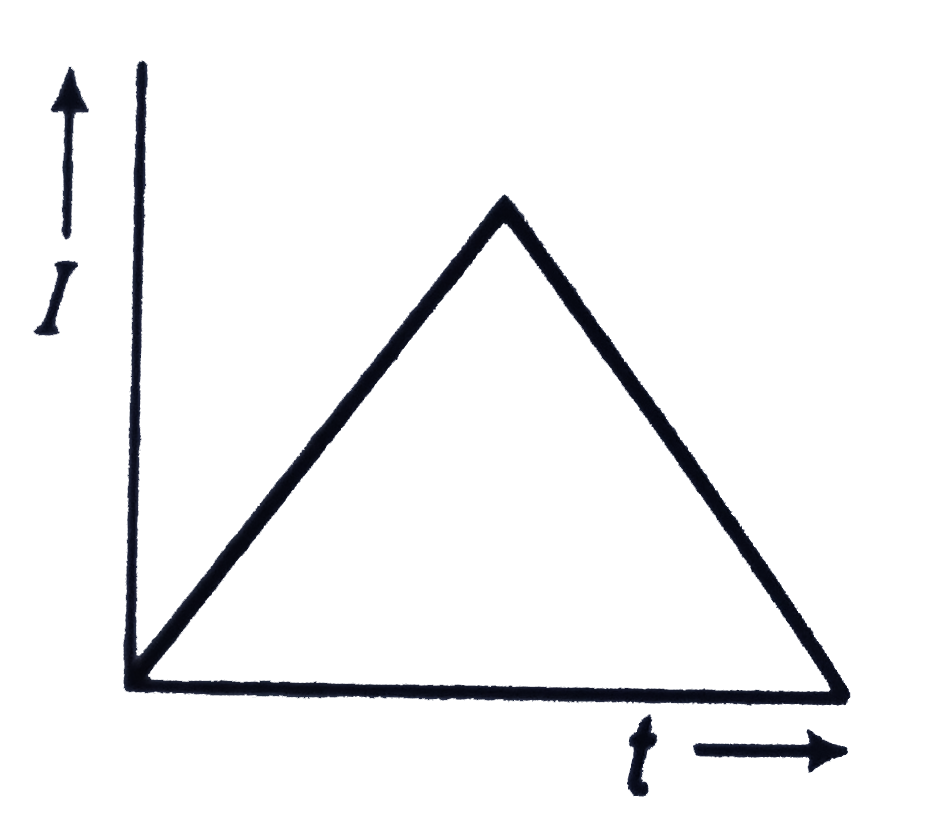
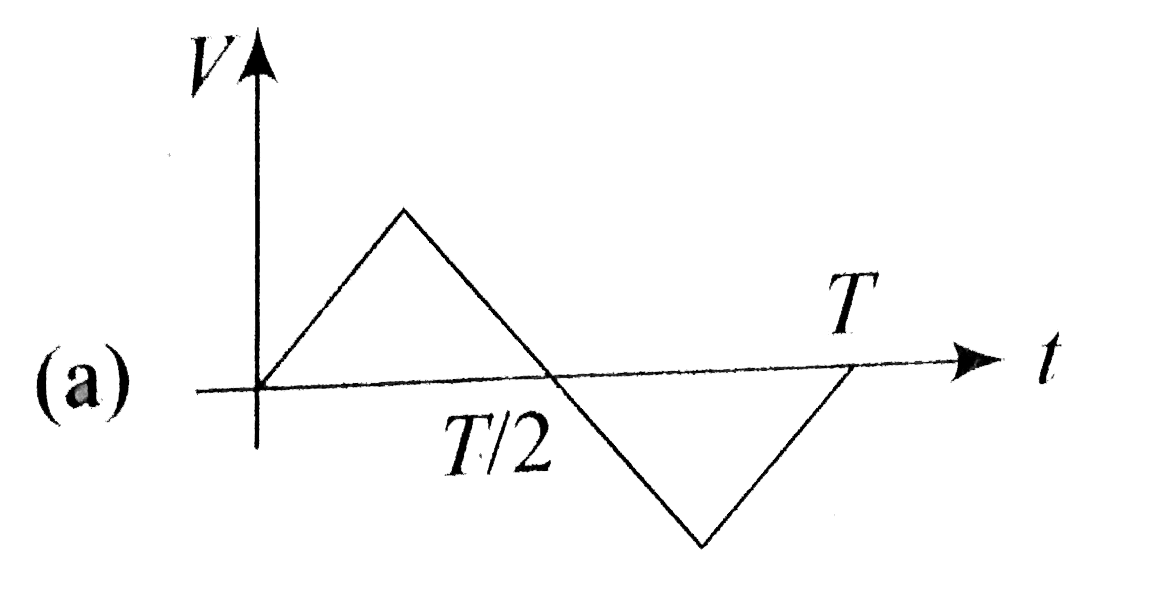
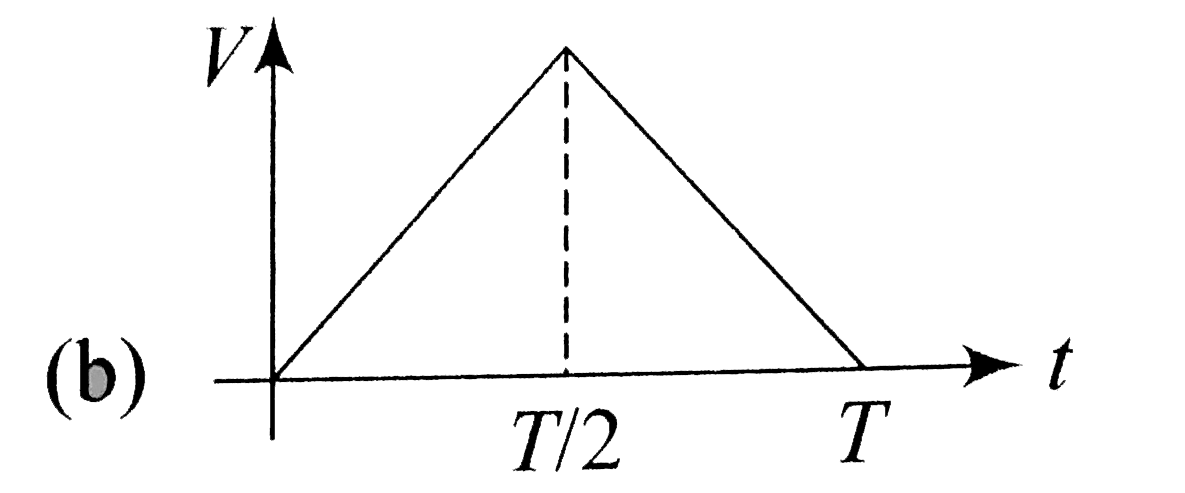
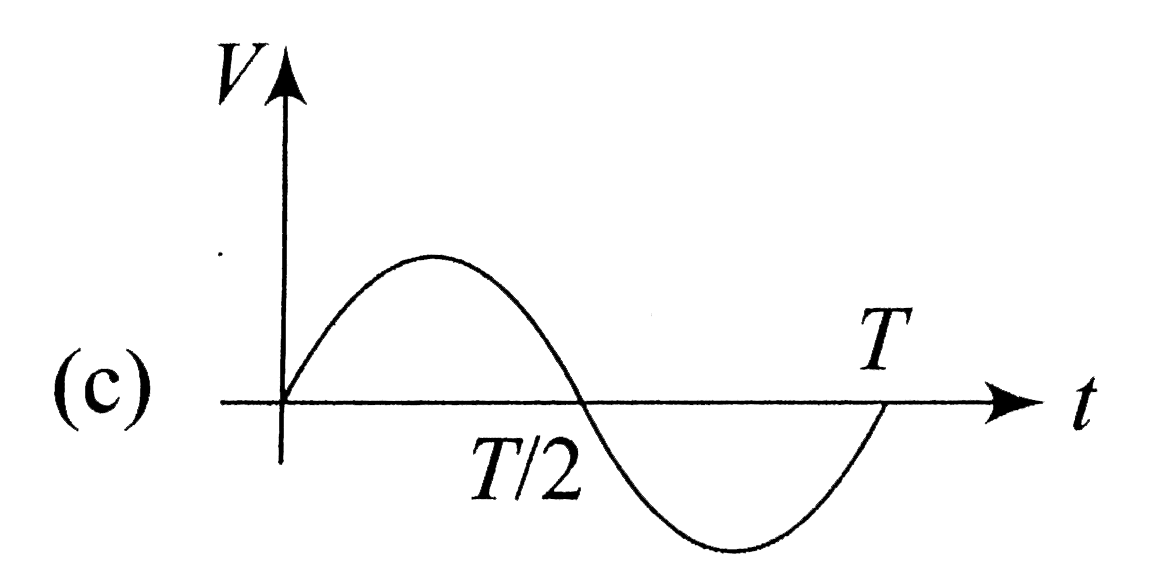
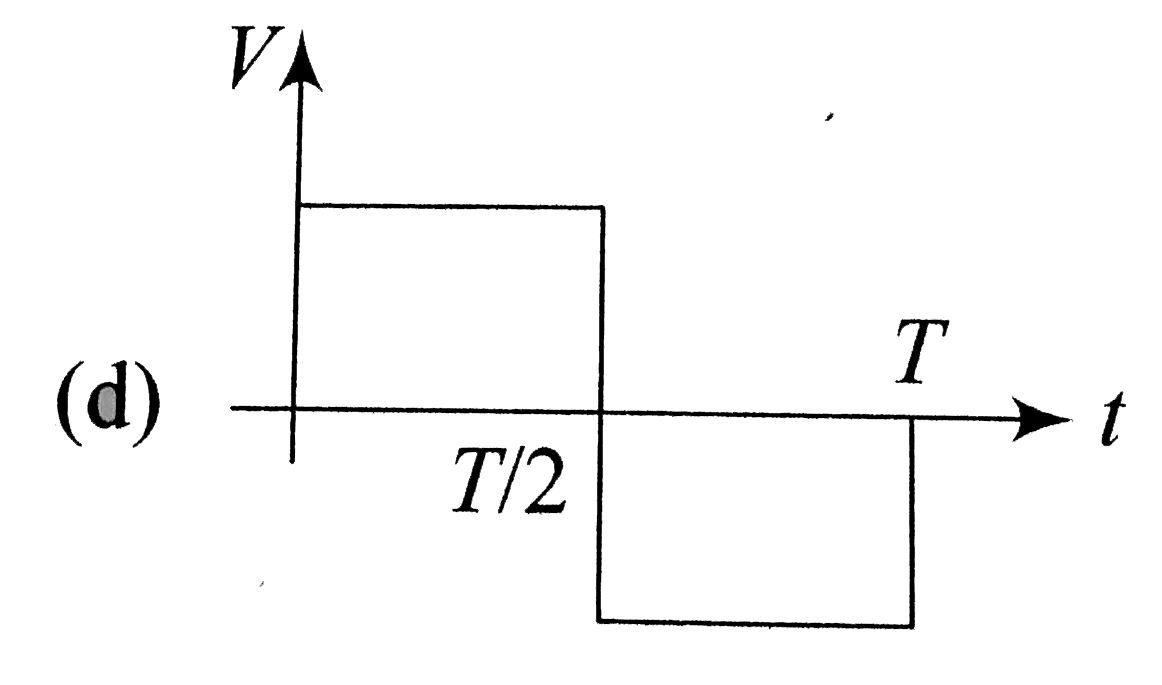
An alternating current `I` in an inductance coil varies with time `t` according to the graph as shown: Which one of the following graph gives the variation of voltage with time?

A

B

C

D

Text Solution

Verified by Experts

The correct Answer is:

D

For inductor as we know induced voltage For `t=0` to `t=-T//2`
`V=L(dI)/(dt)=Ld/(dt)((2I_(0)t)/T)=` constant,
For `t=T//2` to `t=T`
`V=(LdI)/(dt)((-2I_(0)t)/T)=-` constant
therefore, answer will be represented by graph `(d)`.
Promotional Banner

Topper's Solved these Questions

  • ALTERNATING CURRENT

    A2Z|Exercise AIIMS Questions|26 Videos
  • ALTERNATING CURRENT

    A2Z|Exercise Section D - Chapter End Test|30 Videos
  • ALTERNATING CURRENT

    A2Z|Exercise Section B - Assertion Reasoning|26 Videos
  • ATOMIC PHYSICS

    A2Z|Exercise Section D - Chapter End Test|30 Videos

Similar Questions

Explore conceptually related problems

The current i in an induction coil varies with time according to the graph shown in figure. Which of the following graph shows induced emf in the coil with time:

The current is an induction coil varies with time t , according to the graph shown in figure. Which of the following graphs shows the induced emf (e) in the coil with time.

The current (I) in the inductance is varying with time according to the plot shown in figure. Which one of the following is the correct variation of voltage with time in the coil?

The current (I) in the inductance is varying with time according to the plot shown in figure Which one of the following is the correct variation of voltage with time in the coil ?

The current i in an induction coil varies with time t according to the graph shown in the figure-5.250. Which of the following graphs shows the induced EMF in the coil with time ?

The current i in an inductionn coil varies with time t according to the graph shown in the figure. Which of the following grahs shows athe induced emf (epsilon) in the coil with time?

A2Z-ALTERNATING CURRENT-AIPMT/NEET Questions
  1. In any AC circuit the emf (e) and the current (i) at any instant are g...

    Text Solution

    |

  2. Power dissipated in an L-C-R series circuit connected to an AC source ...

    Text Solution

    |

  3. In the given circuit, Fig., the reading of voltmeter V(1) and V(2) 300...

    Text Solution

    |

  4. A 220 V input is supplied to a transformer. The output circuit draws a...

    Text Solution

    |

  5. An AC voltage is applied to a resistance R and an inductance L in seri...

    Text Solution

    |

  6. In an ac circuit , an alternating voltage e = 200 sqrt2 sin 100 t volt...

    Text Solution

    |

  7. The rms value of potential difference V shown in the figure is

    Text Solution

    |

  8. A coil has resistance 30 ohm and inductive reactance 20 ohm at 50 Hz f...

    Text Solution

    |

  9. In an electrical circuit R,L,C and an AC voltage source are all connec...

    Text Solution

    |

  10. An alternating current I in an inductance coil varies with time t acco...

    Text Solution

    |

  11. The instatanteous value of alternating current and voltages in a circu...

    Text Solution

    |

  12. A coil of self-inductance L is connected in series with a bulb B and a...

    Text Solution

    |

  13. A transformer having efficiency of 90% is working on 200 V and 3 kW po...

    Text Solution

    |

  14. A resistance R draws power P when connected to an AC source. If an ind...

    Text Solution

    |

  15. A series R-C circuit is connected to an alternating voltage source. Co...

    Text Solution

    |

  16. The input signal given to a CE amplifier having a voltage gain of 150 ...

    Text Solution

    |

  17. An inductor 20 mH, a capacitor 50 muF and a resistor 40 Omegaare conne...

    Text Solution

    |

  18. A small signal voltage V(t)=V(0)sin omegat is applied across an ideal ...

    Text Solution

    |

  19. Which of the following combinations should be selected for better turn...

    Text Solution

    |

  20. The potential differences across the resistance, capacitance and induc...

    Text Solution

    |
