A
B
C
D
Text Solution
Verified by Experts
The correct Answer is:
 .
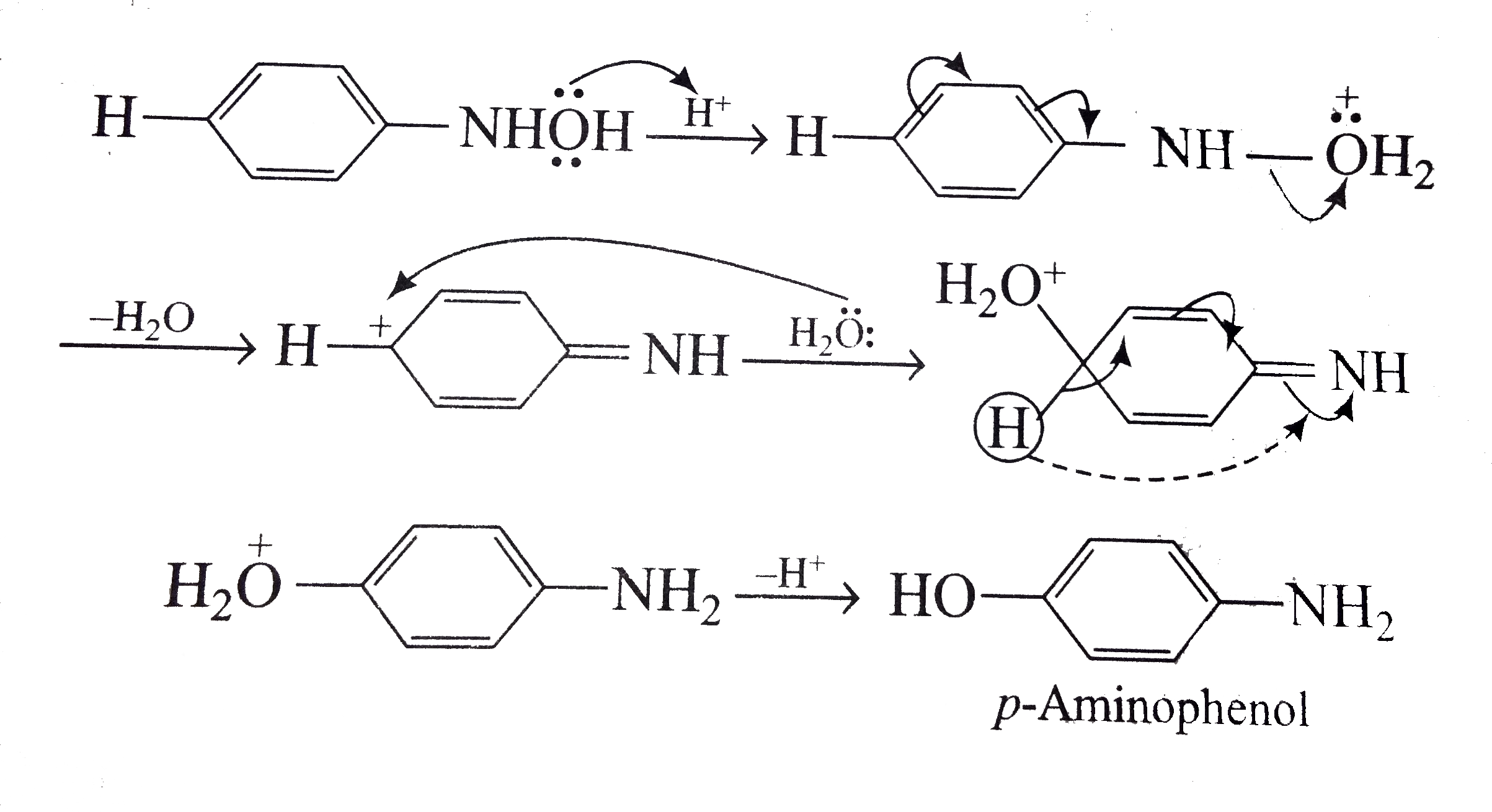
. 



Topper's Solved these Questions
Similar Questions
Explore conceptually related problems
R SHARMA-AMINES-Follow -up Test
- Which of the following compounds is known is o-phenetidine ? .
Text Solution
|
- During the reduction of nitro compound to an amine the oxidation numbe...
Text Solution
|
- Reduction of nitrobenzene with zinc dust and aqueous ammonium chloride...
Text Solution
|
- When reduction of nitrobenzene is carride out in alkaline medium it fo...
Text Solution
|
- The product of the following reaction .
Text Solution
|
- Consider the following sequence of reactions C(6)H(5)CH(2)Ioverset(K...
Text Solution
|
- Acetone oxime on catalytic hydrogenation gives
Text Solution
|
- The final product formed in the reaction C(6)H(5)C-=CHunderset(HgSO(...
Text Solution
|
- The end product (B) of the reaction .
Text Solution
|
- The end product (B) of the reaction sequence is .
Text Solution
|
- Consider the following sequence of reactions CH(2)=CHCH=CH(2)underse...
Text Solution
|
- CH(3)CH(2)OHunderset(H(2)SO(4))overset(K(2)Cr(2)C(2))rarrA overset(SOC...
Text Solution
|
- C(6)H(5)CH(2)Ioverset(NaN(3))rarrA underset(2H(2)O)overset(1.LAH)rarrB...
Text Solution
|
- H(2)C=CHCH(2)Br+N(3)^()rarrAunderset(1LiAIH(4))overset(2.H(2)O)rarrB ...
Text Solution
|
- CH=CHunderset(42%H(2)SO(4))overset(1%HgSO(4))rarrAunderset(Delta,press...
Text Solution
|
- CH(3)CNunderset(2.steam distillation)overset(1.SnCI(2)//HCI)rarrA unde...
Text Solution
|
- Which of the following reactions leads to the formation of a primary a...
Text Solution
|
- Gabried synthesis is not a viable method for preparing (i) t- butyla...
Text Solution
|
- Acetamide is treated separaately with the following reagents Which one...
Text Solution
|
- Among the following compounds the one which will produce 1-phenylethan...
Text Solution
|