Home
Class 12
PHYSICS
All objects referred to the subsequent p...

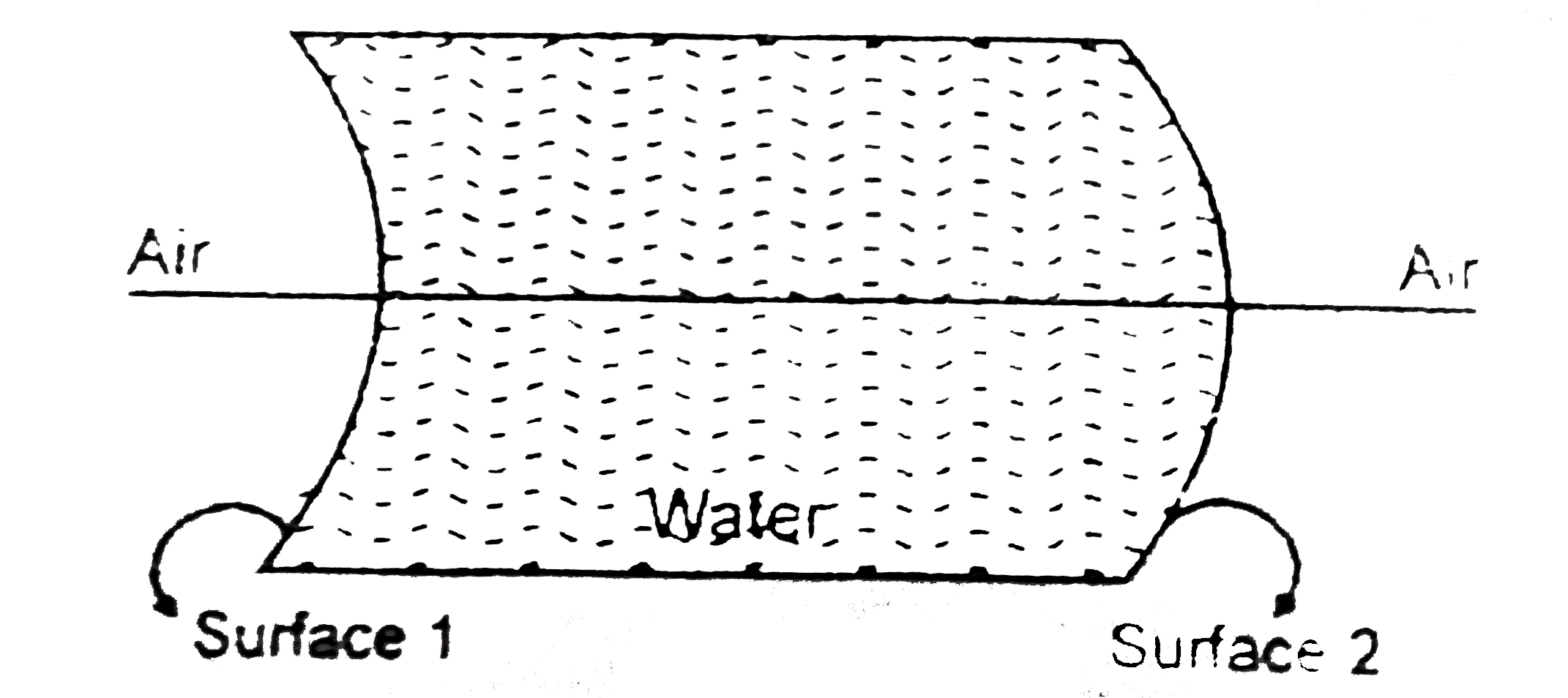
All objects referred to the subsequent problems lie on the principal axis.

If light is incident on surface `1` from left, the image formed after the first refraction is definitely :

A

Real for a real object

B

Virtual for a real object

C

Real for a virtual object

D

Virtual for a virtual object

Text Solution

Verified by Experts

The correct Answer is:
B

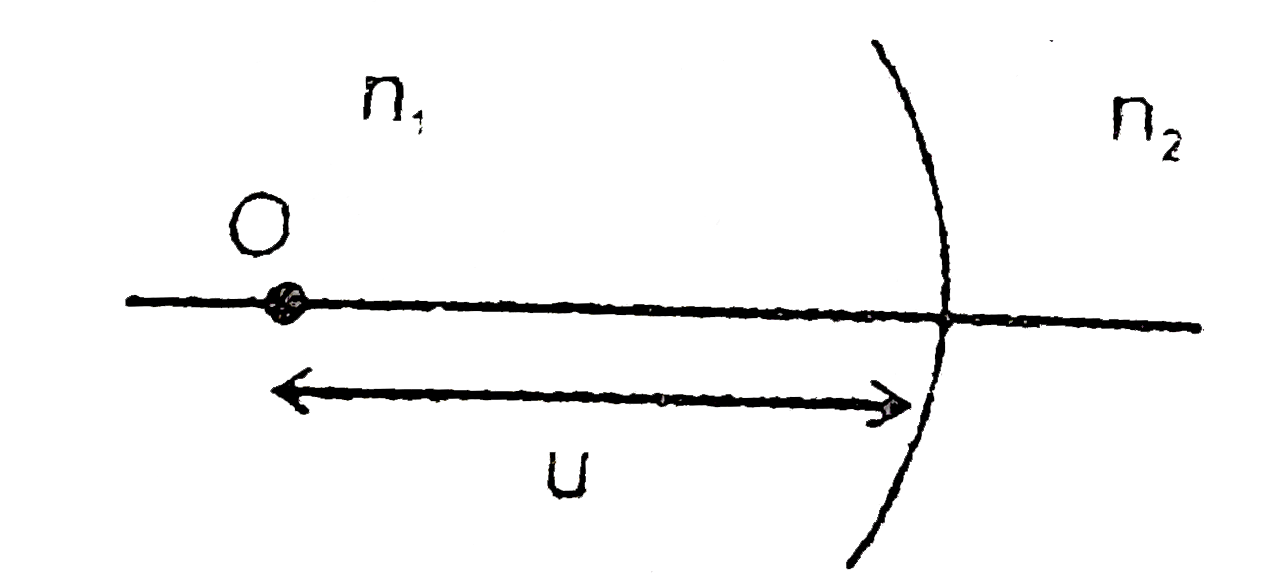
`(mu_(2))/(v)=(mu_(1))/(u)+((mu_(2)-mu_(1))/(R))`
`(mu_(2)-mu_(1))` is `+ve` and `R` is `-ve` if `u` is `-ve,v` will always be `-ve`
i.e. for real object image is always virtual.
Promotional Banner

Topper's Solved these Questions

  • DAILY PRACTICE PROBLEM

    RESONANCE|Exercise DPP No.11|20 Videos
  • DAILY PRACTICE PROBLEM

    RESONANCE|Exercise DPP No.12|9 Videos
  • DAILY PRACTICE PROBLEM

    RESONANCE|Exercise DPP No.9|20 Videos
  • CURRENT ELECTRICITY

    RESONANCE|Exercise High Level Problems (HIP)|21 Videos
  • ELECTRO MAGNETIC WAVES

    RESONANCE|Exercise Exercise 3|27 Videos

Similar Questions

Explore conceptually related problems

All objects referred to the subsequent problems lie on the principal axis. If light is incident on surface 2 from right then which of the following is true for images formed after a single refraction.

All objects referred to the subsequent problems lie on the principal axis. In above question if the object is real, then the final image formed after two refractions :

A region bounding water has air on two sides. Tell the nature (real or virtual) of the image for following cases- (The object is real and lies on the principal axis (see fig) in all cases.) (a) The object is to the left of surface 1 and the image to be considered is formed after the first refraction. (b) The object is to the left of surface 1 and the image to be considered is formed after two refractions. (c) The object is to the right of second surface and the image to be considered is formed after one refraction.

In the figure shown , a point object O is placed in air on the principal axis. The radius of curvature of the spherical surfaces is 60 cm. I is the final image formed after all reflections and refractions.

An equiconvex lens of refractive index 1.5 has its two surfaces having radius of curvature of 30 cm. A point object has been placed on the principal axis at a distance of 60 cm from the lens. Find the distance of image from the lens formed by the rays which suffer refraction at first surface, reflection at second surface, again a reflection on the first surface and finally a refraction from the second surface.

(i) Device the mathematical n between refractive indices n_(1) and n_(2) of two radii and radius of curvature R for refraction at a convex shperical surface. Consider the object to be a point since lying on the principal axis in rarer medium of refractive index n_(1) and a real image formed in the denser medium of refractive index n_(2) . Hence, derive lens marker's formula. (ii) Light from a point source in air falls on a convex spherical glass surface of refractive index 1.5 and radius of curvature 20cm . The distance of light source from the glass surface is 100cm . At what position is the image formed ?

A thin lens made of a material of refractive index mu_2 has a medium of refractive index mu_1 on one side and a medium of refractive index on the other side. The lens is biconvex and the two radii of curvature have equal magnitude R. A beam of light travelling parallel to the principal axis is incident on the lens. Where will the image be formed if the beam is incident from (a) the medium p, and (b) from the medium mu_3 ?

A plano-convex lens P and a concavo-convex lens Q are in contact as shown in figure. The refractive index o fthe material of the lens P and Q is 1.8 and 1.2 respectively. The radius of curvature of the concave surface of the lens Q is double the radius of curvature of the convex surface. The convex surface of Q is silvered. An object is placed on the placed on the principal axis at a distance 10 cm form the plane surface. The image is formed at a distance 40 cm from the plane surfaces on the same side. The focal length of the system is

An object is present on the principal axis of a concave mirror at a distance 30cm from it.Focal length of mirror is 20cm Image formed by mirror is

