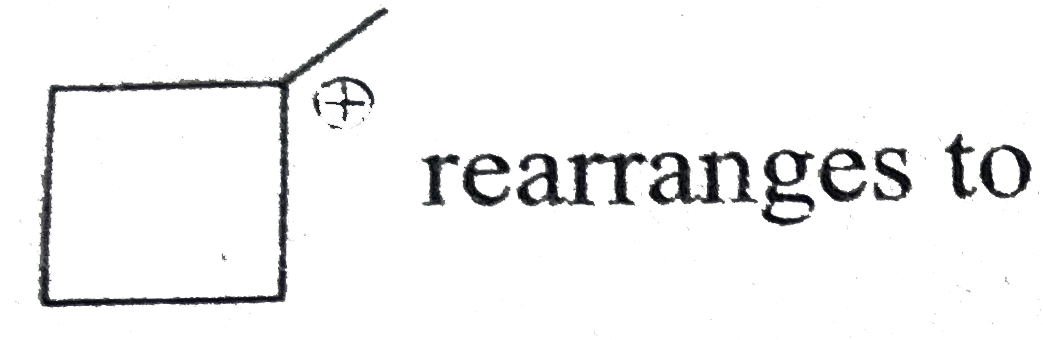
 rearranges to :
A
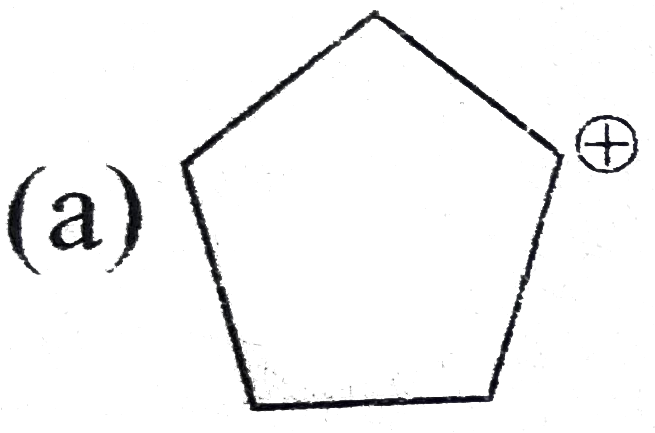
B
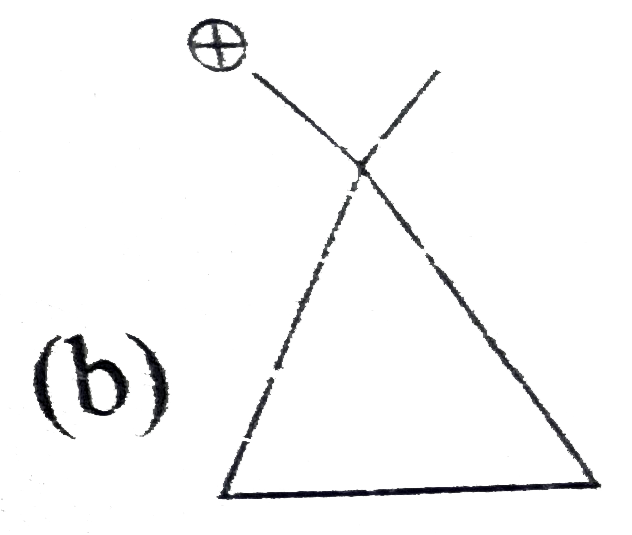
C
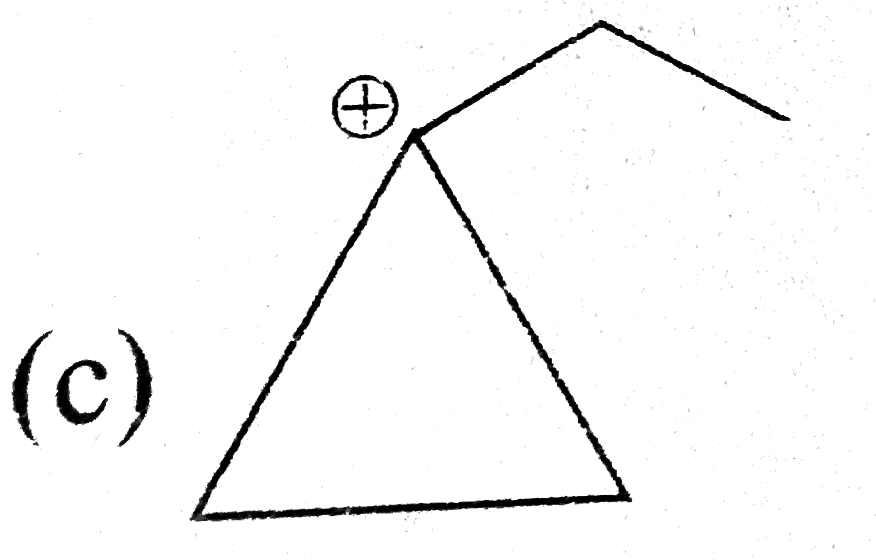
D
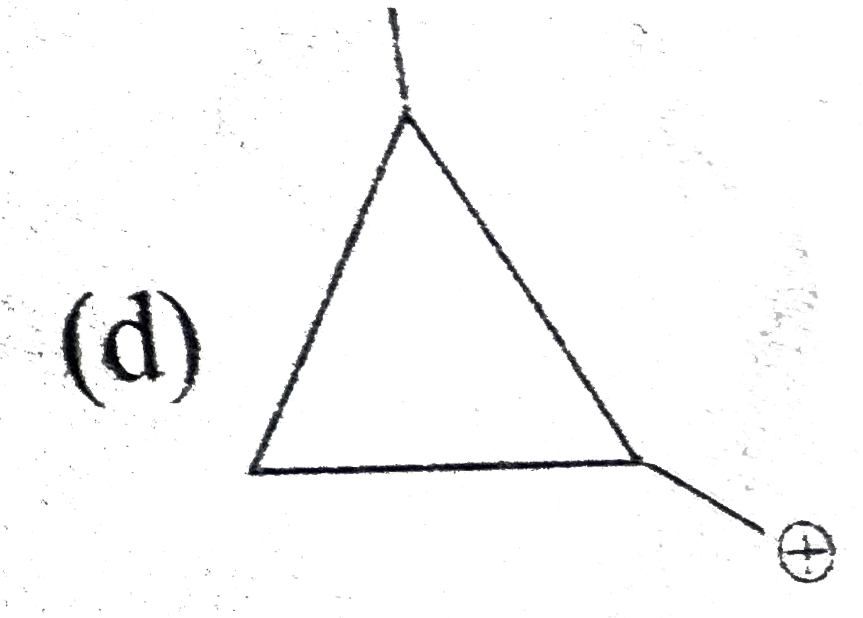
Text Solution
Verified by Experts
The correct Answer is:



Topper's Solved these Questions
HALIDES
HIMANSHU PANDEY|Exercise Level 2 (Q.1 To Q.25)|25 VideosHALIDES
HIMANSHU PANDEY|Exercise Level 2 (Q.26 To Q.50)|25 VideosHALIDES
HIMANSHU PANDEY|Exercise Subjective Type Problems|10 VideosGENERAL ORGANIC CHEMISTRY
HIMANSHU PANDEY|Exercise Subjective Type Problems|19 VideosISOMERISM
HIMANSHU PANDEY|Exercise Subjective Type Problems|11 Videos
Similar Questions
Explore conceptually related problems
HIMANSHU PANDEY-HALIDES-Level 1 (Q.26 To Q.48)
- The order of decreasing stability of the cations is : (I) CH(3)overs...
Text Solution
|
- Which of the following two carbocation is more stable ?
Text Solution
|
- rearranges to :
Text Solution
|
- Which of the following reactions will go faster if the concentration o...
Text Solution
|
- Suggest the suitable solvent for the reaction given below.
Text Solution
|
- What is the principal product of the following reaction ?
Text Solution
|
- Which of the following reaction is possible ?
Text Solution
|
- H(3)C-overset(CH(3))overset(|)CH-underset(Cl)underset(|)CH-CH(3)unders...
Text Solution
|
- The order of reactivity of alkyl halide in the reaction R-X+MgrarrRMgX...
Text Solution
|
- The reaction of with RMgX, leads to the formation of :
Text Solution
|
- Which of the following compounds on reaction with CH(3)MgBr will give ...
Text Solution
|
- RMgBr+Aoverset(H(3)O^(⊕))rarrCH(3)CH(2)OH, R and A are :
Text Solution
|
- CH(3)MgBr+CH(2)=CH-overset(O)overset(||)C-Hoverset(H(3)O^(+))rarrProdu...
Text Solution
|
- The product obtained on treating acetone with ethyl magnesium bromide ...
Text Solution
|
- Consider the following reaction, which of the following statement...
Text Solution
|
- 2-Phenylethanol may be prepared by the reaction of phenyl magnesium br...
Text Solution
|
- Order of rate of reaction of following compound with phenyl magnesium ...
Text Solution
|
- Select the correct order of decreasing reactivity of the following com...
Text Solution
|
- Product What is the product ?
Text Solution
|
- RMgXoverset((i)CH(3)CN)underset(NH(4)Cl)rarr(A)overset(RMgX)underset(N...
Text Solution
|