

Home
Class 12
CHEMISTRY
In which of the following pairs is the s...

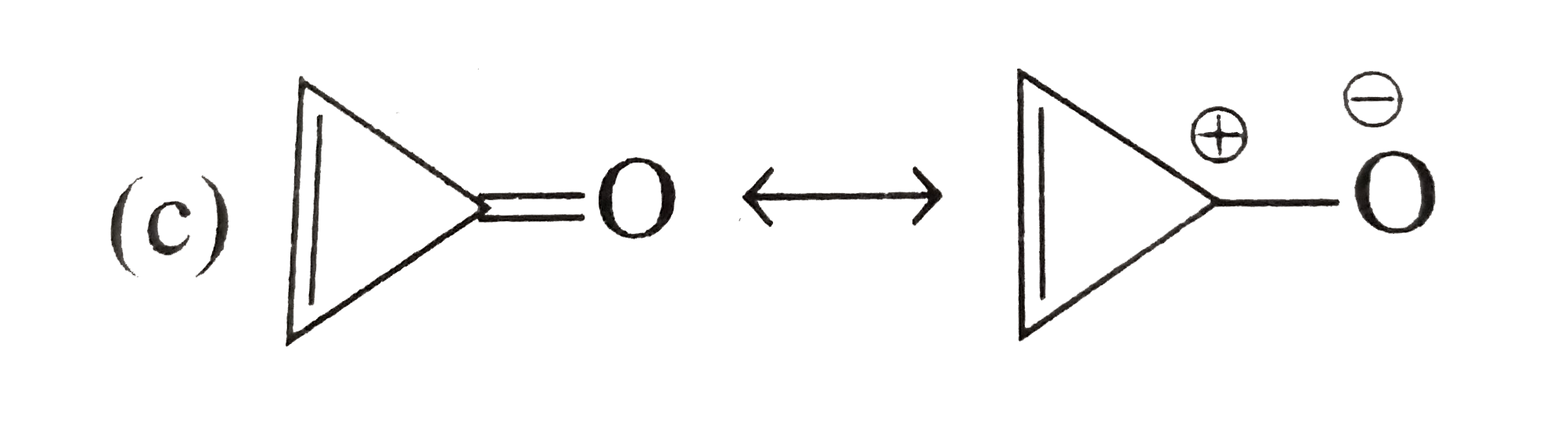
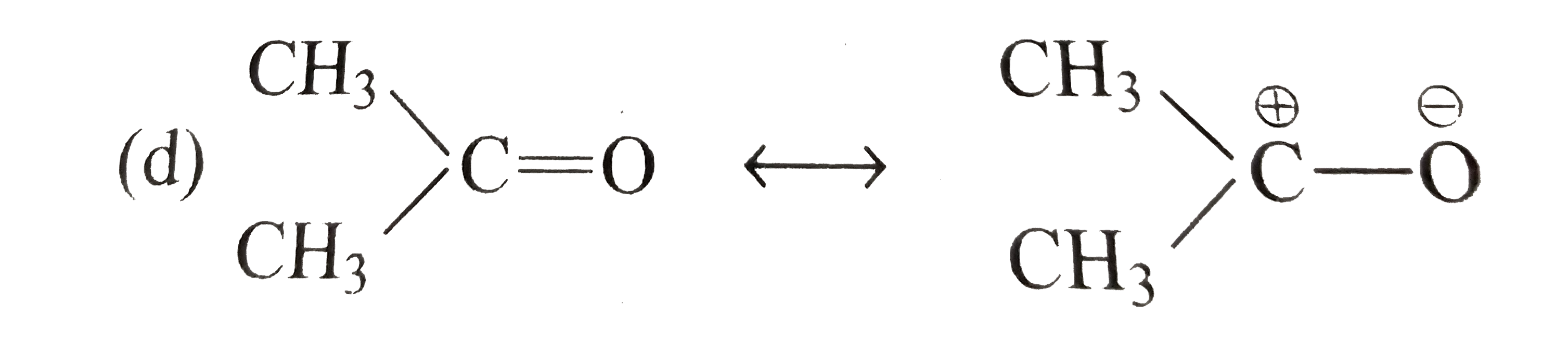
In which of the following pairs is the sturcture on the right major resonance contributor?

A

B

C

D

Text Solution

AI Generated Solution

The correct Answer is:

To determine which structure in each pair is the major resonance contributor, we need to analyze the resonance structures based on certain stability criteria. Here's a step-by-step solution: ### Step 1: Identify the Resonance Structures For each pair given in the question, identify the resonance structures. Look for lone pairs, double bonds, and charges (positive or negative) in the structures. ### Step 2: Evaluate the Resonance Contributors 1. **Neutral vs. Ionic**: Generally, neutral structures are more stable than ionic structures. If one structure is neutral and the other is ionic, the neutral structure is likely the major contributor. 2. **Charge Distribution**: If both structures are ionic, the one with the charge on the more electronegative atom is more stable. Conversely, if the charge is on a less electronegative atom, that structure is less stable. 3. **Aromaticity**: If one of the structures is aromatic, it is usually the major contributor due to the added stability from resonance and delocalization of electrons. ### Step 3: Apply the Criteria to Each Pair - For each pair, apply the criteria mentioned above: - Compare the stability of neutral vs. ionic structures. - Check the placement of charges and electronegativity. - Look for any aromatic structures. ### Step 4: Conclude the Major Contributor After evaluating each pair based on the above criteria, conclude which structure on the right is the major resonance contributor. ### Example Analysis 1. **Pair 1**: - Left Structure: Neutral - Right Structure: Ionic - Conclusion: Right structure is not the major contributor (Left is major). 2. **Pair 2**: - Left Structure: Neutral - Right Structure: Ionic - Conclusion: Right structure is not the major contributor (Left is major). 3. **Pair 3**: - Left Structure: Neutral - Right Structure: Aromatic - Conclusion: Right structure is the major contributor due to aromaticity. ### Final Answer Based on the analysis, the structure on the right is the major resonance contributor in the pair where it is aromatic. ---

To determine which structure in each pair is the major resonance contributor, we need to analyze the resonance structures based on certain stability criteria. Here's a step-by-step solution: ### Step 1: Identify the Resonance Structures For each pair given in the question, identify the resonance structures. Look for lone pairs, double bonds, and charges (positive or negative) in the structures. ### Step 2: Evaluate the Resonance Contributors 1. **Neutral vs. Ionic**: Generally, neutral structures are more stable than ionic structures. If one structure is neutral and the other is ionic, the neutral structure is likely the major contributor. ...
Promotional Banner

Topper's Solved these Questions

  • GENERAL ORGANIC CHEMISTRY

    HIMANSHU PANDEY|Exercise Level 2 (Q.26 To Q.50)|25 Videos
  • GENERAL ORGANIC CHEMISTRY

    HIMANSHU PANDEY|Exercise Level 2 (Q.51 To Q.75)|25 Videos
  • GENERAL ORGANIC CHEMISTRY

    HIMANSHU PANDEY|Exercise Level 1 (Q.26 To Q.49)|24 Videos
  • CHEMISTRY IN DAILY LIFE

    HIMANSHU PANDEY|Exercise Integer Answer Type Problems|7 Videos
  • HALIDES

    HIMANSHU PANDEY|Exercise Subjective Type Problems|10 Videos

Similar Questions

Explore conceptually related problems

Which of the following pairs of Lewis structure represent resonance contributor to the species?

Which of the following is not a paired sturcture in male

Which of the following pairs has higher resonance energy:

Which of the following pairs has higher resonance energy:

In which of the following pairs of resonance contributors is the sturcture on the right a important contributor?

Which of the following pairs are resonating structures ?

Which of the following pairs has higher resonance energy :

Which of the following pairs has higher resonance energy :

Which of the following pairs has higher resonance energy :

Which of the following pairs has higher resonance energy :

HIMANSHU PANDEY-GENERAL ORGANIC CHEMISTRY-Level 2 (Q.1 To Q.25)
  1. Which of the following is not a planar molecule?

    Text Solution

    |

  2. Which of following pairs does not represent resonance sturctures?

    Text Solution

    |

  3. In which of the following pairs is the sturcture on the right major re...

    Text Solution

    |

  4. In which of the following pairs of resonance contributors is the sturc...

    Text Solution

    |

  5. Examine the following resonating structures of formic acid and arrange...

    Text Solution

    |

  6. Which of the following compounds will not show resonance?

    Text Solution

    |

  7. Which of the following compounds will exhibit d-orbital resonance?

    Text Solution

    |

  8. Which of the following represents resonating structure of

    Text Solution

    |

  9. Which of the following is not a permissible resonating form?

    Text Solution

    |

  10. Less contributing structure of nitroethene is :

    Text Solution

    |

  11. Which will be the least stable resonating structure?

    Text Solution

    |

  12. Which will be the least stable resonating structure?

    Text Solution

    |

  13. Which of the following pairs of structures is not a pair of resonating...

    Text Solution

    |

  14. Which of the following pairs of strutures does not represent resonatin...

    Text Solution

    |

  15. The most stable resonating structure of p-nitrosonitrobenzene is :

    Text Solution

    |

  16. Which of the following molecules has longest C=C strenght?

    Text Solution

    |

  17. The decreasing order of bond length of C=C in the following compounds ...

    Text Solution

    |

  18. In which of the following molecules all the effects namely inductive, ...

    Text Solution

    |

  19. There are three canonical structures of naphthalene. Examine them and ...

    Text Solution

    |

  20. Among these compounds the correct order of C-N bond length is :

    Text Solution

    |
