Home
Class 12
CHEMISTRY
Which of the following compounds will ex...

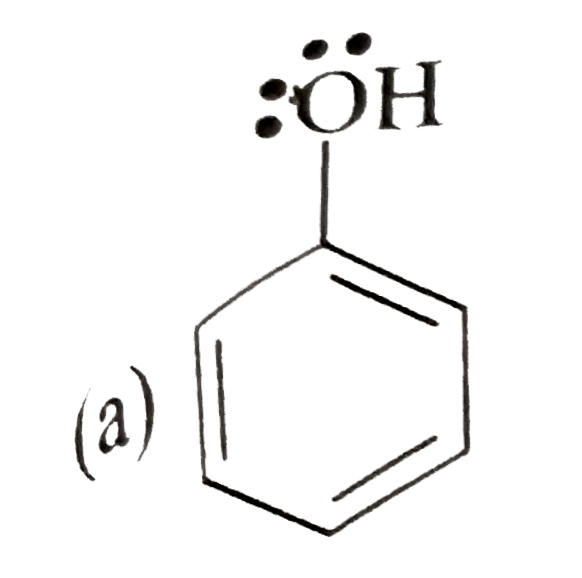
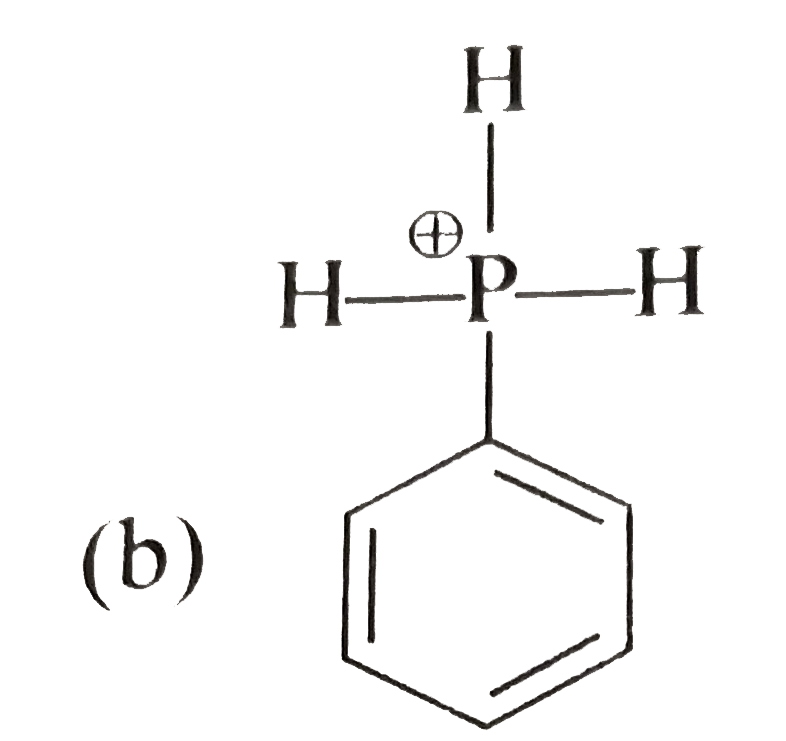
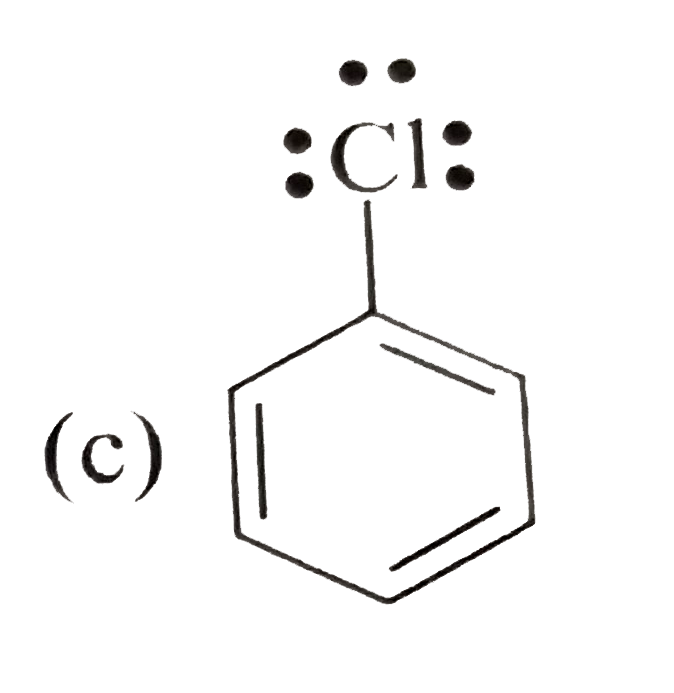
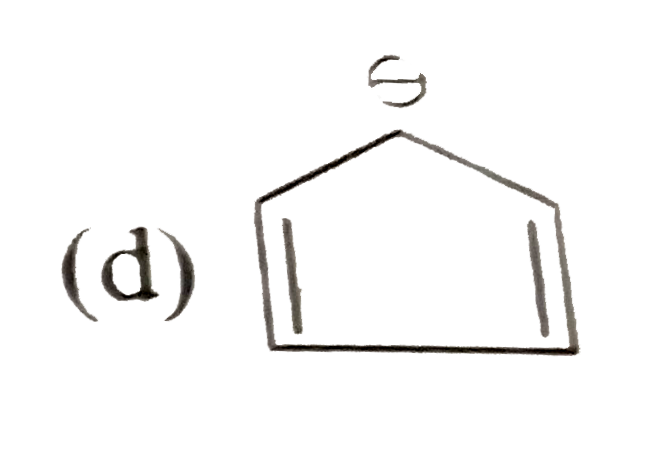
Which of the following compounds will exhibit d-orbital resonance?

A

B

C

D

Text Solution

AI Generated Solution

The correct Answer is:

To determine which of the given compounds will exhibit d-orbital resonance, we need to analyze the electronic structure of the elements involved, particularly focusing on phosphorus and chlorine, as they are the key players in this phenomenon. ### Step-by-Step Solution: 1. **Understanding d-Orbital Resonance**: - d-orbital resonance occurs when a compound has a central atom with vacant d-orbitals that can accept electron density from neighboring atoms or groups. This typically involves elements from the third period and below in the periodic table, such as phosphorus and chlorine. 2. **Identifying the Elements**: - We need to focus on phosphorus (P) and chlorine (Cl) as they are the elements that can exhibit d-orbital resonance. Carbon (C) does not have d-orbitals and thus cannot participate in d-orbital resonance. 3. **Evaluating Chlorine**: - Chlorine is an electron-rich species with several lone pairs of electrons. While it has vacant d-orbitals, the presence of these lone pairs makes it less likely to participate in resonance with other electron-rich species. Therefore, chlorine is not a good candidate for d-orbital resonance. 4. **Evaluating Phosphorus**: - Phosphorus, on the other hand, can be an electron-deficient species, especially when it carries a positive charge. It has vacant d-orbitals that can accept electrons. This makes phosphorus a suitable candidate for d-orbital resonance, as it can effectively participate in resonance with electron-donating groups. 5. **Conclusion**: - Based on the analysis, phosphorus can participate in d-orbital resonance due to its electron deficiency and vacant d-orbitals, while chlorine cannot effectively participate due to its electron-rich nature. Therefore, the compound containing phosphorus will exhibit d-orbital resonance. ### Final Answer: The compound that will exhibit d-orbital resonance is the one containing phosphorus.

To determine which of the given compounds will exhibit d-orbital resonance, we need to analyze the electronic structure of the elements involved, particularly focusing on phosphorus and chlorine, as they are the key players in this phenomenon. ### Step-by-Step Solution: 1. **Understanding d-Orbital Resonance**: - d-orbital resonance occurs when a compound has a central atom with vacant d-orbitals that can accept electron density from neighboring atoms or groups. This typically involves elements from the third period and below in the periodic table, such as phosphorus and chlorine. 2. **Identifying the Elements**: ...
Promotional Banner

Topper's Solved these Questions

  • GENERAL ORGANIC CHEMISTRY

    HIMANSHU PANDEY|Exercise Level 2 (Q.26 To Q.50)|25 Videos
  • GENERAL ORGANIC CHEMISTRY

    HIMANSHU PANDEY|Exercise Level 2 (Q.51 To Q.75)|25 Videos
  • GENERAL ORGANIC CHEMISTRY

    HIMANSHU PANDEY|Exercise Level 1 (Q.26 To Q.49)|24 Videos
  • CHEMISTRY IN DAILY LIFE

    HIMANSHU PANDEY|Exercise Integer Answer Type Problems|7 Videos
  • HALIDES

    HIMANSHU PANDEY|Exercise Subjective Type Problems|10 Videos

Similar Questions

Explore conceptually related problems

The following compound can exhibits

The following compound can exhibits

Which of the following compounds will exhibit tautomerism?

Which of the following compounds will exhibit optical isomerism ?

Which of the following compounds will exhibits geometrical isomerism ?

Which of the following compounds will exhibit geometrical isomerism?

Which of the following compound will exhibit geometrical isomerism ?

HIMANSHU PANDEY-GENERAL ORGANIC CHEMISTRY-Level 2 (Q.1 To Q.25)
  1. In which of the following pairs is the sturcture on the right major re...

    Text Solution

    |

  2. In which of the following pairs of resonance contributors is the sturc...

    Text Solution

    |

  3. Examine the following resonating structures of formic acid and arrange...

    Text Solution

    |

  4. Which of the following compounds will not show resonance?

    Text Solution

    |

  5. Which of the following compounds will exhibit d-orbital resonance?

    Text Solution

    |

  6. Which of the following represents resonating structure of

    Text Solution

    |

  7. Which of the following is not a permissible resonating form?

    Text Solution

    |

  8. Less contributing structure of nitroethene is :

    Text Solution

    |

  9. Which will be the least stable resonating structure?

    Text Solution

    |

  10. Which will be the least stable resonating structure?

    Text Solution

    |

  11. Which of the following pairs of structures is not a pair of resonating...

    Text Solution

    |

  12. Which of the following pairs of strutures does not represent resonatin...

    Text Solution

    |

  13. The most stable resonating structure of p-nitrosonitrobenzene is :

    Text Solution

    |

  14. Which of the following molecules has longest C=C strenght?

    Text Solution

    |

  15. The decreasing order of bond length of C=C in the following compounds ...

    Text Solution

    |

  16. In which of the following molecules all the effects namely inductive, ...

    Text Solution

    |

  17. There are three canonical structures of naphthalene. Examine them and ...

    Text Solution

    |

  18. Among these compounds the correct order of C-N bond length is :

    Text Solution

    |

  19. C(1)-C(2) bond is shortest in :

    Text Solution

    |

  20. Among the following three canonical sturetures what would be their rel...

    Text Solution

    |
