Text Solution
Verified by Experts
The correct Answer is:



Topper's Solved these Questions
ENVIRONMENTAL CHEMISTRY
NCERT EXEMPLAR|Exercise Assertion And Reason|7 VideosENVIRONMENTAL CHEMISTRY
NCERT EXEMPLAR|Exercise Long Answer Type|5 VideosENVIRONMENTAL CHEMISTRY
NCERT EXEMPLAR|Exercise Short Answer Type|18 VideosCLASSIFICATION OF ELEMENTS AND PERIODICITY IN PROPERTIES.
NCERT EXEMPLAR|Exercise Long answer types question|7 VideosHYDROCARBONS
NCERT EXEMPLAR|Exercise Long Answer Type Questions|4 Videos
Similar Questions
Explore conceptually related problems
NCERT EXEMPLAR-ENVIRONMENTAL CHEMISTRY-Match the column
- Match the terms given in Column I with the compound given in Column II...
Text Solution
|
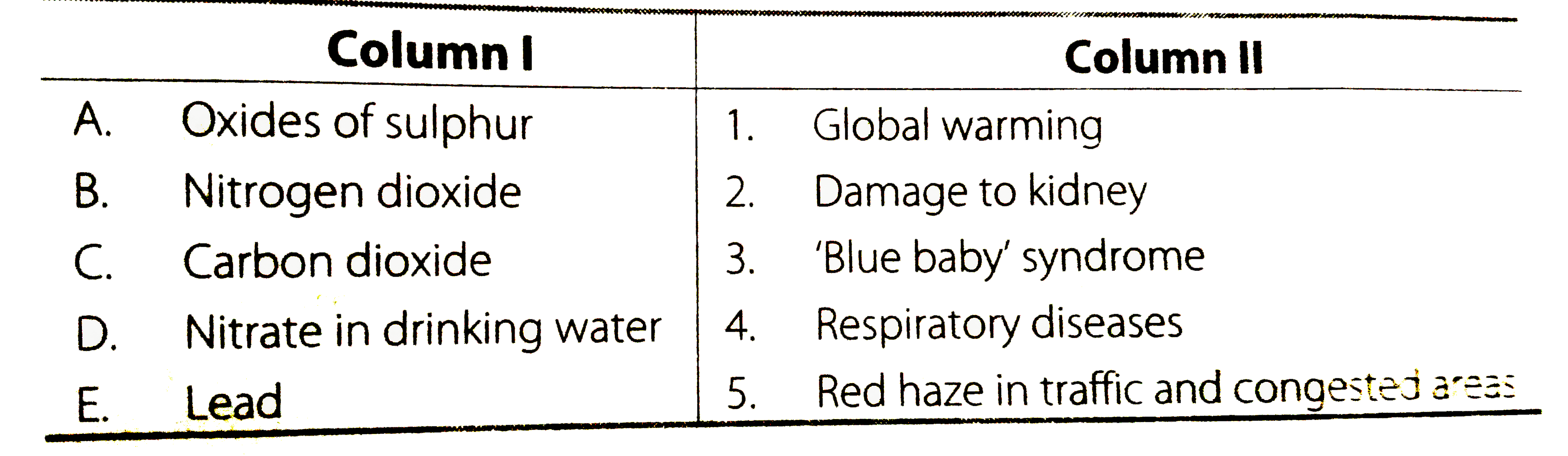
- Match the pollution(s) in column I with the effect(s) in column II.
Text Solution
|
- Match the activity given in Column I with the type of pollution create...
Text Solution
|
- Match the pollutants given in Column I with their effects given in Col...
Text Solution
|