Home
Class 12
PHYSICS
A virtual erect image by a diverging len...

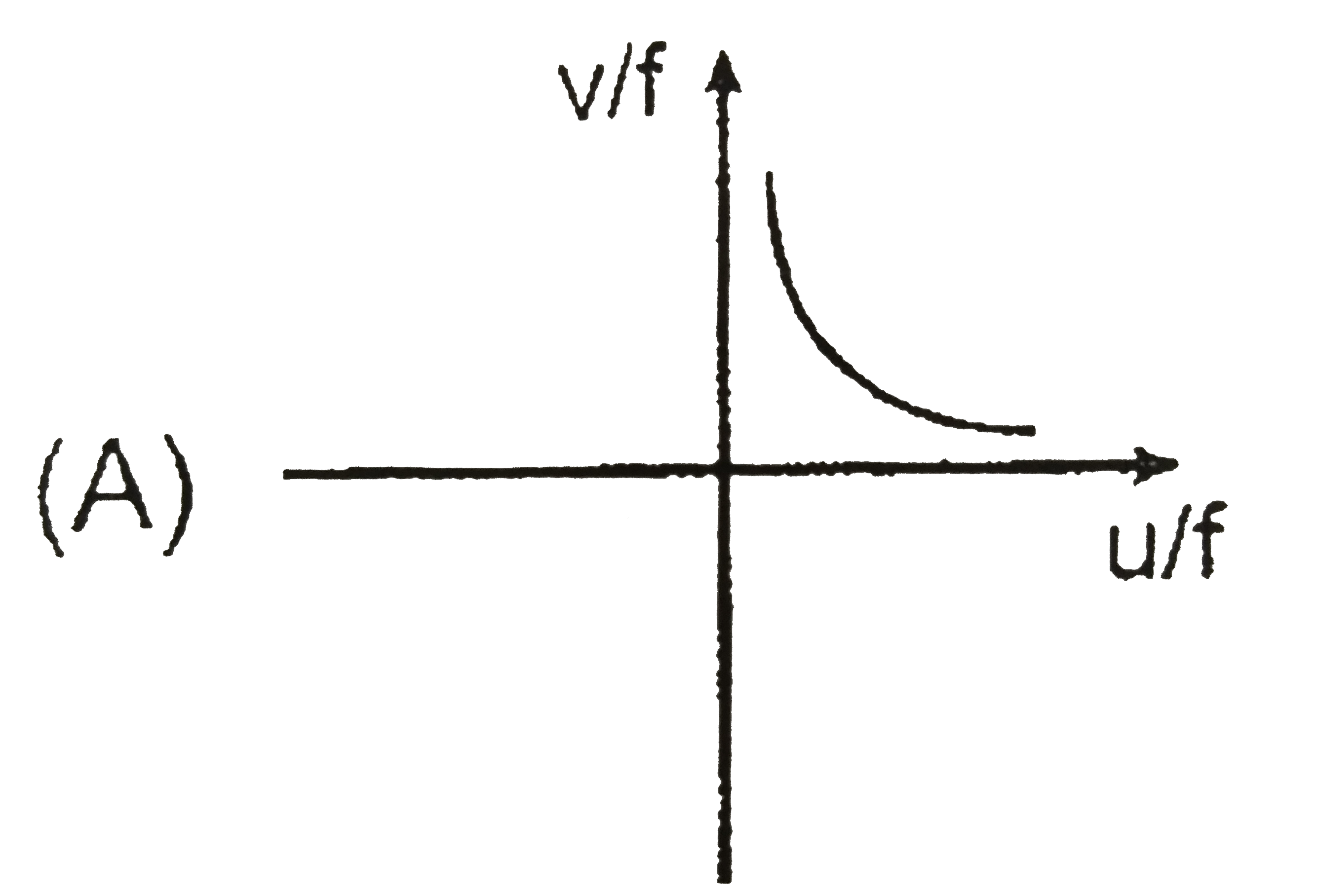
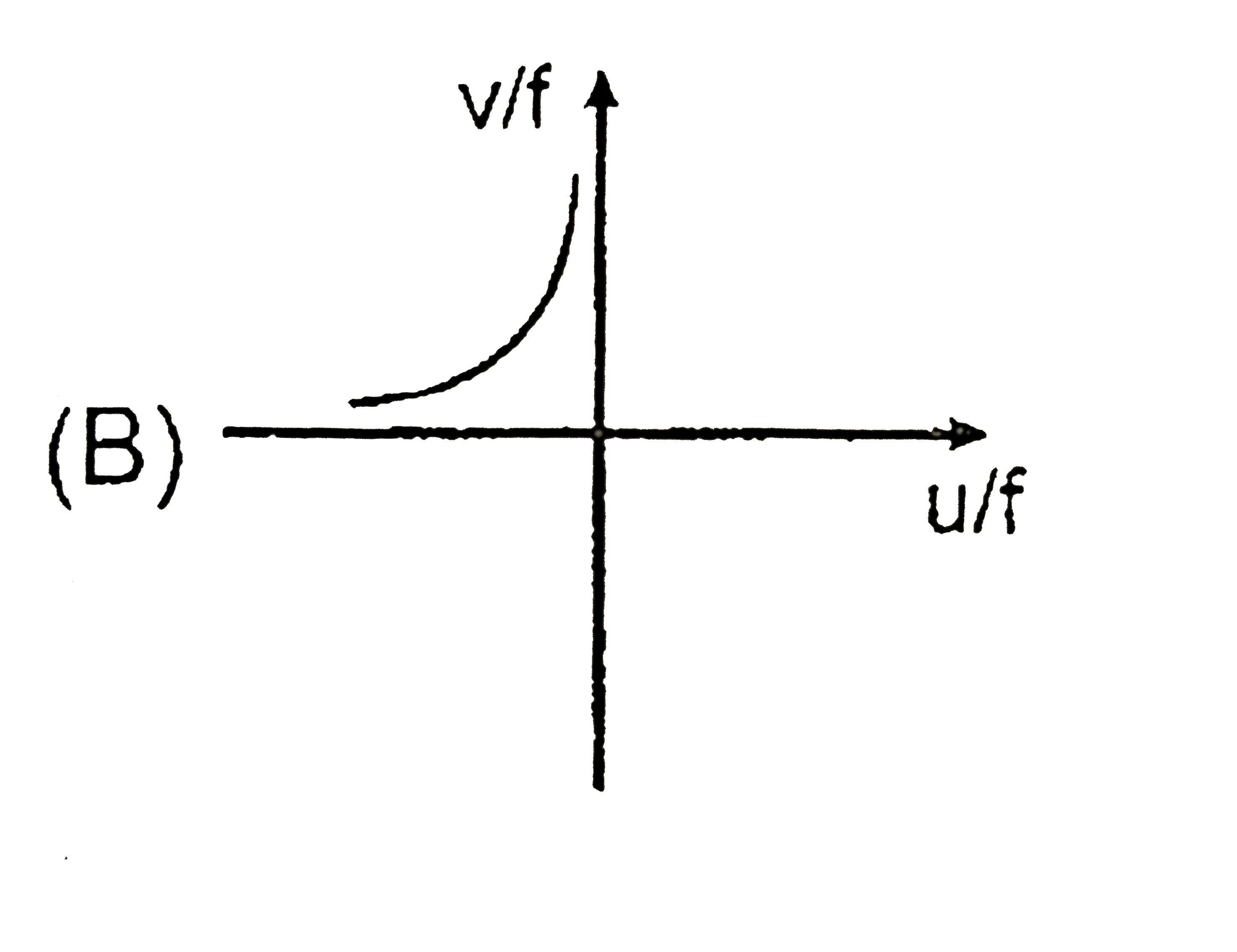
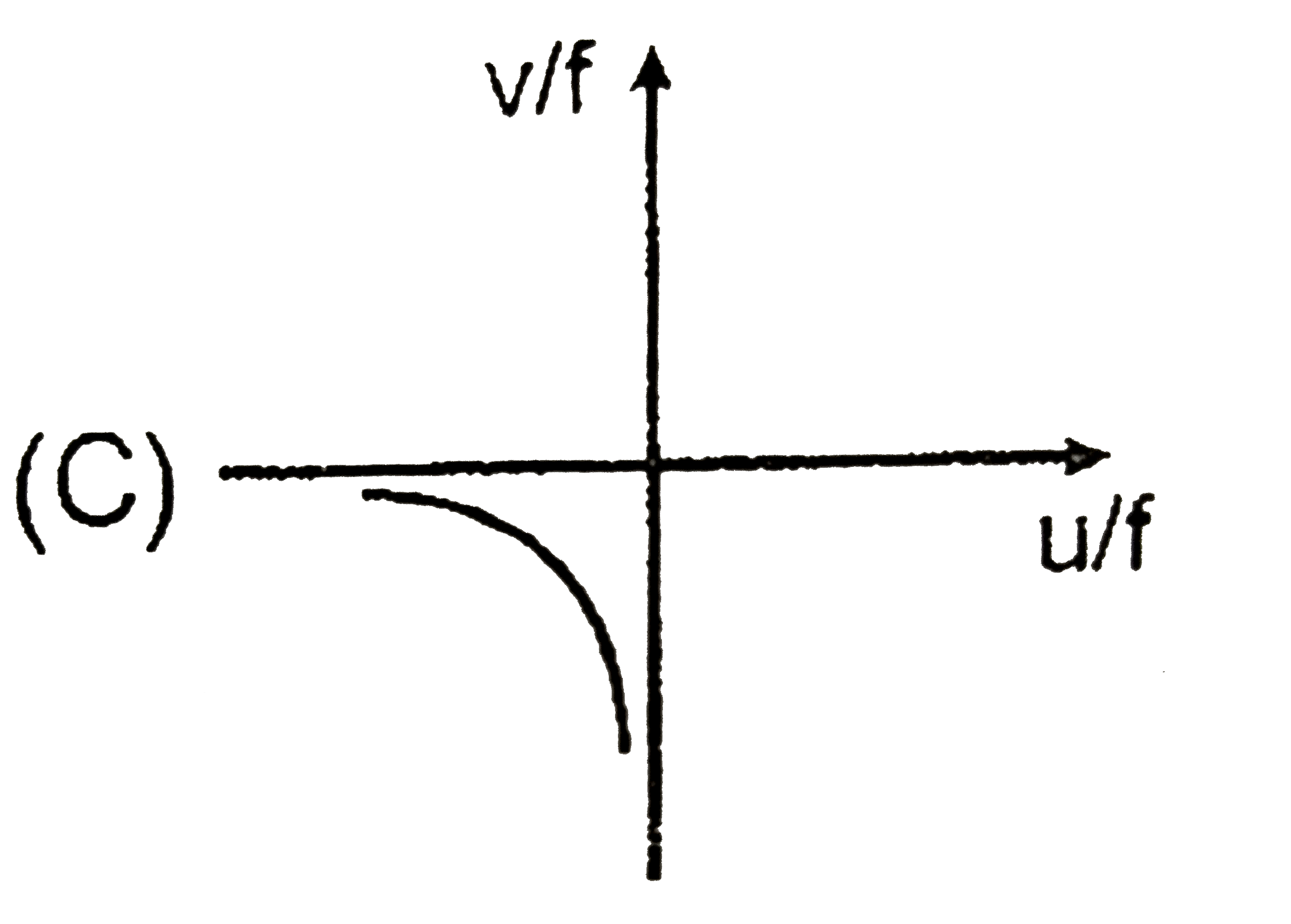
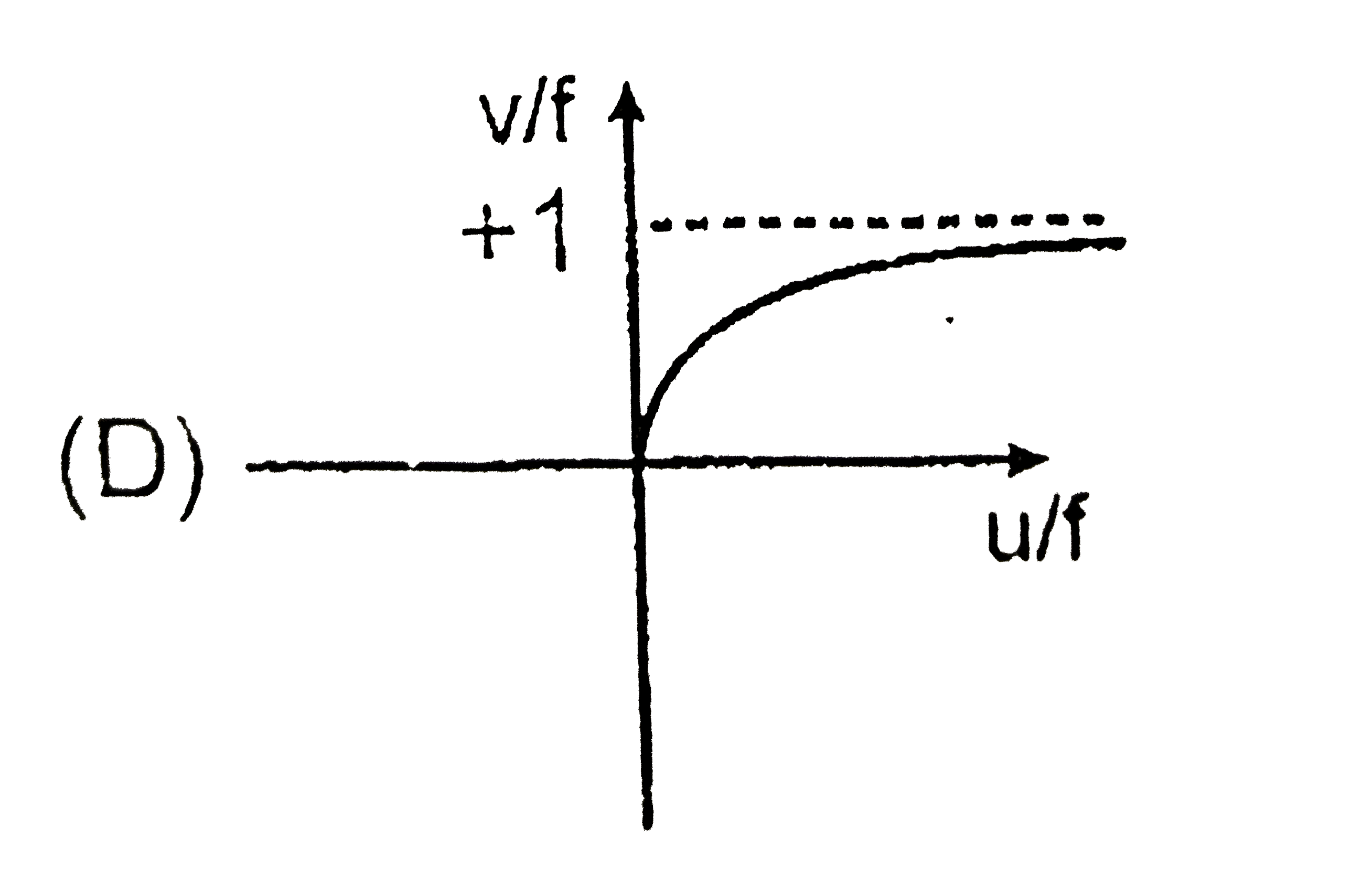
A virtual erect image by a diverging lens is repesented by (`u` ,`v` ,`f` , are coordinates)

A

B

C

D

Text Solution

Verified by Experts

The correct Answer is:

B

For vertical erect image by diverging lens.
`u`, `v` and `f` are negative
`therefore (u)/(f)=+ve` and `(v)/(f)=+ve`
`(1)/(f)=(1)/(v)-(1)/(u) 1=(f)/(v)-(f)/(u) (1)/(y)=(1)/(x)+1`
`y=(x)/(x+1)` since `x & y` and `+ve` graph lies in firstt quadrant. Also, at `x=0,y=0` and at `x=infty ,, y=1` Hence, `(D)`
Promotional Banner

Topper's Solved these Questions

  • GEOMATRICAL OPTICS

    RESONANCE|Exercise Exercise-2|63 Videos
  • GEOMATRICAL OPTICS

    RESONANCE|Exercise Exercise-3|79 Videos
  • GEOMATRICAL OPTICS

    RESONANCE|Exercise Problem|33 Videos
  • EXPERIMENTAL PHYSICS

    RESONANCE|Exercise PART -II|10 Videos
  • GRAVITATION

    RESONANCE|Exercise HIGH LEVEL PROBLEMS|16 Videos

Similar Questions

Explore conceptually related problems

A Galilean telescope obtains the erect final image by using a diverging lens of focal length 7.5 cm instead of an intermediate erecting lens. If the focal length of the objective is 150 cm, what is the separation between the objective and the eyepiece?

If a virtual, erect and enlarged image is formed by a lens, then which of the following options are correct?

a) Construct ray diagrams to illustrate the formation of a virtual image using i) a converging lens, and ii) a diverging lens. b) What is the difference between the two images formed above?

Which of the following form(s) a virtual and erect image for all positions of the object? (1) Convex lens (2) Concave lens (3) Convex mirror (4) Concave mirror

A 50 cm tall object is at a very large distance from a diverging lens. A virtual, erect and diminished image of the object is formed at a distance of 20 cm in front of the lens. How much is the focal length of the lens?

Assertion :- The minimum distance between a real object and its real image formed by a convex lens is 4f. Reason :- Convex mirror and concave lens form a virtual and erect image for all positions of the real object.

RESONANCE-GEOMATRICAL OPTICS -Exercise-1
  1. In the figure shown, there are two convex lenses L(1) and L(2) having ...

    Text Solution

    |

  2. An object is placed at a distance u from a concave mirror and its real...

    Text Solution

    |

  3. A virtual erect image by a diverging lens is repesented by (u ,v ,f , ...

    Text Solution

    |

  4. What should be the value of distance d so that final image is formed o...

    Text Solution

    |

  5. A thin linear object of size 1mm is kept along the principal axis of a...

    Text Solution

    |

  6. A biconvex lens is used to project a slide on screen. The slide is 2 c...

    Text Solution

    |

  7. The minimum distance between a real object and its real image formed b...

    Text Solution

    |

  8. Two planoconvex lenses each of the focal length of10cm&refractive inde...

    Text Solution

    |

  9. A plano-convex lens, when silvered at its plane surface is equivalent ...

    Text Solution

    |

  10. In the above question the radius of curvature of the curvature of the ...

    Text Solution

    |

  11. The focal length of a plano-concave lens is -10 cm , then its focal le...

    Text Solution

    |

  12. A convex lens of focal length 25 cm and a concave lens of focal length...

    Text Solution

    |

  13. The dispersion of light in a medium implies that :

    Text Solution

    |

  14. Critical angle of light passing from glass to air is minimum for

    Text Solution

    |

  15. A plane glass slab is placed over various coloured letters. The letter...

    Text Solution

    |

  16. A medium has nv = 1.56, nr=1.44. Then its dispersive power is:

    Text Solution

    |

  17. All the listed things below are made of flint glass. Which one of thes...

    Text Solution

    |

  18. Light of wavelenght 4000 A is incident at small angle on a prim of ape...

    Text Solution

    |

  19. A simple microscope has a focal length of 5 cm . The magnification at...

    Text Solution

    |

  20. In a compound microscope, the intermediate image is

    Text Solution

    |
