Text Solution
Verified by Experts
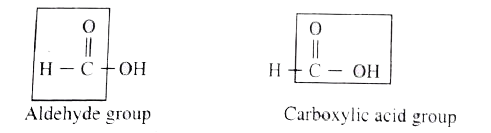



Topper's Solved these Questions
Similar Questions
Explore conceptually related problems
FULL MARKS-SAMPLE PAPER - 9 (SOLVED)-PART-IV
- (i) CO is more stable at higher temperature. Why ? (ii) How will you...
Text Solution
|
- (i) Give the balanced equation for the reaction between chlorine with ...
Text Solution
|
- (i) Discuss the ortho and pyro silicates. (ii) Compare lanthanides a...
Text Solution
|
- (i) Ni^(2+) is identified using alcoholic solution of dimethyl glyoxim...
Text Solution
|
- (i) What is meant by the term "coordination number"? What is the coord...
Text Solution
|
- (i) Explain about the hydrolysis of salt of strong base and weak acid....
Text Solution
|
- (i) What are lyophilic and lyophobic sols ? Give one example of each t...
Text Solution
|
- (i) How would you calculate the solubility of sparingly soluble salt u...
Text Solution
|
- (i) What are the uses of nitrobenzene ? (ii) Write a note on formati...
Text Solution
|
- (i) Define TFM value. (ii) Differentiate thermoplastic and thermoset...
Text Solution
|