Home
Class 11
PHYSICS
Which of the following x-t graphs does n...

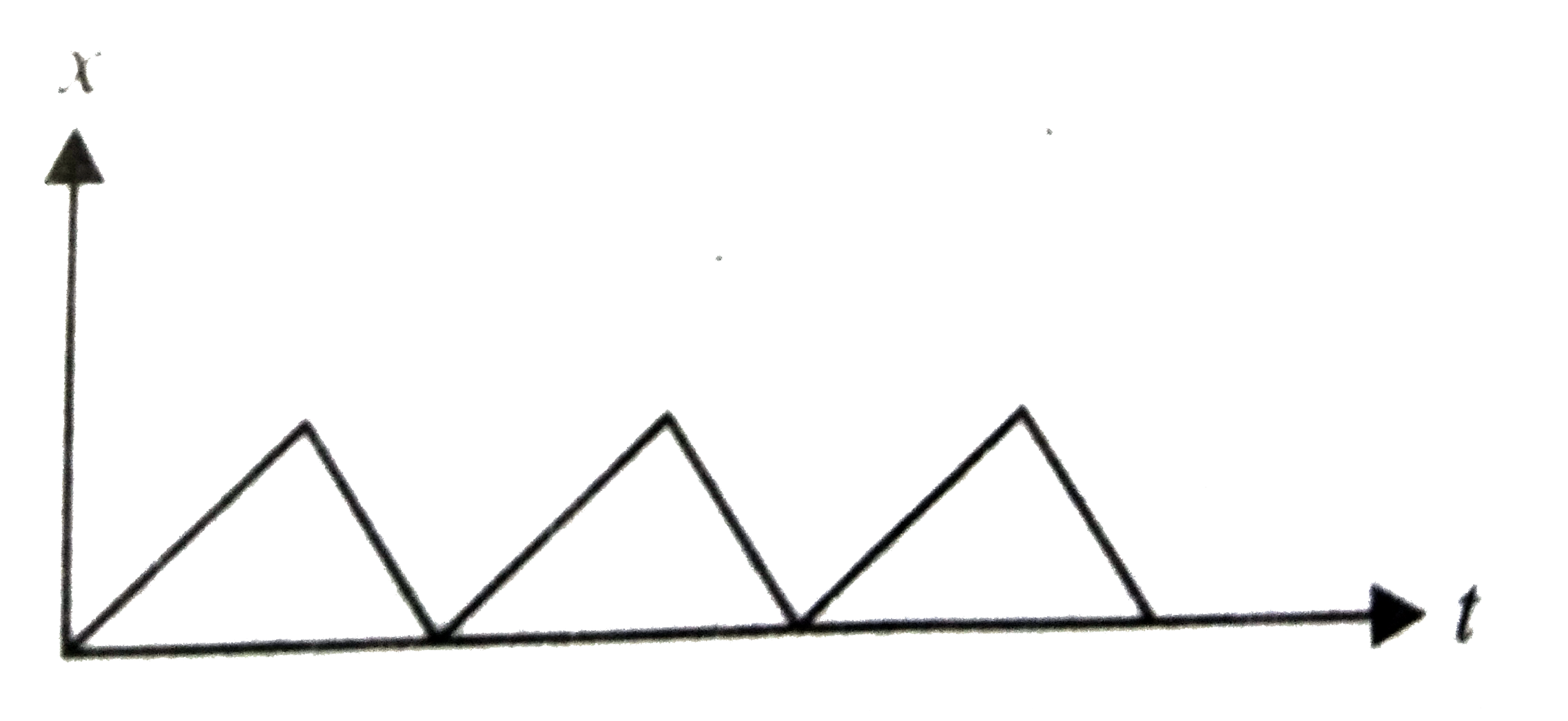
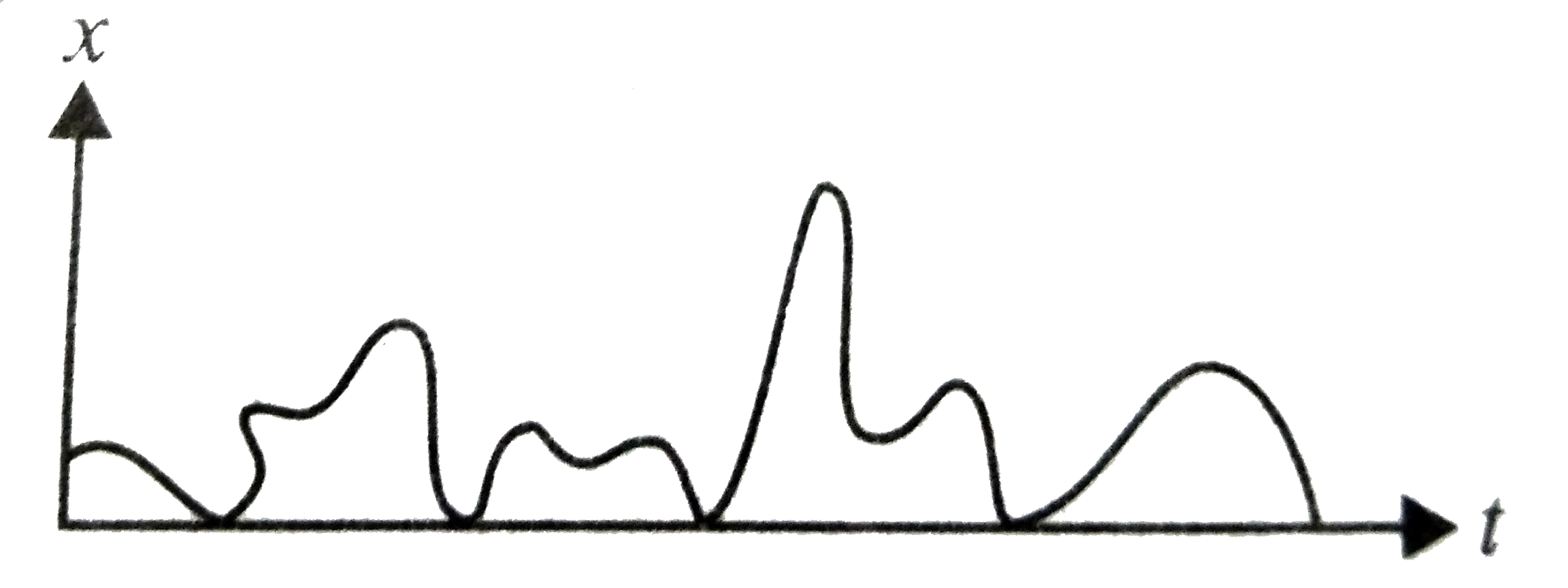
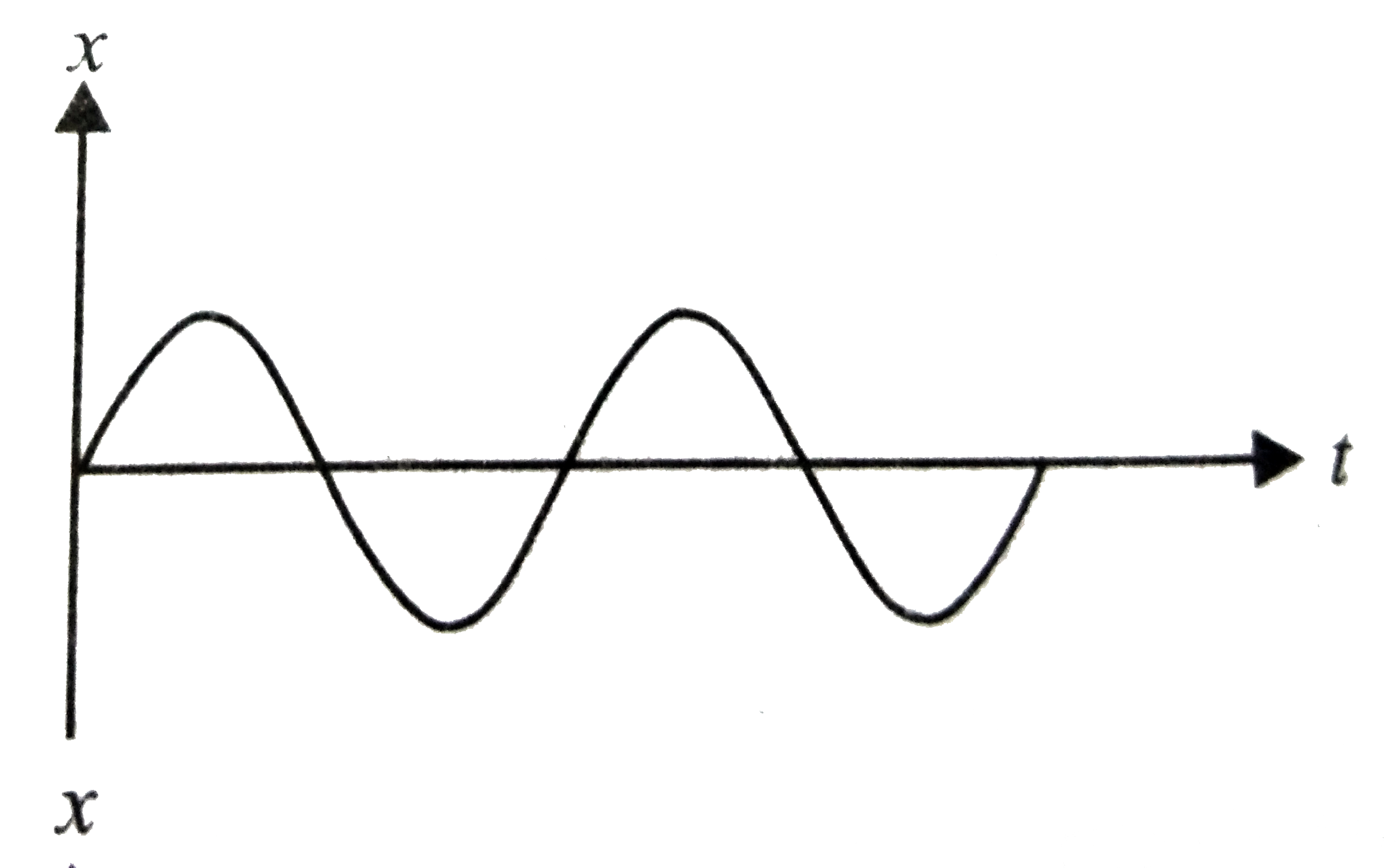
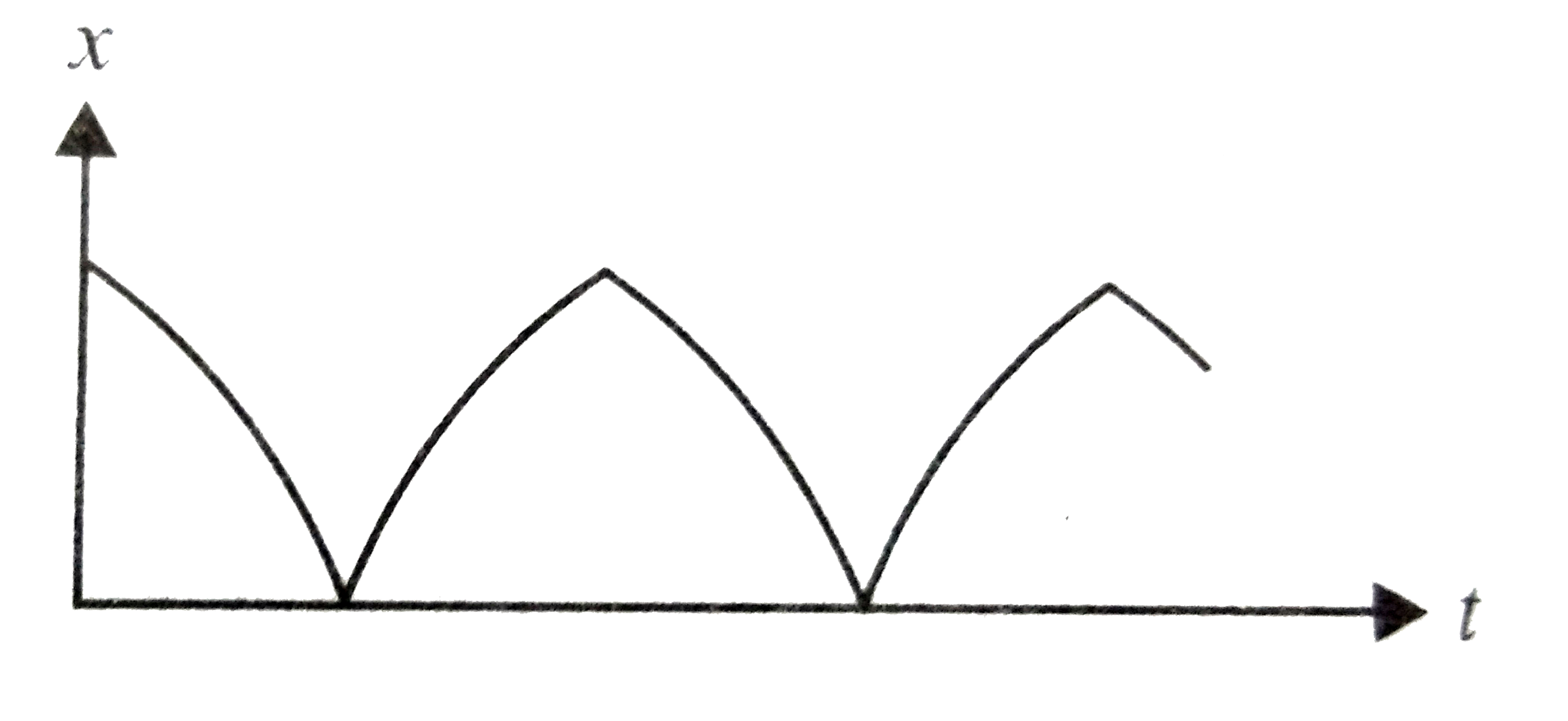
Which of the following x-t graphs does not represent periodic motion?

A

B

C

D

Text Solution

AI Generated Solution

The correct Answer is:

To determine which of the given x-t graphs does not represent periodic motion, we will analyze each option based on the definition of periodic motion. Periodic motion is characterized by the repetition of motion after a fixed interval of time, known as the time period (T). ### Step-by-Step Solution: 1. **Understand the Definition of Periodic Motion**: - Periodic motion is when an object returns to its initial position after a certain time interval (T). This means the graph must show a repeating pattern. 2. **Analyze Each Graph**: - **Option 1**: Check if the graph shows a repeating pattern. - If the graph has a consistent shape and returns to the same position after a certain time, it is periodic. - **Option 2**: Check if the graph shows a repeating pattern. - If the graph does not return to the same position or does not have a consistent shape, it is not periodic. - **Option 3**: Check if the graph shows a repeating pattern. - Similar to option 1, if it repeats consistently, it is periodic. - **Option 4**: Check if the graph shows a repeating pattern. - Again, if it returns to the same position after a certain time, it is periodic. 3. **Identify the Non-Periodic Graph**: - After analyzing all options, identify which graph does not exhibit periodic behavior. - In this case, upon examining the graphs, **Option 2** does not show any periodicity and does not return to the same position after a fixed time. 4. **Conclusion**: - Therefore, the graph that does not represent periodic motion is **Option 2**. ### Final Answer: Option 2 is the correct answer as it does not represent periodic motion.

To determine which of the given x-t graphs does not represent periodic motion, we will analyze each option based on the definition of periodic motion. Periodic motion is characterized by the repetition of motion after a fixed interval of time, known as the time period (T). ### Step-by-Step Solution: 1. **Understand the Definition of Periodic Motion**: - Periodic motion is when an object returns to its initial position after a certain time interval (T). This means the graph must show a repeating pattern. 2. **Analyze Each Graph**: ...
Promotional Banner

Topper's Solved these Questions

  • OSCILLATIONS

    NCERT FINGERTIPS ENGLISH|Exercise Higher Order Thinking Skills|8 Videos
  • OSCILLATIONS

    NCERT FINGERTIPS ENGLISH|Exercise Exemplar Problems|9 Videos
  • MOTION IN A STRAIGHT LINE

    NCERT FINGERTIPS ENGLISH|Exercise NCERT Exemplar|6 Videos
  • PHYSICAL WORLD

    NCERT FINGERTIPS ENGLISH|Exercise Assertion And Reason|10 Videos

Similar Questions

Explore conceptually related problems

Which of the following pairs of graphs does not represent the motion of he same particle in the same interval (curves are parabollic) :-

A particle is thrown vertically upwards with a velocity v . It returns to the ground in time T. which of the following graphs correctly represents the motion ?

Which of the following velocity-time graphs represent uniform motion

Which of the following curves does not represent motion in one dimensions?

The graph shown the variation with times t of the velocity v of an object . Which one of the following graphs best represents the variation of acceleration a of the object with time t ?

Which of the following graphs best represents the variation of acceleration 'a' with displacement x?

As the expression in ivolving sine function , which of the following equations does not represent a simple harmonic motion ?

Which of the following graph represents Boyle's law ?

Which of the following graphs cannot possibly represent one dimensional motion of a particle. .

NCERT FINGERTIPS ENGLISH-OSCILLATIONS -Assertion And Reason
  1. Which of the following x-t graphs does not represent periodic motion?

    Text Solution

    |

  2. Assertion: The motion of the earth around the sun is perriodic but not...

    Text Solution

    |

  3. Assertion: A combination of two simple harmonic motions with a arbitra...

    Text Solution

    |

  4. Assertion: The motion of a simple pendulum is simple harmoni for all a...

    Text Solution

    |

  5. Assertion: Simple harmonic motion is the projection of uniform circula...

    Text Solution

    |

  6. Assertion: The graph of total energy of a particle in SHM with respect...

    Text Solution

    |

  7. Assertion: If the amplitude of a simple harmonic oscillator is doubled...

    Text Solution

    |

  8. Assertion: Every periodic motion is not simple harmonic motion. Reas...

    Text Solution

    |

  9. Assertion: A block of small mass m attached to a stiff spring will hav...

    Text Solution

    |

  10. Assertion: In damped oscillation, the energy of the system is dissipat...

    Text Solution

    |

  11. Assertion: In forced oscillations, th steady state motion of the parti...

    Text Solution

    |

  12. Assertion: An earthquake will not cause uniform damage to all building...

    Text Solution

    |

  13. Assertion: A child in a garden swing periodically presses his feet aga...

    Text Solution

    |

  14. Assertion: The skill in swinging to greater heights lies in the synchr...

    Text Solution

    |

  15. Assertion: In the ideal case of zero damping, the amplitude of simpl h...

    Text Solution

    |

  16. Assertion : The amplitude of oscillation can never be infinite. Reas...

    Text Solution

    |
