Home
Class 11
CHEMISTRY
In this paragraph, some statements are g...

In this paragraph, some statements are given based on isomerism. Read the following statements given for every question and provide the answer.
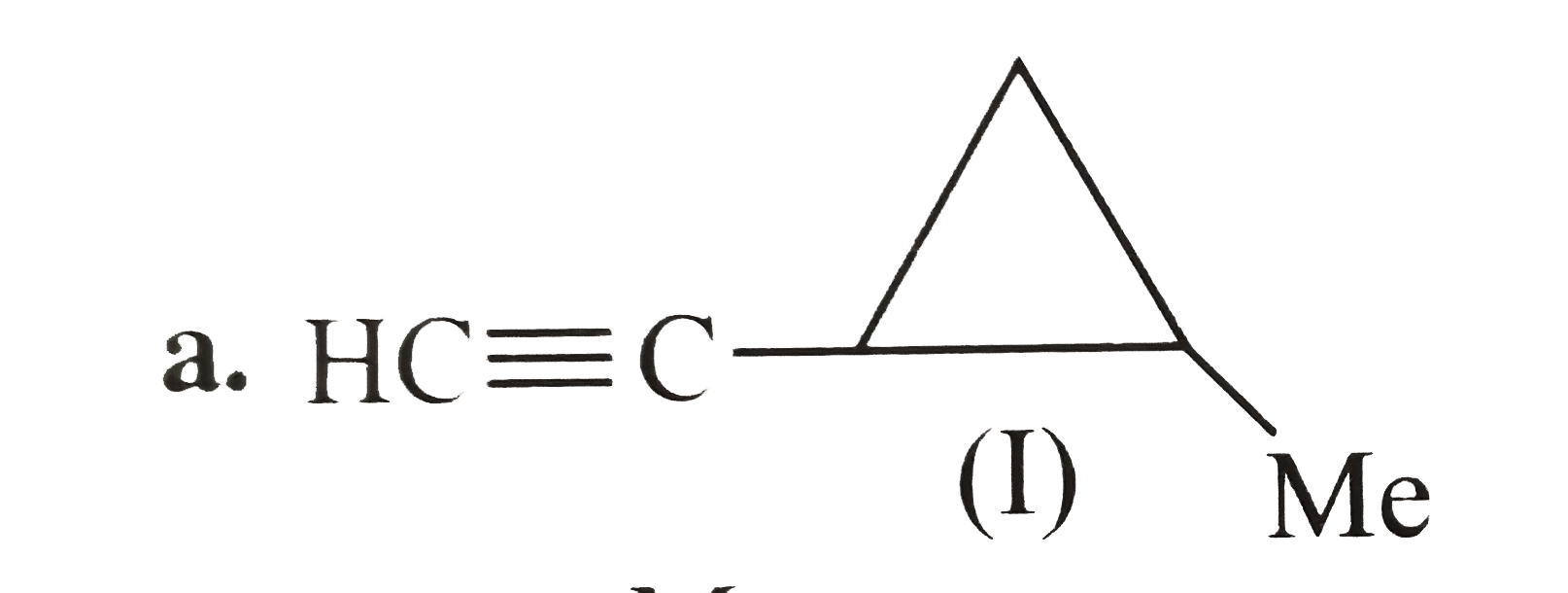
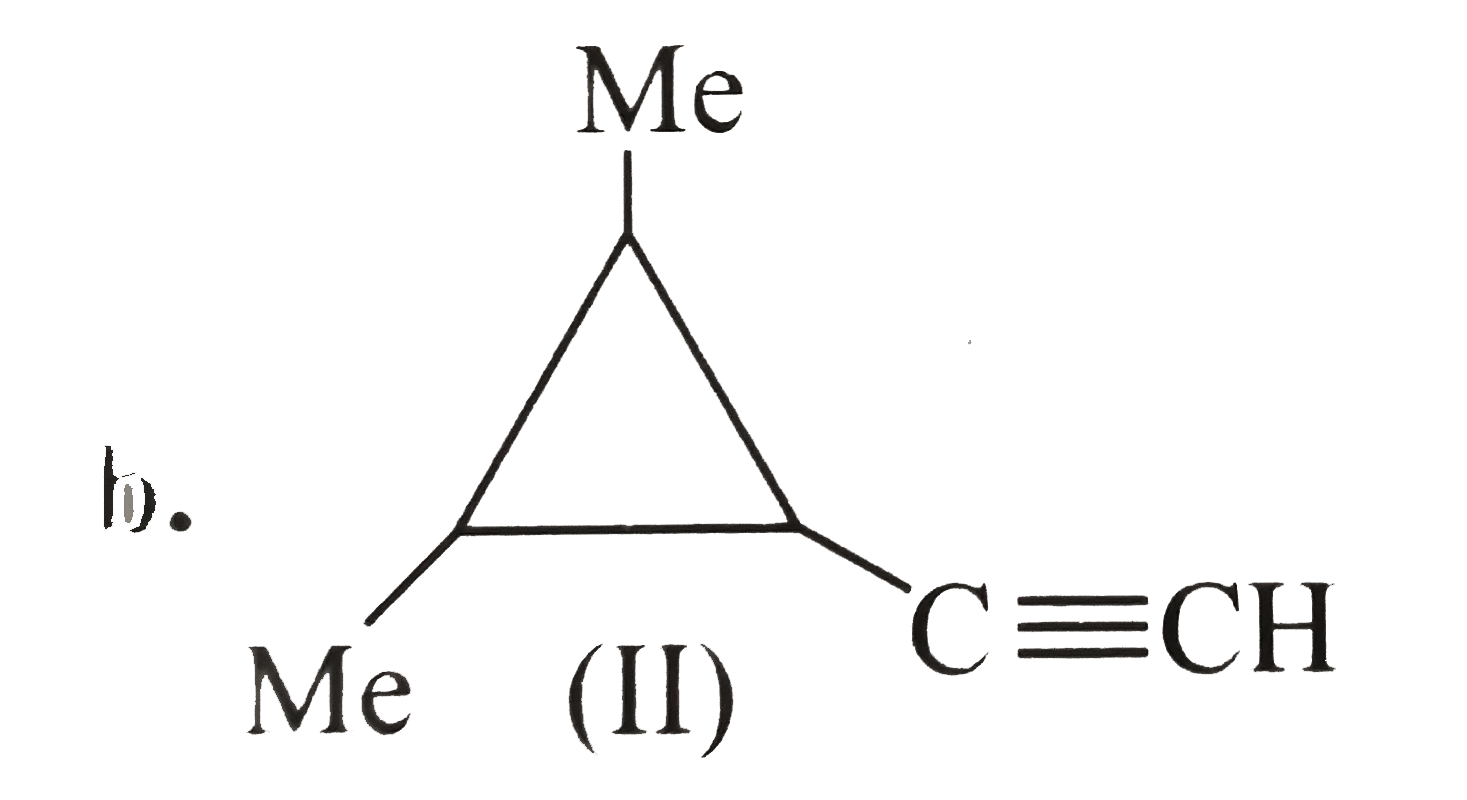
Which of the following structrues of a cyclic alkene with the lowest number of `C` atoms shows both geometrical and optical isomerism?

A

B

C

Both

D

None

Text Solution

AI Generated Solution

The correct Answer is:

To solve the question regarding which cyclic alkene structure shows both geometrical and optical isomerism with the lowest number of carbon atoms, we can follow these steps: ### Step 1: Identify the Structures We need to analyze the given cyclic compounds A and B. We should focus on their carbon atom counts and their potential for geometrical and optical isomerism. ### Step 2: Count the Carbon Atoms - For **Compound A**: - The structure includes a cyclopropane ring with additional substituents. - Count the carbon atoms: 1 (from the ring) + 1 (from the methyl group) + 4 (from the ethynyl group) = **6 carbon atoms**. - For **Compound B**: - The structure also includes a cyclic component with substituents. - Count the carbon atoms: 1 (from the ring) + 6 (from the substituents) = **7 carbon atoms**. ### Step 3: Determine Geometrical Isomerism - **Geometrical Isomerism**: This occurs in compounds with restricted rotation around a double bond or in cyclic structures. - **Compound A** can exist in both cis and trans forms due to the presence of substituents on the ring, which allows for geometrical isomerism. - **Compound B** also shows geometrical isomerism, but we need to check the optical isomerism next. ### Step 4: Determine Optical Isomerism - **Optical Isomerism**: This occurs when a compound lacks a plane of symmetry or a center of symmetry, making it chiral. - For **Compound A**: The cis form of Compound A does not have a plane of symmetry or a center of symmetry, making it optically active. The trans form also lacks symmetry, thus it is also optically active. - For **Compound B**: The cis form has a plane of symmetry, making it optically inactive, while the trans form is optically active. However, since we are looking for a compound that shows both types of isomerism, Compound B does not satisfy this requirement. ### Step 5: Conclusion Since Compound A has 6 carbon atoms and shows both geometrical and optical isomerism, it is the correct answer. Compound B, while showing geometrical isomerism, does not show optical isomerism in both forms. ### Final Answer The structure of a cyclic alkene with the lowest number of carbon atoms that shows both geometrical and optical isomerism is **Compound A**. ---
Promotional Banner

Topper's Solved these Questions

  • ISOMERISM

    CENGAGE CHEMISTRY ENGLISH|Exercise Multiple choice questions (Exercise)|38 Videos
  • ISOMERISM

    CENGAGE CHEMISTRY ENGLISH|Exercise Single correct answer type|13 Videos
  • ISOMERISM

    CENGAGE CHEMISTRY ENGLISH|Exercise Exercise|19 Videos
  • IONIC EQUILIBRIUM

    CENGAGE CHEMISTRY ENGLISH|Exercise Archives Subjective|28 Videos
  • NCERT BASED EXERCISE

    CENGAGE CHEMISTRY ENGLISH|Exercise Chemical Equilibrium|73 Videos

Similar Questions

Explore conceptually related problems

In this paragraph, some statements are given based on isomerism. Read the following statements given for every question and provide the answer. Which of the following cyclic dienes does not show geometrical isomerism?

Which of the following compound can show both optical and geometrical isomerism :

Which of the following complex(s) can not exhibit both geometrical and optical isomerism?

Which of the following can show both tautomerism and optical isomerism

Give the structrues of six C atom cyclic diene with lowest molecular mass that shows only geometrical isomers (diastereomers) and not optical isomers.

Given a+b+c+d = 0 which of the following statement is incorrect

Given a +b+c+d=0 which of the following statement is incorrect

Give the structural formula of a cyclic alkyne with the lowest number of C atoms and showing: a. Both geometrical and optical isomerisms. b. Geometrical isomerism with meso stereoisomers.

Given a+b+c+d=0 . Which of the following statements(s) is (are) correct?

In which of the following pairs both the complexes show geometrical isomerism?
