Home
Class 12
CHEMISTRY
Which of the following compounds on oxid...

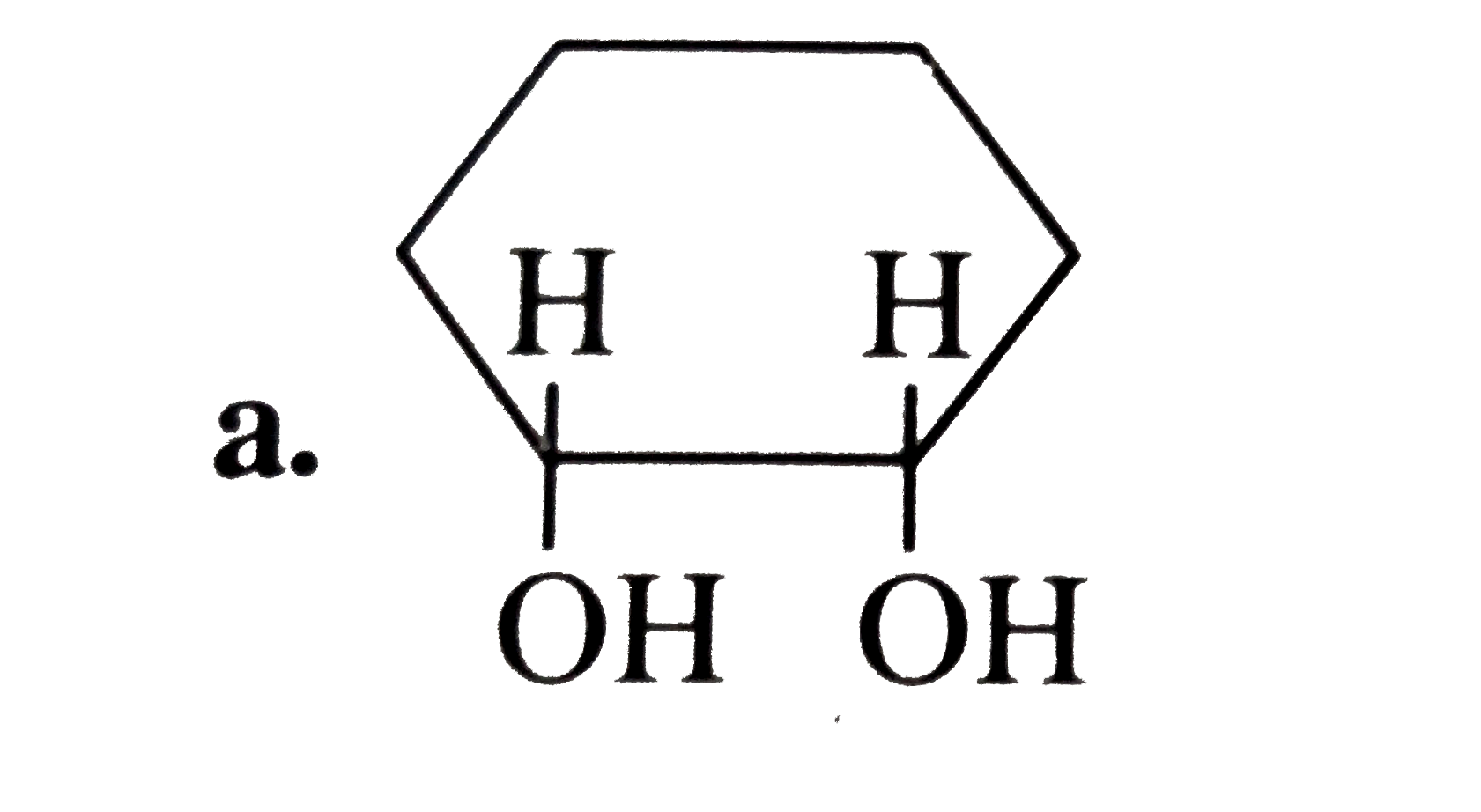
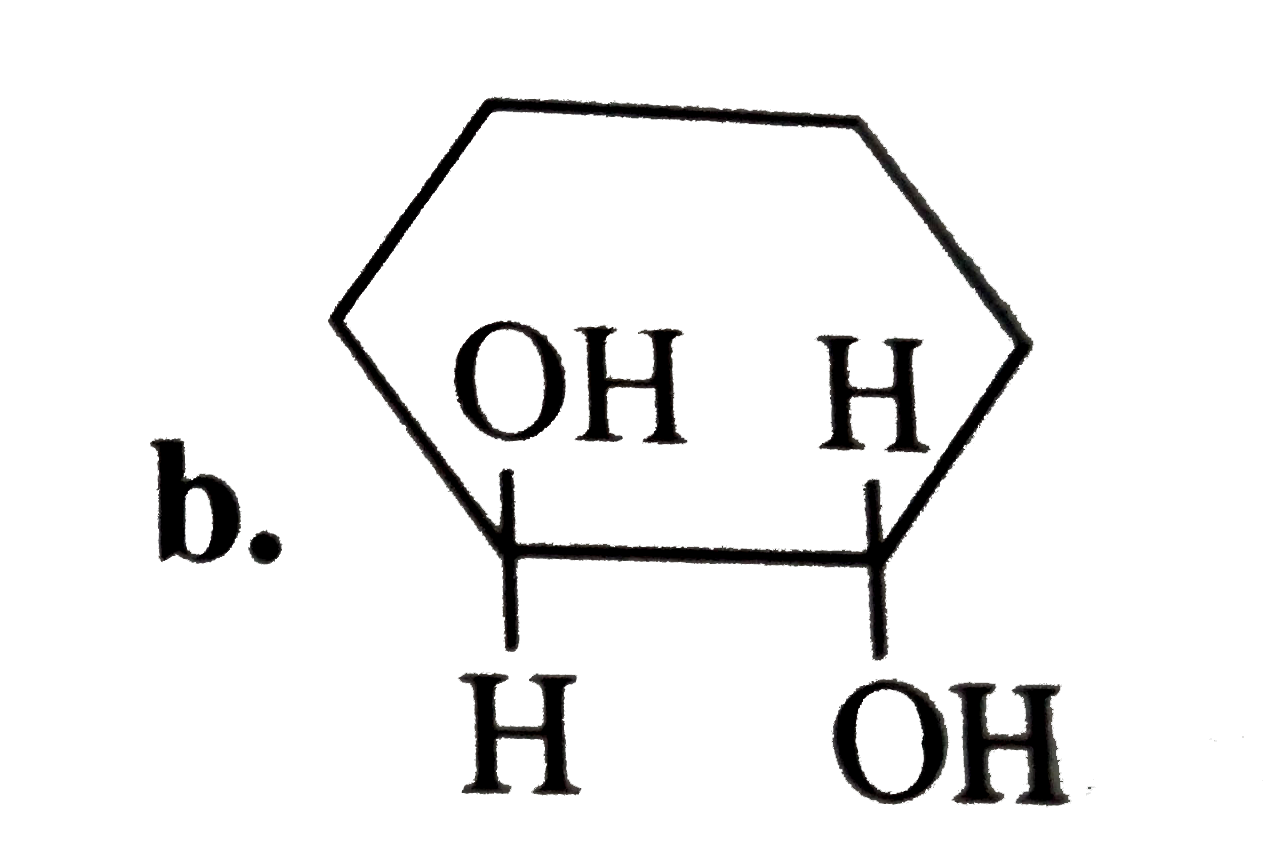
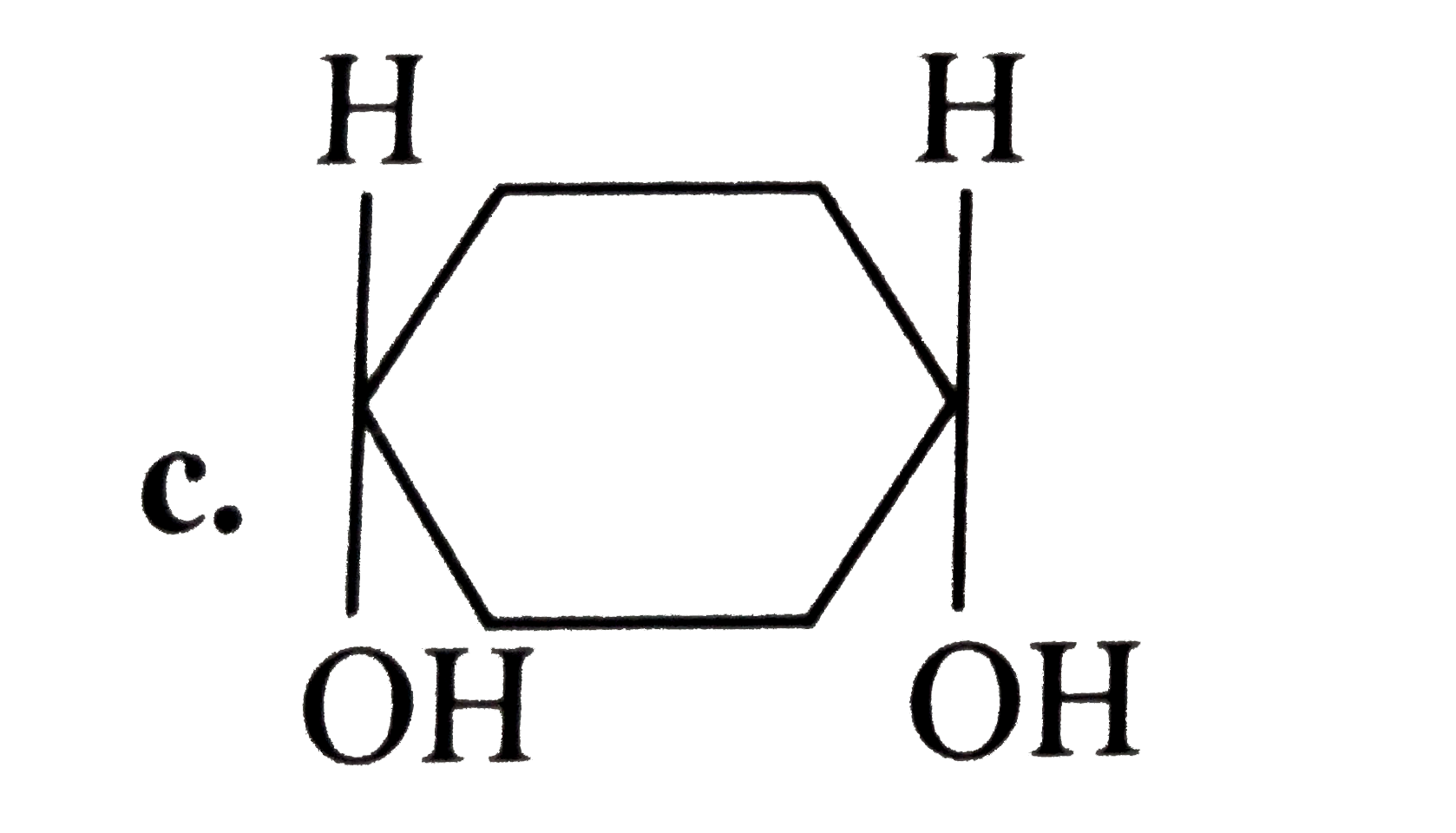
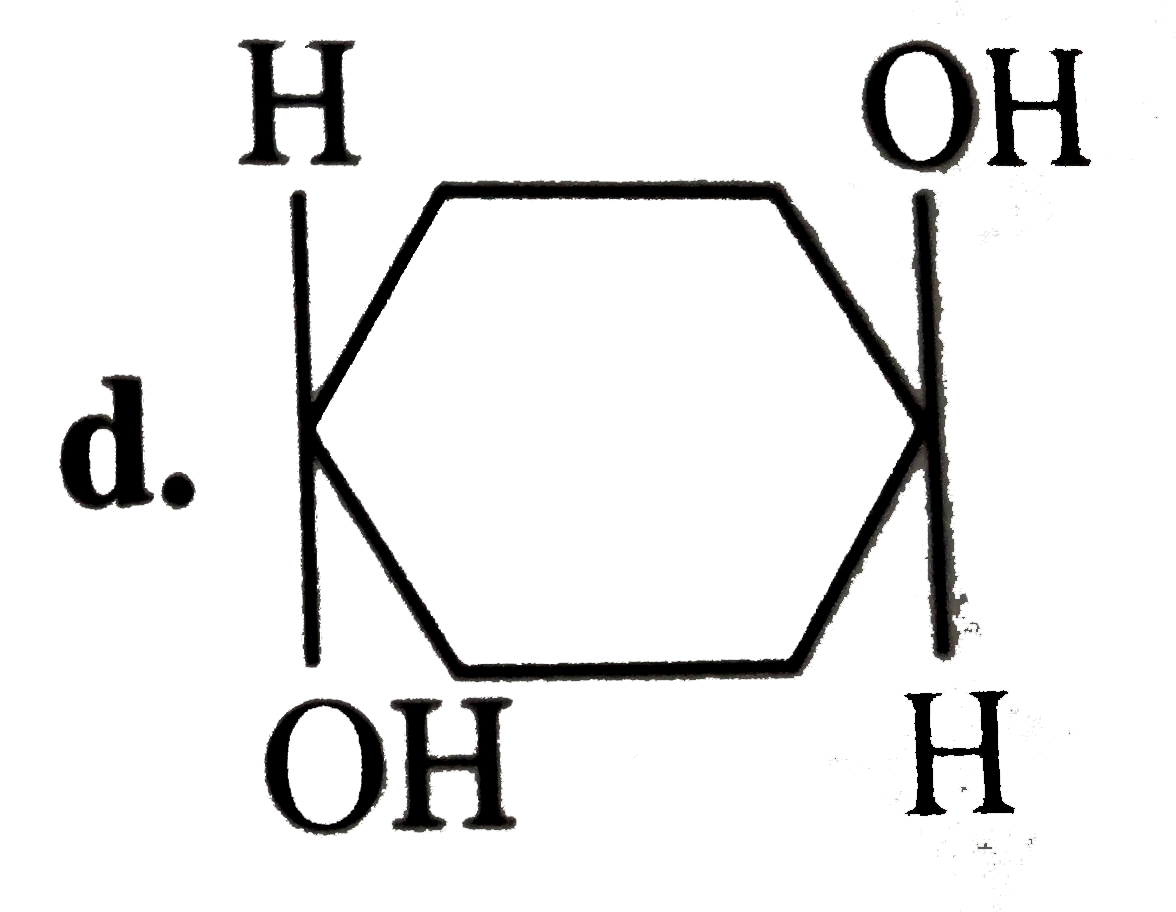
Which of the following compounds on oxidation with `(CH_(3)COO)_(4)` Pd would give the product `OHC(CH_(2))_(4)CHO` ?

A

B

C

D

Text Solution

AI Generated Solution

The correct Answer is:

To determine which compound, when oxidized with lead tetraacetate \((CH_3COO)_4Pd\), yields the product \(OHC(CH_2)_4CHO\), we need to analyze the structure of the desired product and the requirements for the oxidation reaction. ### Step-by-Step Solution: 1. **Identify the Desired Product**: The product is \(OHC(CH_2)_4CHO\). This indicates that we have a compound with two aldehyde groups (–CHO) and a central carbon atom that is connected to four carbon atoms (–C(CH_2)_4–). 2. **Understand the Reaction Mechanism**: The oxidation with lead tetraacetate typically involves the cleavage of vicinal diols (1,2-diols) to form aldehydes or ketones. The reaction proceeds through a cyclic intermediate and requires syn addition, meaning that the hydroxyl groups must be added to adjacent carbons in a specific orientation. 3. **Check for Vicinal Diols**: We need to find a compound that contains vicinal diols, as this is a prerequisite for the reaction with lead tetraacetate. The diols must be on adjacent carbon atoms. 4. **Evaluate the Options**: - **Option A**: If this compound has vicinal diols in a syn configuration, it could potentially lead to the desired product. - **Option B**: If this compound has trans addition of hydroxyl groups, it cannot produce the desired product. - **Option C**: If the diols are not vicinal, it cannot yield the desired product. - **Option D**: Similar to option B, if it has trans addition, it cannot yield the desired product. 5. **Select the Correct Compound**: After evaluating the options, we find that **Option A** contains vicinal diols in a syn configuration, making it the correct choice. When oxidized with lead tetraacetate, it will yield the desired product \(OHC(CH_2)_4CHO\). ### Conclusion: The correct compound that, upon oxidation with lead tetraacetate, gives the product \(OHC(CH_2)_4CHO\) is **Option A**. ---

To determine which compound, when oxidized with lead tetraacetate \((CH_3COO)_4Pd\), yields the product \(OHC(CH_2)_4CHO\), we need to analyze the structure of the desired product and the requirements for the oxidation reaction. ### Step-by-Step Solution: 1. **Identify the Desired Product**: The product is \(OHC(CH_2)_4CHO\). This indicates that we have a compound with two aldehyde groups (–CHO) and a central carbon atom that is connected to four carbon atoms (–C(CH_2)_4–). 2. **Understand the Reaction Mechanism**: ...
Promotional Banner

Topper's Solved these Questions

  • ALIPHATIC AND AROMATIC ALDEHYDES AND KETONES

    CENGAGE CHEMISTRY ENGLISH|Exercise Exercises Single Correct|71 Videos
  • ALIPHATIC AND AROMATIC ALDEHYDES AND KETONES

    CENGAGE CHEMISTRY ENGLISH|Exercise Exercises Assertion-Reasoning|6 Videos
  • ALIPHATIC AND AROMATIC ALDEHYDES AND KETONES

    CENGAGE CHEMISTRY ENGLISH|Exercise Exercises Linked Comprehension|59 Videos
  • ALCOHOL,PHENOL AND ETHERS

    CENGAGE CHEMISTRY ENGLISH|Exercise Archives Analytical And Descriptive|15 Videos
  • APPENDIX INORGANIC VOLUME 2

    CENGAGE CHEMISTRY ENGLISH|Exercise Short Answer Type|179 Videos

Similar Questions

Explore conceptually related problems

Which one of the following compounds gives acetone (CH_(3))_(2)C=O as one of the product of its ozonlysis?

Which one of the following two compounds will give Haloform reaction and why ? CH_(3)CHO,HCHO

Which of the following compounds can form carbanion easily ? I. CH_(3)CH_(2) II. CH_(3)CHO III. CH_(3)CH_(2)Cl IV. The correct choice is :

Write IUPAC name of the following compound : CH_(3)CH_(2)CH(CHO)CH_(2)COOH

Identify the correct order of boiling points of the following compounds: underset(1)(CH_(3)CH_(2)CH_(2)CH_(2)OH) , underset(2)(CH_(3)CH_(2)CH_(2)CHO) underset(3)(CH_(3)CH_(2)CH_(2)COOH)

Convert CH_(3)CHO into the following compounds: a. b.

Give the IUPAC name of the following compounds: (i) CH_(3)COCH(CH_(3))_(2) , (ii) CH_(3)CH(OH)CH_(2)CHO ,

Give the IUPAC names of the following compounds : CH_(3)CH(CH_(3))CH_(2)CH_(2)CHO

CENGAGE CHEMISTRY ENGLISH-ALIPHATIC AND AROMATIC ALDEHYDES AND KETONES-Exercises Multiple Correct
  1. Which of the following reaction are correct?

    Text Solution

    |

  2. Which of the statements are correct about the given reaction ?

    Text Solution

    |

  3. Which of the following compounds on oxidation with (CH(3)COO)(4) Pd w...

    Text Solution

    |

  4. Which of the following statements are correct about the following reac...

    Text Solution

    |

  5. Which of the following reactions would give propanal ?

    Text Solution

    |

  6. Which of the statements are about the following reaction ?

    Text Solution

    |

  7. Which of the following would undergo Aldol condensation ?

    Text Solution

    |

  8. Which of the statements are correct about the internal or intramolecul...

    Text Solution

    |

  9. Which of the methods are better in the synthesis of the following comp...

    Text Solution

    |

  10. Which of the following are correct reactions ?

    Text Solution

    |

  11. Which of the following are crossed aldol products in the given reactio...

    Text Solution

    |

  12. Which of the statements are correct about the reaction ? (A) overs...

    Text Solution

    |

  13. Which of the following statements are correct about the reaction given...

    Text Solution

    |

  14. Which of the following are correct reactions ?

    Text Solution

    |

  15. Which of the following statements are correct about the bisulphite add...

    Text Solution

    |

  16. Which of the statements are correct about the following reactions ? ...

    Text Solution

    |

  17. Which of the following are Perkin reactions ?

    Text Solution

    |

  18. Which of the following are correct reactions ?

    Text Solution

    |

  19. Which of the following statements are true about the benzoin reaction ...

    Text Solution

    |

  20. Give a reaction where Lead iodide is formed as one of the product.

    Text Solution

    |
