Home
Class 12
CHEMISTRY
Among the following, the least and the b...

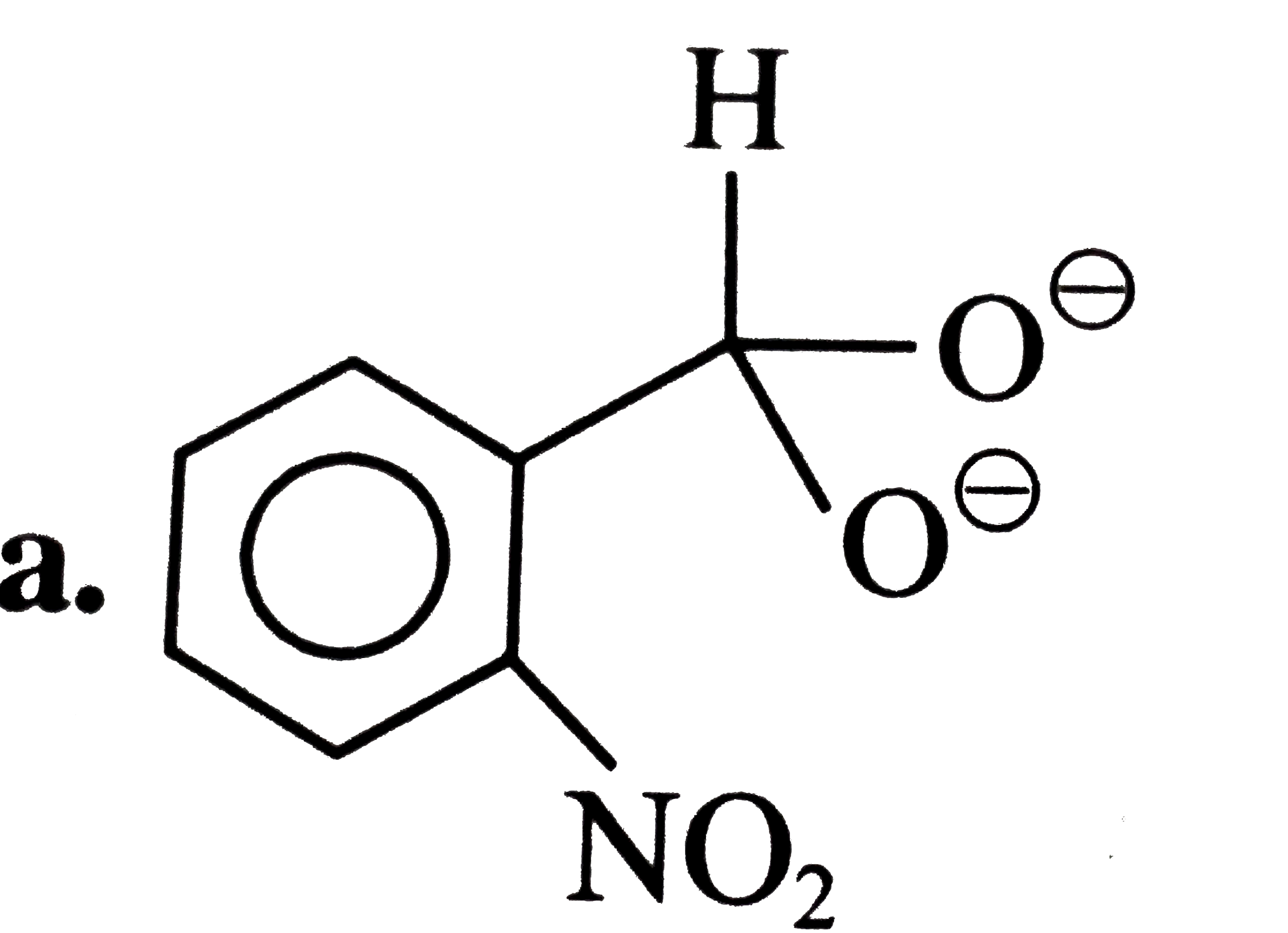
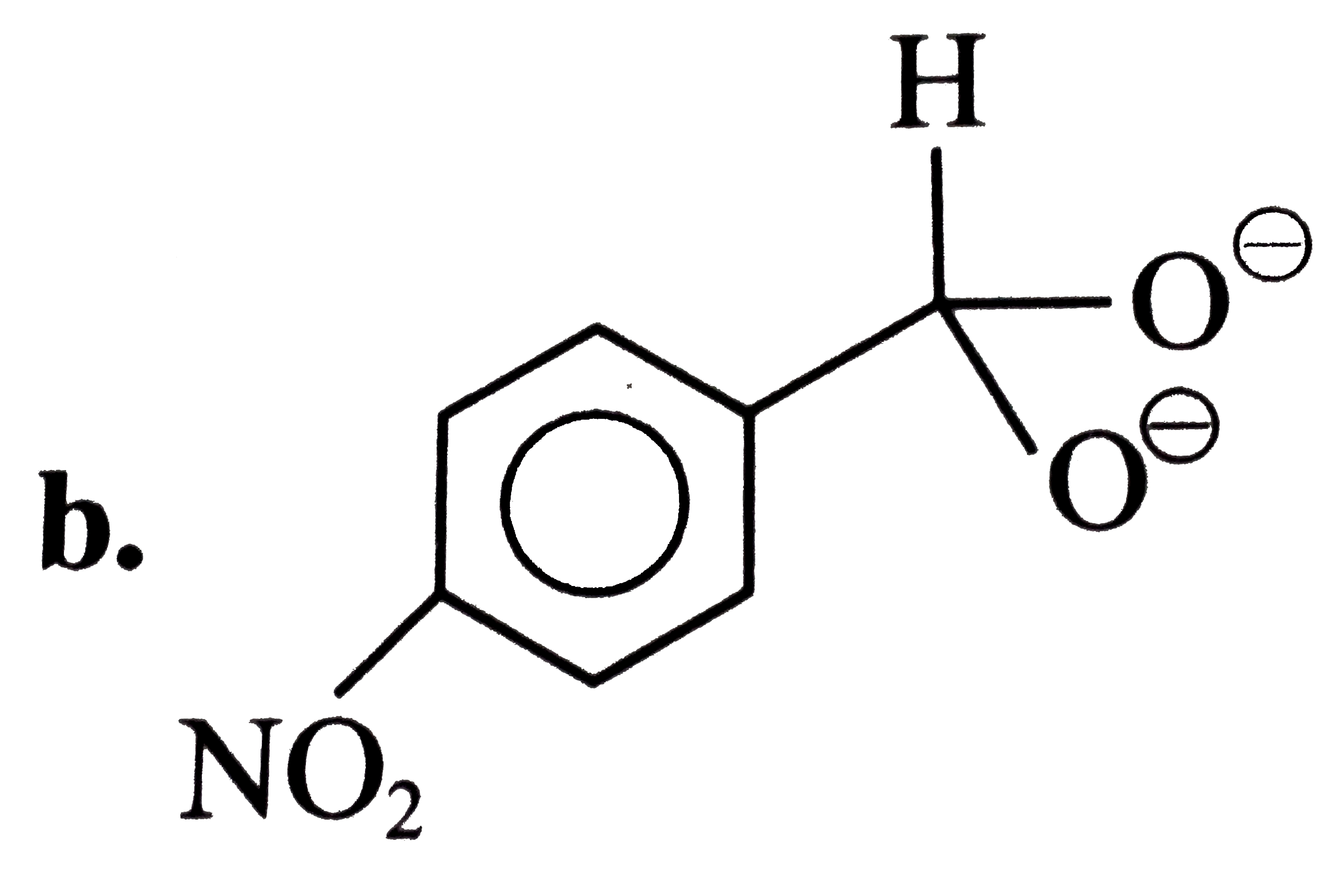
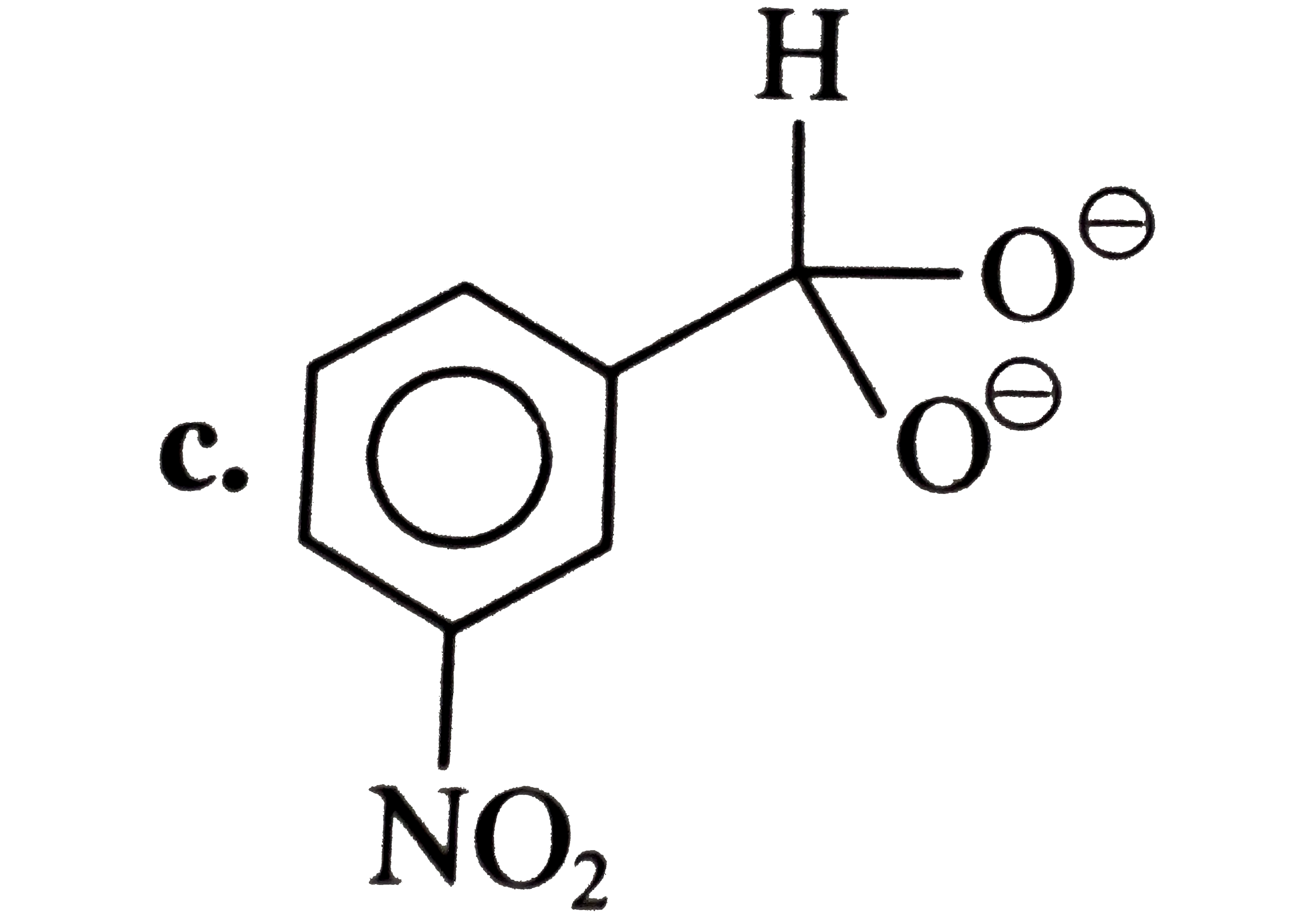
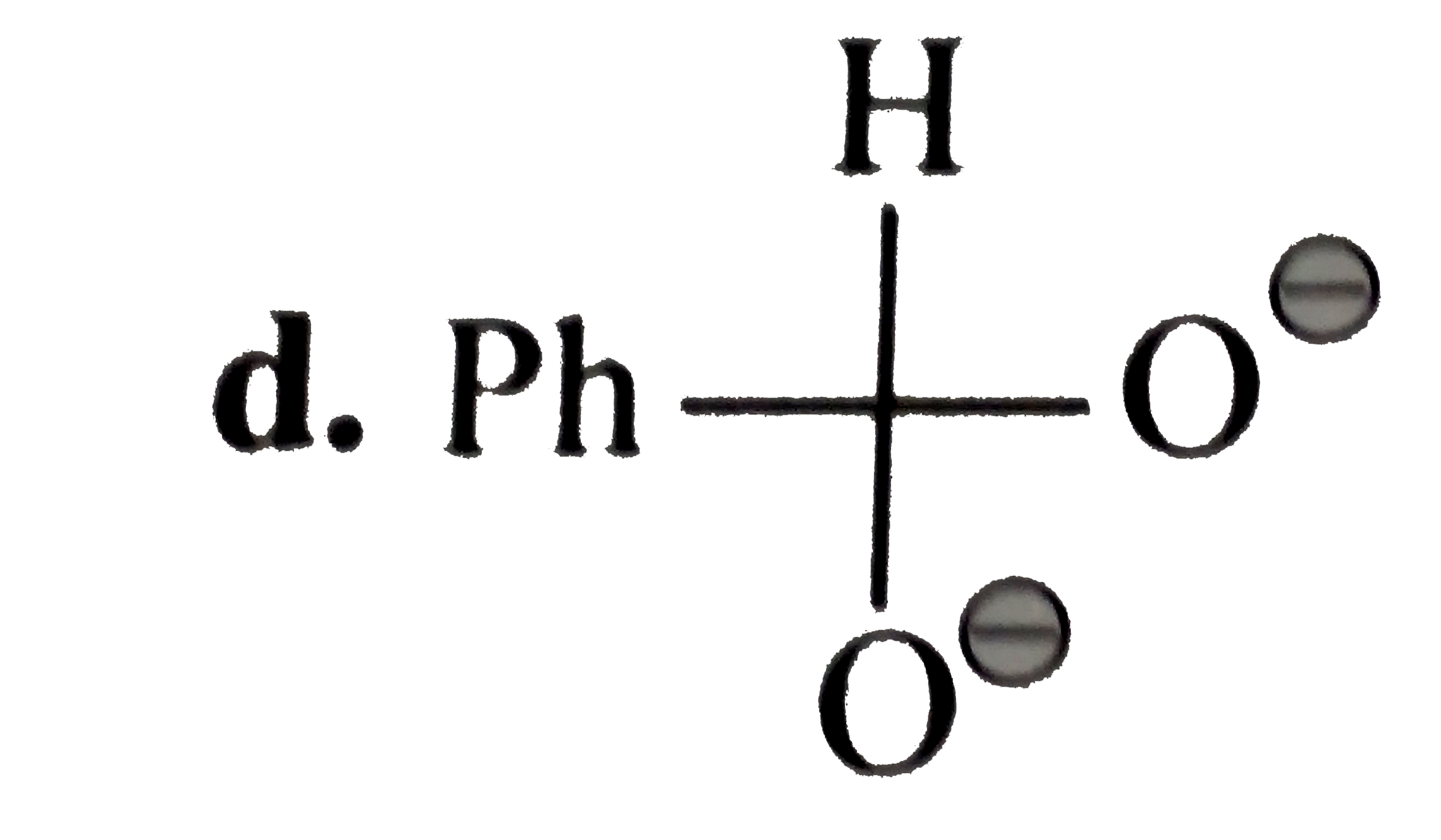
Among the following, the least and the best `H^(Θ)` ion donor, respectively, are:

A

B

C

D

Text Solution

AI Generated Solution

The correct Answer is:

To determine the least and the best H⁻ ion donor among the given options, we need to analyze the effects of substituents on the aromatic compounds. Here's a step-by-step solution: ### Step 1: Identify the Compounds First, we need to identify the compounds that are being compared. In this case, we have compounds with different substituents, particularly focusing on the presence of the nitro group (NO₂). ### Step 2: Understand the Effects of Substituents - **Electron-Withdrawing Groups (EWGs)**: The nitro group (NO₂) is an electron-withdrawing group that exerts a -I (inductive) effect and a -R (resonance) effect. This means it pulls electron density away from the aromatic ring. - **Electron-Donating Groups (EDGs)**: If there are no substituents or if there are electron-donating groups, the electron density on the ring will be higher, making it easier for H⁻ ions to be released. ### Step 3: Analyze the Position of the Nitro Group The position of the nitro group relative to the hydrogen atom affects the electron density: - **Ortho NO₂**: This position has both -I and -R effects, significantly reducing electron density. - **Para NO₂**: This position also has -I and -R effects, but the distance reduces the overall impact compared to ortho. - **Meta NO₂**: This position only has the -I effect, which is less impactful than the -R effect present in ortho and para. ### Step 4: Determine the Least H⁻ Ion Donor Among the compounds with nitro groups: - The **ortho NO₂** compound experiences the strongest electron-withdrawing effects, leading to the least electron density and thus making it the least likely to donate an H⁻ ion. - Therefore, **ortho NO₂** is the least H⁻ ion donor. ### Step 5: Determine the Best H⁻ Ion Donor - The compound without any electron-withdrawing or donating groups (option D) will have a higher electron density and thus a greater tendency to donate H⁻ ions. - Therefore, **option D** is the best H⁻ ion donor. ### Conclusion The least and the best H⁻ ion donor among the options are: - **Least H⁻ ion donor**: Ortho NO₂ (Option A) - **Best H⁻ ion donor**: No substituent compound (Option D)

To determine the least and the best H⁻ ion donor among the given options, we need to analyze the effects of substituents on the aromatic compounds. Here's a step-by-step solution: ### Step 1: Identify the Compounds First, we need to identify the compounds that are being compared. In this case, we have compounds with different substituents, particularly focusing on the presence of the nitro group (NO₂). ### Step 2: Understand the Effects of Substituents - **Electron-Withdrawing Groups (EWGs)**: The nitro group (NO₂) is an electron-withdrawing group that exerts a -I (inductive) effect and a -R (resonance) effect. This means it pulls electron density away from the aromatic ring. - **Electron-Donating Groups (EDGs)**: If there are no substituents or if there are electron-donating groups, the electron density on the ring will be higher, making it easier for H⁻ ions to be released. ...
Promotional Banner

Topper's Solved these Questions

  • ALIPHATIC AND AROMATIC ALDEHYDES AND KETONES

    CENGAGE CHEMISTRY ENGLISH|Exercise Exercises Single Correct|71 Videos
  • ALIPHATIC AND AROMATIC ALDEHYDES AND KETONES

    CENGAGE CHEMISTRY ENGLISH|Exercise Exercises Assertion-Reasoning|6 Videos
  • ALIPHATIC AND AROMATIC ALDEHYDES AND KETONES

    CENGAGE CHEMISTRY ENGLISH|Exercise Exercises Linked Comprehension|59 Videos
  • ALCOHOL,PHENOL AND ETHERS

    CENGAGE CHEMISTRY ENGLISH|Exercise Archives Analytical And Descriptive|15 Videos
  • APPENDIX INORGANIC VOLUME 2

    CENGAGE CHEMISTRY ENGLISH|Exercise Short Answer Type|179 Videos

Similar Questions

Explore conceptually related problems

Among the following, the best and the least H^(Θ) ion donor, respectively, are:

Among the following, the best and the least H^(Θ) ion donor, respectively, are:

Among the following which is the least basic

Among the following the least soluble sulphate is

Among the following, the least stable resonance structure is :

Which among of the following has least surface tension?

Which among the following is the least soluble in water

Among the following least 3rd ionization energy is for

Among the following oxides, which is least acidic ?

CENGAGE CHEMISTRY ENGLISH-ALIPHATIC AND AROMATIC ALDEHYDES AND KETONES-Exercises Multiple Correct
  1. Which of the following statements are correct about the reaction given...

    Text Solution

    |

  2. Which of the following are correct reactions ?

    Text Solution

    |

  3. Which of the following statements are correct about the bisulphite add...

    Text Solution

    |

  4. Which of the statements are correct about the following reactions ? ...

    Text Solution

    |

  5. Which of the following are Perkin reactions ?

    Text Solution

    |

  6. Which of the following are correct reactions ?

    Text Solution

    |

  7. Which of the following statements are true about the benzoin reaction ...

    Text Solution

    |

  8. Give a reaction where Lead iodide is formed as one of the product.

    Text Solution

    |

  9. Among the following, the least and the best H^(Θ) ion donor, respectiv...

    Text Solution

    |

  10. Among the following, the best and the least H^(Θ) ion donor, respectiv...

    Text Solution

    |

  11. Among the following, the least and the best H^(Θ) ion donor, respectiv...

    Text Solution

    |

  12. Among the following, the best and the least H^(Θ) ion donor, respectiv...

    Text Solution

    |

  13. Consider the following reaction using isotopically labelled Cl^(35), C...

    Text Solution

    |

  14. Select the compounds undergoing inter- or intra-molecular Cannizzaro r...

    Text Solution

    |

  15. Which of the following statements are correct about the following reac...

    Text Solution

    |

  16. Which of the following statements are wrong about the given reaction ?

    Text Solution

    |

  17. How is pH scale related to concentration of Hydronium ions?

    Text Solution

    |

  18. Which of the following statements are correct about the above reaction...

    Text Solution

    |

  19. Which of the following are not ambident carbanions ?

    Text Solution

    |

  20. Which of the following are correct (B) and (C ) products, respectively...

    Text Solution

    |
