Home
Class 12
CHEMISTRY
Which one is o, p-directiong group for e...

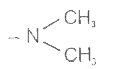
Which one is o, p-directiong group for electrophliic substitution reaction ?

A

`-overset(O)overset(||)C-OH`

B

`-overset(O)overset(||)C-NH_(2)`

C

D

`-NO_(2)`

Text Solution

AI Generated Solution

The correct Answer is:

To determine which group is ortho-para directing for electrophilic substitution reactions in aromatic compounds, we need to analyze the nature of the substituents on the benzene ring. Here’s a step-by-step solution: ### Step 1: Understand Electrophilic Substitution Electrophilic substitution reactions occur on aromatic rings, such as benzene, where an electrophile replaces a hydrogen atom. The positions where the electrophile can attack are the ortho (adjacent) and para (opposite) positions relative to the substituent. ### Step 2: Identify Activating and Deactivating Groups - **Activating Groups**: These groups increase the electron density on the aromatic ring, particularly at the ortho and para positions. They usually have lone pairs of electrons that can be donated into the ring, or they can have a positive inductive effect (+I). - **Deactivating Groups**: These groups decrease the electron density on the ring and make electrophilic substitution less favorable. They typically withdraw electron density through resonance or inductive effects. ### Step 3: List Common Activating Groups Common ortho-para directing activating groups include: - -NH2 (amino group) - -OH (hydroxyl group) - -OCH3 (methoxy group) - -R (alkyl groups like -CH3) ### Step 4: Analyze the Given Options In the question, we need to evaluate the groups provided (not listed here, but typically options like -NO2, -CHO, -NH2, etc.) to identify which one is ortho-para directing: - **Example of Deactivators**: -NO2 (nitro), -CHO (aldehyde), -CN (cyano) are all deactivating groups and will direct electrophilic substitution to the meta position instead of ortho or para. - **Example of Activators**: -NH2 (amino) is an activating group and will direct electrophilic substitution to the ortho and para positions. ### Step 5: Conclusion Based on the analysis, the group that is ortho-para directing for electrophilic substitution is the one that is an activating group. If we assume option C is an activating group (like -NH2), then it is the correct answer. ### Final Answer The ortho-para directing group for electrophilic substitution reaction is **option C** (assuming it is an activating group like -NH2). ---
Promotional Banner

Topper's Solved these Questions

  • HYDROCARBONS

    AAKASH INSTITUTE ENGLISH|Exercise Assignment(Section - B) (Obejctive type question)|5 Videos
  • HYDROCARBONS

    AAKASH INSTITUTE ENGLISH|Exercise Assignment(Section - C) (Previous Years Questions)|60 Videos
  • HYDROCARBONS

    AAKASH INSTITUTE ENGLISH|Exercise Exercise|33 Videos
  • HALOALKANES AND HALOARENES

    AAKASH INSTITUTE ENGLISH|Exercise ASSIGNMENT SECTION -D|15 Videos
  • HYDROGEN

    AAKASH INSTITUTE ENGLISH|Exercise ASSIGNMENT (SECTION - D) (Assertion-Reason Type question)|15 Videos

Similar Questions

Explore conceptually related problems

Amino group is o, p-directing for electrophilic substitution reaction. But, on nitration the major product is m-nitroaniline because

The most deactivating group for electrophilic substitution reaction in benzene ring is

Which of the following is most reactive for electrophilic substitution reaction

o,p-directing group are mostly :

Can the amino group, in the aniline molecule, become meta-directing in an elecrophilic substitution reaction?

Although chlorine is an electron withdrawing group, yet it is ortho-, para- directing in electrophilic aromatic substitution reactions. Why?

Althrough chlorine is an electron withdrawing group, yet it is ortho-para-directing in electrophilic aromatic substitution reactions. Explain why it is so ?

Which of the folliwng compounds is the most reactive towards electrophilic substitution reaction?

underset((I))("In Chlorobenzene") , underset((II))("2,4-dinitrochlorobenzene"), underset((III))("p- nitrochlorobenzene") The decreasing order of reactivity towards electrophliic substitution reaction is

Toluene o/p orienting with respect to an electrophilic substitution reaction due to

AAKASH INSTITUTE ENGLISH-HYDROCARBONS-Assignment(Section - A) (Obejctive type question)
  1. The reaction of CH(3)CH=CH(2) with HOCl will yield

    Text Solution

    |

  2. C(6)H(5)CH(2)CH(2)CH(3) is when oxidised in the presence of alk. KMnO(...

    Text Solution

    |

  3. Toulene overset(K(2)Cr(2)O(7))underset(H(2)SO(4))to Y. Here Y is

    Text Solution

    |

  4. C(6)H(6)+Z overset(Anhy.AlCl(3))to Toluene The compound Z is

    Text Solution

    |

  5. C(6)H(6) overset("Oxidation")underset(V(2)O(5)//Delta)to X. Here, X is

    Text Solution

    |

  6. In kharash effect,reaction follows

    Text Solution

    |

  7. A,B and C can be

    Text Solution

    |

  8. Benzene undergoes substituion reaction more easily than addition becau...

    Text Solution

    |

  9. A mixture of C(2)H(6), C(2)H(4) and C(2)H(2) is bubbled through alkali...

    Text Solution

    |

  10. Ethylene reacts with S(2)Cl(2) to give

    Text Solution

    |

  11. Ph-C-=CH overset(Hg^(+),H^(+)//H(2)O)to A Aditon of H(2)O in the rea...

    Text Solution

    |

  12. Monomer of neoprene is

    Text Solution

    |

  13. Compound A is :

    Text Solution

    |

  14. Compound A is :

    Text Solution

    |

  15. Which of the following is active species in sulphonation of benzene ?

    Text Solution

    |

  16. Which one is o, p-directiong group for electrophliic substitution reac...

    Text Solution

    |

  17. underset((I))("In Chlorobenzene") , underset((II))("2,4-dinitrochlorob...

    Text Solution

    |

  18. CH(3)-CH=CH-CH(2)-CH(3) overset(HI)to underset("major")A Compound A ...

    Text Solution

    |

  19. The electrophilie which attacks in Friedel-Craft acylation is

    Text Solution

    |

  20. Which of the folllowing shows geometrical isomerism ?

    Text Solution

    |
