Home
Class 11
CHEMISTRY
An organic base (X) reacts with nitrous ...

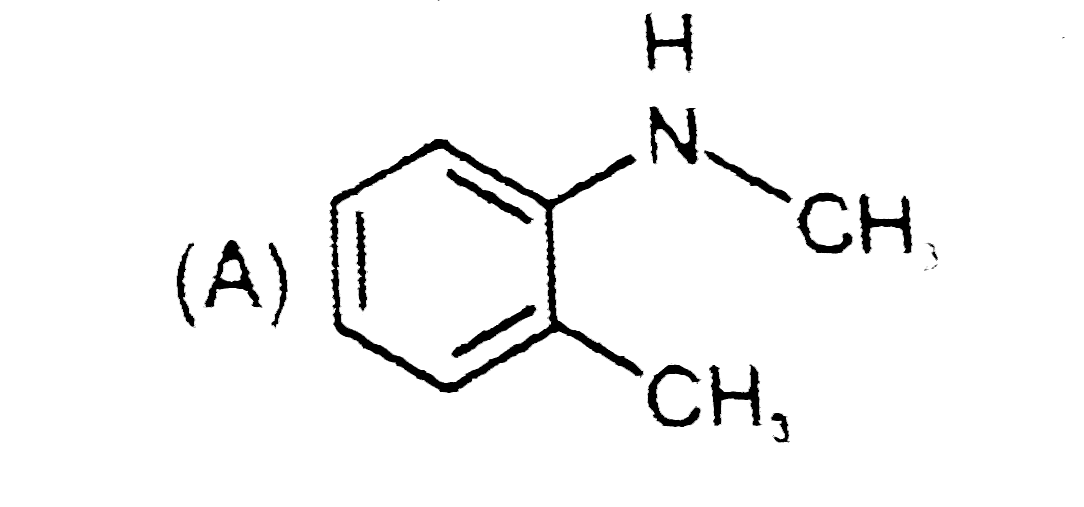
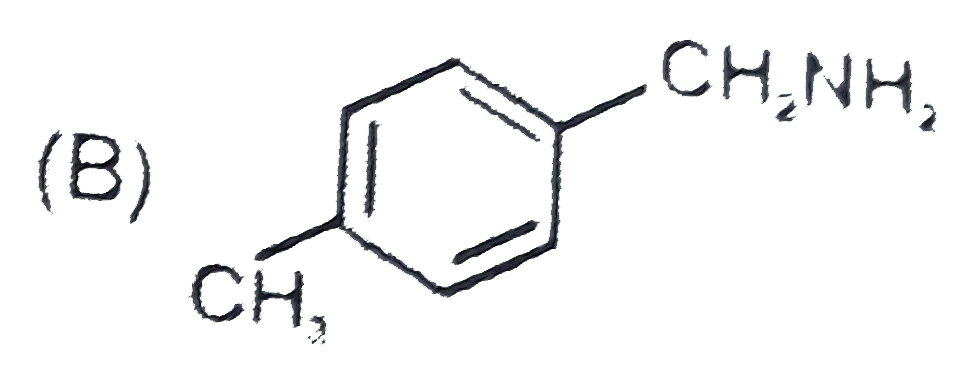
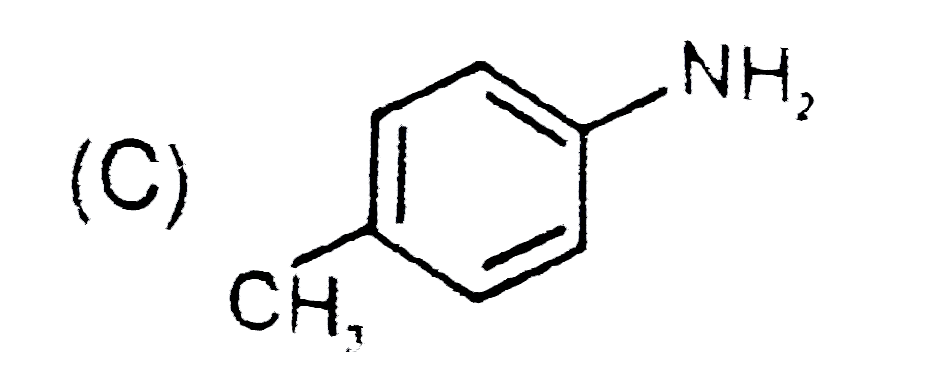
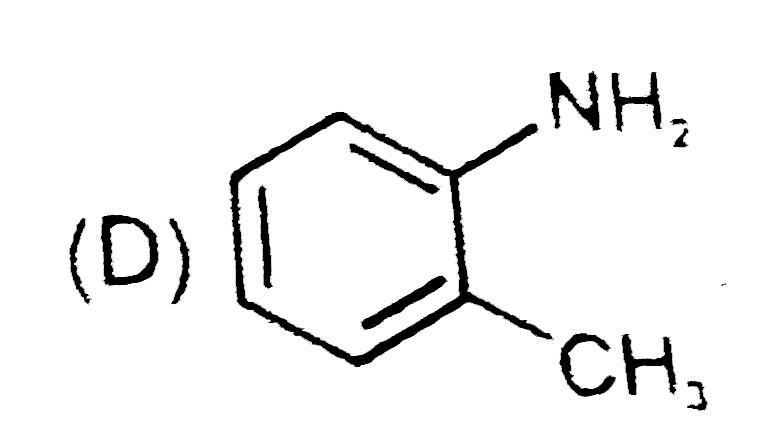
An organic base (X) reacts with nitrous acid at `0^(@)` to give a clear solution. Heating with KCN and cuprous cyanide followed by continued heating with conc. HCl gives a crystaline solid. Heating this solid with alkaline potassium permangante gives a compound which dehydrates on heating to a crystaline solid. `"X" is:

A

B

C

D

Text Solution

AI Generated Solution

The correct Answer is:

To solve the problem step by step, we need to analyze the reactions described and identify the organic base (X). ### Step 1: Identify the reaction with nitrous acid The organic base (X) reacts with nitrous acid (HNO2) at 0°C to form a clear solution. This indicates that X is likely an amine, as amines react with nitrous acid to form diazonium salts, which are soluble in water. **Hint:** Consider that nitrous acid reacts with primary amines to form diazonium salts. ### Step 2: Determine the structure of X Given that the reaction produces a clear solution, we can deduce that X is likely a primary amine. Let's assume X is a simple primary amine, such as methylamine (CH3NH2). **Hint:** Look for simple primary amines that can form diazonium salts. ### Step 3: Reaction with KCN and cuprous cyanide Next, the compound formed from the diazonium salt is heated with potassium cyanide (KCN) and cuprous cyanide (CuCN). This reaction typically leads to the formation of a substituted cyanide compound. For methylamine, the diazonium salt would react to form methyl cyanide (CH3CN). **Hint:** Remember that the reaction with KCN and CuCN leads to the substitution of the diazonium group with a cyanide group. ### Step 4: Heating with concentrated HCl The next step involves heating the resulting cyanide compound with concentrated hydrochloric acid (HCl). This reaction would convert the cyanide group into a carboxylic acid, resulting in the formation of acetic acid (CH3COOH). **Hint:** Consider how cyanides convert to carboxylic acids upon hydrolysis. ### Step 5: Reaction with alkaline potassium permanganate The carboxylic acid formed is then heated with alkaline potassium permanganate (KMnO4). This reagent is a strong oxidizing agent and can oxidize the carboxylic acid to a dicarboxylic acid, such as phthalic acid (C6H4(COOH)2). **Hint:** Alkaline KMnO4 can oxidize alcohols and carboxylic acids to form dicarboxylic acids. ### Step 6: Dehydration to form a crystalline solid Finally, heating the dicarboxylic acid (phthalic acid) leads to dehydration, forming phthalic anhydride (C8H4O3), which is a crystalline solid. **Hint:** Dicarboxylic acids can lose water to form anhydrides upon heating. ### Conclusion Based on the steps and the reactions described, the organic base (X) is methylamine (CH3NH2), which leads to the formation of phthalic anhydride after undergoing the series of reactions. **Final Answer:** "X" is methylamine (CH3NH2).
Promotional Banner

Topper's Solved these Questions

  • AROMATIC COMPOUNDS

    RESONANCE ENGLISH|Exercise PART-III: PRACTICE TEST-2(IIT-JEE(ADVANCED pattern))|7 Videos
  • AROMATIC COMPOUNDS

    RESONANCE ENGLISH|Exercise Section -2 (one or more than one options correct type)|7 Videos
  • AROMATIC COMPOUNDS

    RESONANCE ENGLISH|Exercise PART-I PRACTICE TEST-1(IIT-JEE MAIN PATTERN)|30 Videos
  • ATOMIC STRUCTURE

    RESONANCE ENGLISH|Exercise ORGANIC CHEMISTRY(Fundamental Concept )|16 Videos

Similar Questions

Explore conceptually related problems

Which of the following compound(s) on heating with soda lime gives propane?

Give balanced equations for the following reactions : Potassium permanganate is heated with concentrated hydrochloric acid.

When boric acid reacts with sodium carbonate a white crystaline solid X is formed which on heating above 750 C gives

Which of the following compound gives paramagnetic gas on heating :-

Which of the following compound gives paramagnetic gas on heating :-

A white solid X reacts with dil. HCl to give colourless gas which is used in fire extinguishers. The solid X is

Quartz on strong heating followed by rapid cooling gives glass which is an amorphous solid because

Diborane reacts with ammonia to initially forms X which on further heating gives borazine X is

Which of the following compounds does give N_(2) on heating ?

Which of the following compounds does give N_(2) on heating ?

RESONANCE ENGLISH-AROMATIC COMPOUNDS -PART-II: NATIONAL STANDARD EXAMINATION IN CHEMISTRY (NSEC) STAGE-I
  1. The product obtained when 4-hydroxybenzene sulphonic acid is treated ...

    Text Solution

    |

  2. The most appropriate reaction for the conversion of bromobenzene to be...

    Text Solution

    |

  3. p-bromoaniline is prepared from aniline via

    Text Solution

    |

  4. Which one of the following has the highest melting point ?

    Text Solution

    |

  5. On bromination, the electron rich phenoxide ion will be attacked most ...

    Text Solution

    |

  6. The sequence of decreasing aromaticity in the above compounds is

    Text Solution

    |

  7. Can the amino group, in the aniline molecule, become meta-directing in...

    Text Solution

    |

  8. Consider the following reactions the major product (Y) of the re...

    Text Solution

    |

  9. The product of Reimer-Tiemann reaction is a

    Text Solution

    |

  10. The nitrogen atom in the following cyclic compounds can be removed as ...

    Text Solution

    |

  11. X underset("ether")overset(Mg)rarrY underset(H^(+))overset("Dry " CO(2...

    Text Solution

    |

  12. When 2-hydroxybenzoic acid (salicylic acid) is treated with bromine wa...

    Text Solution

    |

  13. The product P obtained through the following sequence of reactions is

    Text Solution

    |

  14. Triethylamine is reacted with a peracid to obtain X. The nitrogen atom...

    Text Solution

    |

  15. An organic base (X) reacts with nitrous acid at 0^(@) to give a clear ...

    Text Solution

    |

  16. organic compound sometimes adjust their electronic as well as steric s...

    Text Solution

    |

  17. The major product 'S' of the following reaction sequence is:

    Text Solution

    |

  18. The product of the following reaction is <img src="https://d10lpgp6x...

    Text Solution

    |

  19. The major product of the following reaction is:

    Text Solution

    |

  20. The major product 'X' formed in the following reaction is

    Text Solution

    |
