Home
Class 12
CHEMISTRY
Resonance is not possible in...

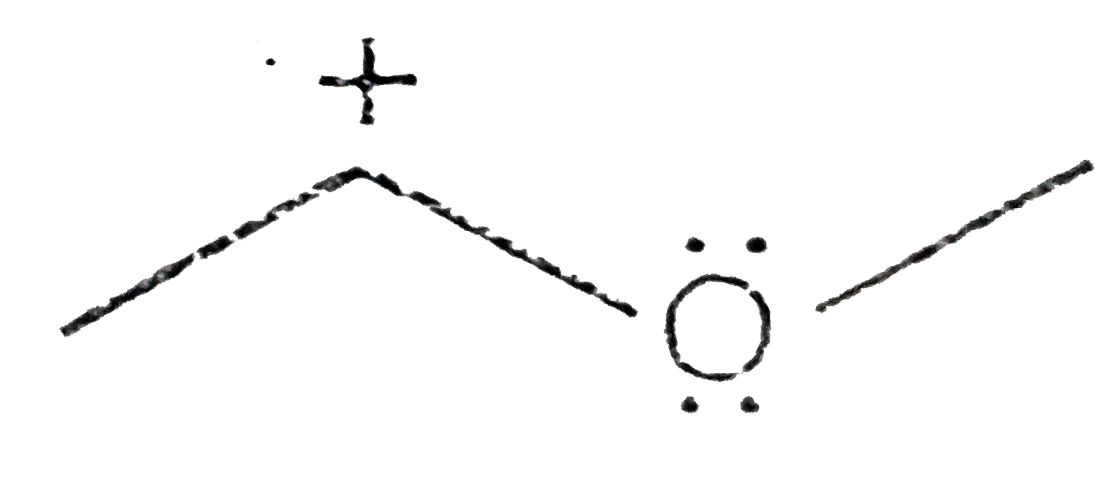
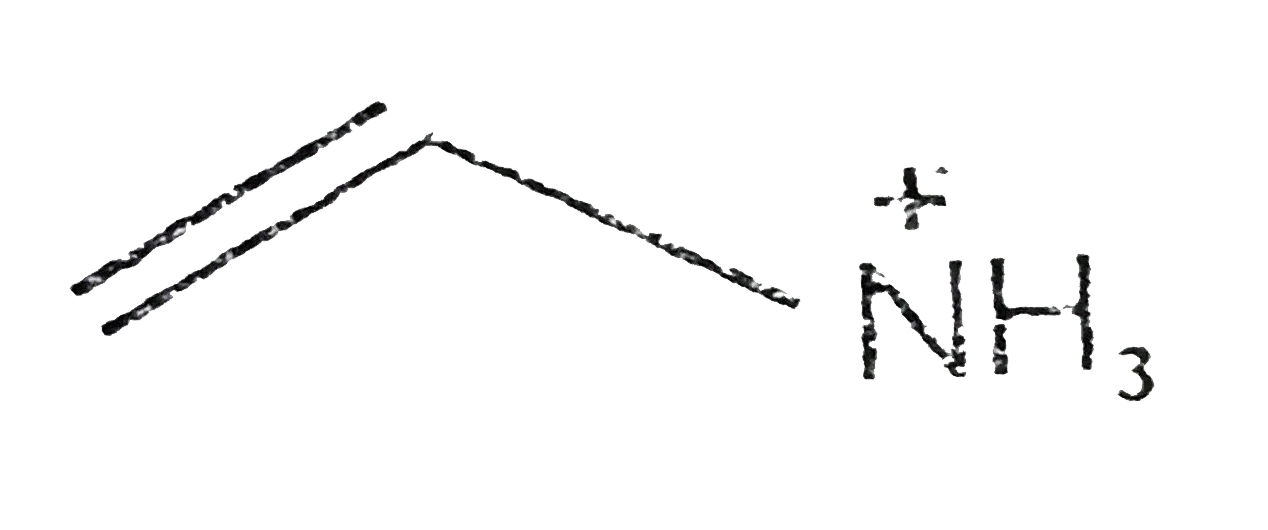
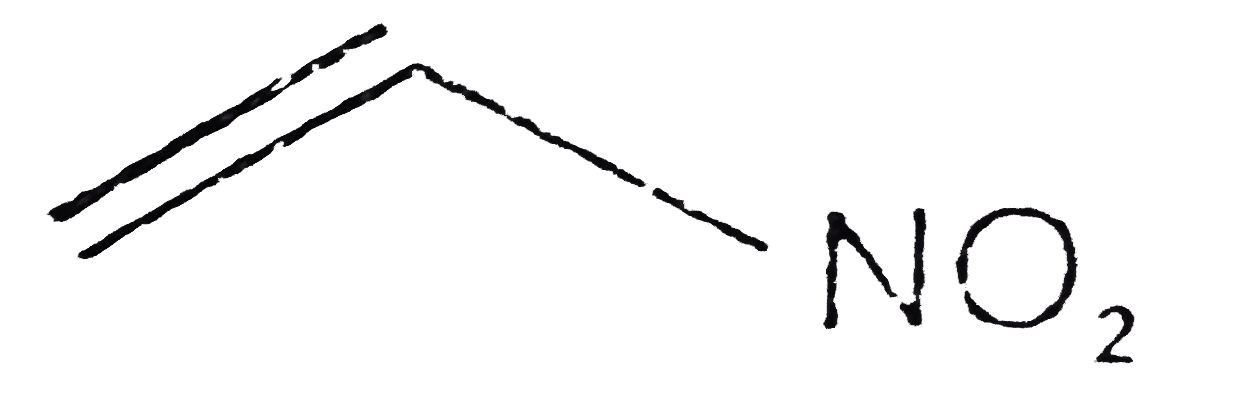
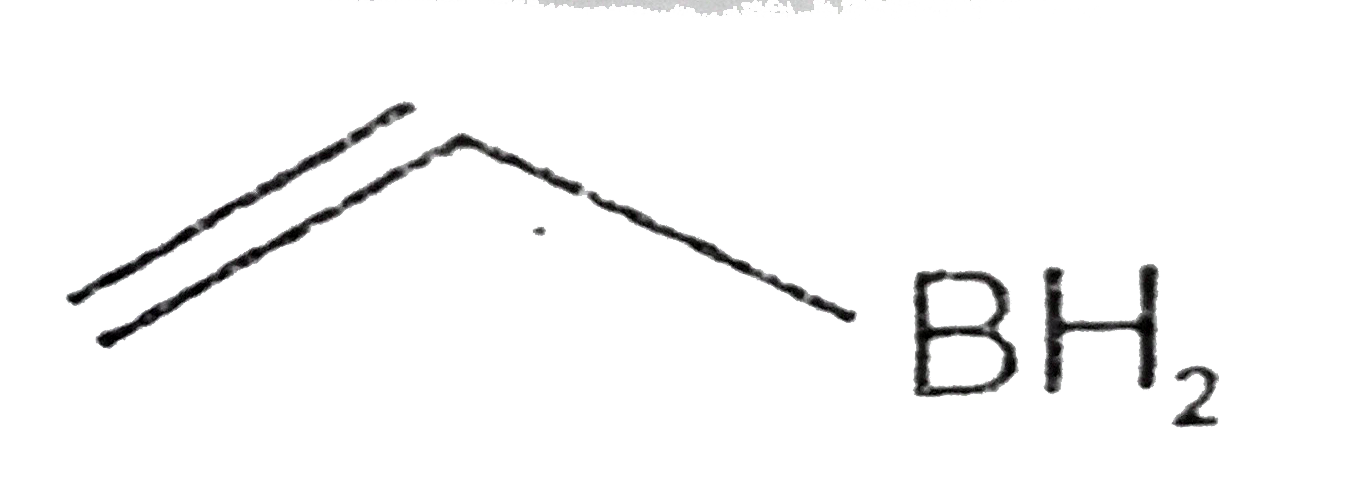
Resonance is not possible in

A

B

C

D

Text Solution

AI Generated Solution

The correct Answer is:

To determine which compound does not exhibit resonance, we can analyze the given options step by step. ### Step 1: Identify the Compounds We need to analyze the compounds given in the options. Let's denote them as: - Option 1: Compound with a positive charge and an oxygen with a lone pair. - Option 2: NH3 with a positive charge on nitrogen. - Option 3: NO2. - Option 4: BH2 with a double bond. ### Step 2: Analyze Option 1 For the first compound, we have a positive charge and a lone pair on oxygen. The oxygen can donate its lone pair to form a double bond with the adjacent atom, leading to resonance structures. Therefore, resonance is possible in this compound. **Hint:** Look for lone pairs and charges that can participate in resonance. ### Step 3: Analyze Option 2 In the second option, we have NH3 with a positive charge on nitrogen. Here, nitrogen has four bonds (three with hydrogen and one with a positive charge). Since nitrogen cannot exceed four bonds, there is no possibility of forming a resonance structure. Thus, resonance is not possible in this compound. **Hint:** Remember that elements like nitrogen cannot exceed their maximum bonding capacity. ### Step 4: Analyze Option 3 In the third option, we have NO2. This compound can exhibit resonance because the double bond between nitrogen and one oxygen can shift, allowing for the formation of different resonance structures. Therefore, resonance is possible in this compound. **Hint:** Check for the ability to shift double bonds and lone pairs to create alternative structures. ### Step 5: Analyze Option 4 For the fourth option, we have BH2 with a double bond. Boron can accept an electron pair and can form multiple bonds. Therefore, resonance structures can also be formed in this case. **Hint:** Consider the ability of elements like boron to form additional bonds due to their electron deficiency. ### Conclusion After analyzing all the options, we find that the compound in **Option 2 (NH3 with a positive charge on nitrogen)** does not exhibit resonance. ### Final Answer The answer to the question "Resonance is not possible in" is **Option 2**.
Promotional Banner

Topper's Solved these Questions

  • ORGANIC CHEMISTRY: SOME BASIC PRINCIPLE AND TECHNIQUES

    AAKASH INSTITUTE|Exercise SECTION-C OBJECTIVE TYPE QUESTION (MORE THAN ONE OPTIONS ARE CORRECT)|18 Videos
  • ORGANIC CHEMISTRY: SOME BASIC PRINCIPLE AND TECHNIQUES

    AAKASH INSTITUTE|Exercise SECTION-D LINKED COMPREHENSION TYPE QUESTIONS|6 Videos
  • ORGANIC CHEMISTRY: SOME BASIC PRINCIPLE AND TECHNIQUES

    AAKASH INSTITUTE|Exercise ASSIGNMENT SECTION-A COMPETITION LEVEL QUESTIONS|50 Videos
  • ORGANIC CHEMISTRY : SOME BASIC PRINCIPLES AND TECHNIQUES

    AAKASH INSTITUTE|Exercise Assignment(Section-D)(Assertion - Reason Type Questions)|12 Videos
  • POLYMERS

    AAKASH INSTITUTE|Exercise ASSIGNMENT (SECTION-D)|13 Videos

Similar Questions

Explore conceptually related problems

In which of the following resonance is not possible ?

In which of the following, resonance is not possible?

STATEMENT-1 : In Cr_(2)O_(7)^(-2) bond length of all Cr-O bond is equal and STATEMENT-2: Cr_(2)O_(7)^(-2) , resonance is possible.

In which of the following resonance will be possible? (A) CH_(3)-CH_(2)-CH_(2)-CHO (B) CH_(2)=CH-CH=O (C) CH_(3)COCH_(3) (D) CH_(2)=CH-CH_(2)-CH=CH_(2)

Statement-1: In CO_(2) molecule resonance is possible. Statement-2: CO is used in purification of Ni. Statement-3: H_(2)CO_(3) is more acidic than H_(2)SiO_(3) .

The number of no bond resonance structures possible for but - 1 -ene and a 3^(@) carbocation having methyl, ethyl and isobutyl groups on cationic carbon respectively are

In resonance

|| Resonance ||

|| Resonance ||

AAKASH INSTITUTE-ORGANIC CHEMISTRY: SOME BASIC PRINCIPLE AND TECHNIQUES-SECTION-B OBJECTIVE TYPE QUESTION (ONE OPTION IS CORRECT)
  1. Isomers which can be interconverted through rotation around a single b...

    Text Solution

    |

  2. In the given anion,-ve charge is delocalized on

    Text Solution

    |

  3. The compounds are

    Text Solution

    |

  4. Least stable carbocation among the following is

    Text Solution

    |

  5. Which of the following compound will give blood red colour while doing...

    Text Solution

    |

  6. The most stable free radical is

    Text Solution

    |

  7. Which of the following group will have strongest electron donating mes...

    Text Solution

    |

  8. Among the following the most stable carbocation

    Text Solution

    |

  9. Most acidic species among the following is

    Text Solution

    |

  10. Which of the following double bond in the given molecule is most react...

    Text Solution

    |

  11. Which of the following hydrocarbon is most stable?

    Text Solution

    |

  12. Resonance is not possible in

    Text Solution

    |

  13. Which of the following compounds will have highest enolic content?

    Text Solution

    |

  14. Among the following The correct order of reactivity of chloride is

    Text Solution

    |

  15. Which of the following organic molecule can not form hydrogen bond in ...

    Text Solution

    |

  16. Correct stability order of the given free radicals is

    Text Solution

    |

  17. In which of the following, homolytic bond fission takes place :

    Text Solution

    |

  18. Which of the following is correct order of dipole moment of 0, m and p...

    Text Solution

    |

  19. Which of the following compounds will give negative Lassaigne is test ...

    Text Solution

    |

  20. A mixture contains four solid organic compounds containing A, B, C an...

    Text Solution

    |
