A
B
C
D
Text Solution
Verified by Experts
The correct Answer is:
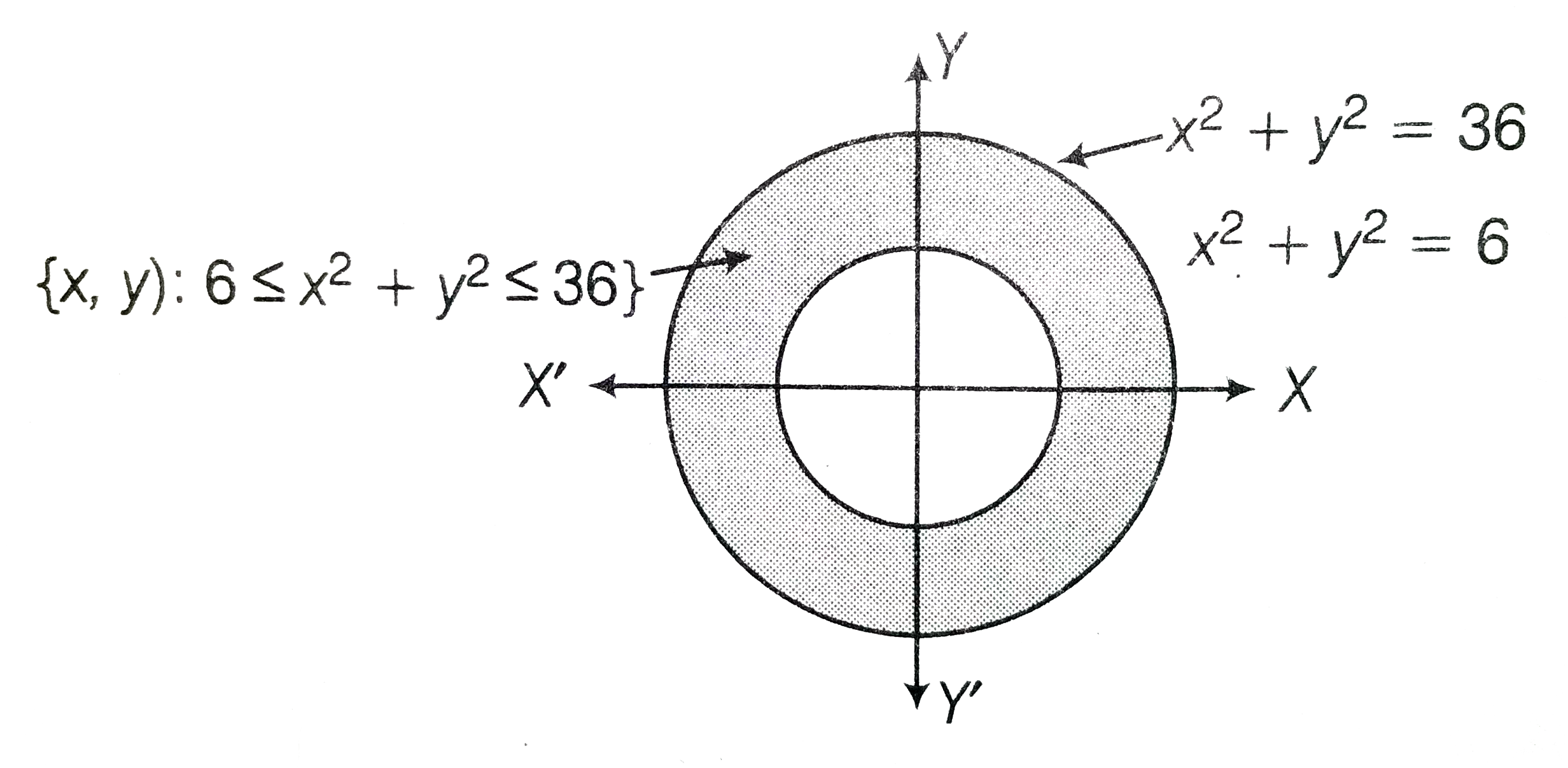



Topper's Solved these Questions
Linear Programming
MHTCET PREVIOUS YEAR PAPERS AND PRACTICE PAPERS|Exercise EXERCISE 1 (TOPICAL PROBLEMS )(Solution of LPP Graphical Method )|15 VideosLinear Programming
MHTCET PREVIOUS YEAR PAPERS AND PRACTICE PAPERS|Exercise EXERCISE 2 (MISCELLANEOUS PROBLEMS )|30 VideosLINE
MHTCET PREVIOUS YEAR PAPERS AND PRACTICE PAPERS|Exercise MHT CET Corner|3 VideosMATHEMATICAL LOGIC
MHTCET PREVIOUS YEAR PAPERS AND PRACTICE PAPERS|Exercise MHT CET CORNER|22 Videos
Similar Questions
Explore conceptually related problems
MHTCET PREVIOUS YEAR PAPERS AND PRACTICE PAPERS-Linear Programming -MHT CET Corner
- Which of the following sets are not convex? A) {(x,y):8x^2+6y^2leq24}...
Text Solution
|
- The shaded part of given figure indicates infeasible region then...
Text Solution
|
- The objective function Z=x1+x2 subject to the constraints: x1+x2leq1...
Text Solution
|
- The constraints -x1+x2 le 1,-x1 +3x2 le 9, x 1,x2 gt 0 defines
Text Solution
|
- The maximum value of Z = 3x + 2y for linear x +y le 7, 2x + 3y le 16, ...
Text Solution
|
- The maximum vlaue of Z = 9x+13y subject to constraints 2x+3yle 18, ...
Text Solution
|
- For the LPP, Min Z= x1 +x2 such that inequalities 5x1+10 x2 ge 0,+x...
Text Solution
|
- The region rprsented by the inequation system x,y ge 0, y le 6, x + y...
Text Solution
|
- A wholesale merchant wants to start the business of cereal with ₹ 2400...
Text Solution
|
- Which of the term is not used in a linear programming problem?
Text Solution
|
- If given constraints are 5x+4y ge2, x le6, y le 7, then the maximum va...
Text Solution
|
- Z=30x +20 y , x+y le 8, x +2y ge 4,6x +4 ge 12,x ge 0 ,y ge 0
Text Solution
|
- Minimize Z= 3x+y, subject to constriants 2x +3y le 6, x +y ge 1, ...
Text Solution
|
- The shaded region for the inequality x+5y le 6 is
Text Solution
|