A
B
C
D
Text Solution
Verified by Experts
The correct Answer is:
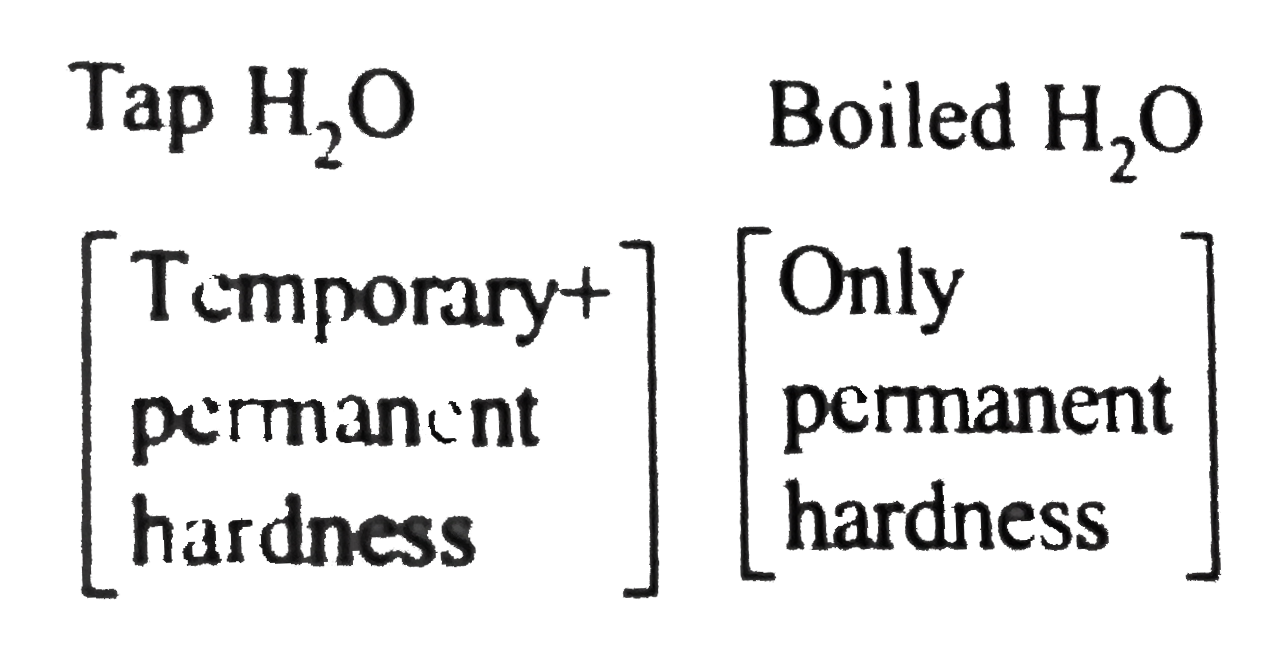



Topper's Solved these Questions
STOICHIOMETRY
CENGAGE CHEMISTRY|Exercise Exercises Assertion Reasoning|15 VideosSTOICHIOMETRY
CENGAGE CHEMISTRY|Exercise Exercises Integer|16 VideosSTOICHIOMETRY
CENGAGE CHEMISTRY|Exercise Exercises Multiple Correct|30 VideosSTATES OF MATTER
CENGAGE CHEMISTRY|Exercise Exercises (Ture False)|25 VideosTHERMODYNAMICS
CENGAGE CHEMISTRY|Exercise Archives (Subjective)|23 Videos
Similar Questions
Explore conceptually related problems
CENGAGE CHEMISTRY-STOICHIOMETRY-Exercises Single Correct
- 100 mL of ozone at STP was passed through 100 mL of 10 volume H(2)O(2)...
Text Solution
|
- 10 " mL of " a solution of H(2)O(2) of 10 violume strength decolourise...
Text Solution
|
- 25mL samples of distiled water, tap water and boiled water required, r...
Text Solution
|
- 3.4 g sample of H(2)O(2) solution containing x% H(2)O(2) by weight req...
Text Solution
|
- If 100 mL of acidified 2NH(2)O(2) is allowed to react with KMnO(4) sol...
Text Solution
|
- In the following equation CrO(4)^(2-)+S(2)O(3)^(2-)+overset(ɵ)(O)Hto...
Text Solution
|
- 0.7 g sample of iron ore was dissolved in acid. Iron was reduced to +2...
Text Solution
|
- 0.50 g of a mixture of K(2)CO(3) and Li(2)CO(3) required 30 mL of 0.25...
Text Solution
|
- In the estimation of nitrogen by Kjeldahl's method, 2.8 g of an organi...
Text Solution
|
- 0.3 g of platinichloride of an organic diacidic base left 0.09 g of pl...
Text Solution
|
- 0.5 g of an organic substance containing phosphorus was heated with co...
Text Solution
|
- A bolloon blown up has a volume of 300 mL at 27% C. The balloon is dis...
Text Solution
|
- The number of moles of KMnO(4) that will be needed to react completely...
Text Solution
|
- In a reaction, 4 mole of electrons are transferred to 1 mole of HNO(3)...
Text Solution
|
- If equal volumes of 0.1 M KMnO(4) and 0.1 M K(2)Cr(2)O(7) solutions ar...
Text Solution
|
- Sulphuryl chloride SO(2)Cl(2) reacts with water to give a mixture of H...
Text Solution
|
- 100 " mL of " 0.01 M KMnO(4) oxidised 100 mL H(2)O(2) in acidic medium...
Text Solution
|
- 10mL of H2O2 solution (volume strength = x) requires 10mL of N//0.56 M...
Text Solution
|
- 4I^(-)+Hg^(2+)rarrHgI(4)^(2-) , 1 mole each of Hg^(2+) and I^(-) will ...
Text Solution
|
- When 1xx10^(-3) " mol of "the chloride of an elements Y was completely...
Text Solution
|