Home
Class 11
CHEMISTRY
Which of the following are not resolvab...

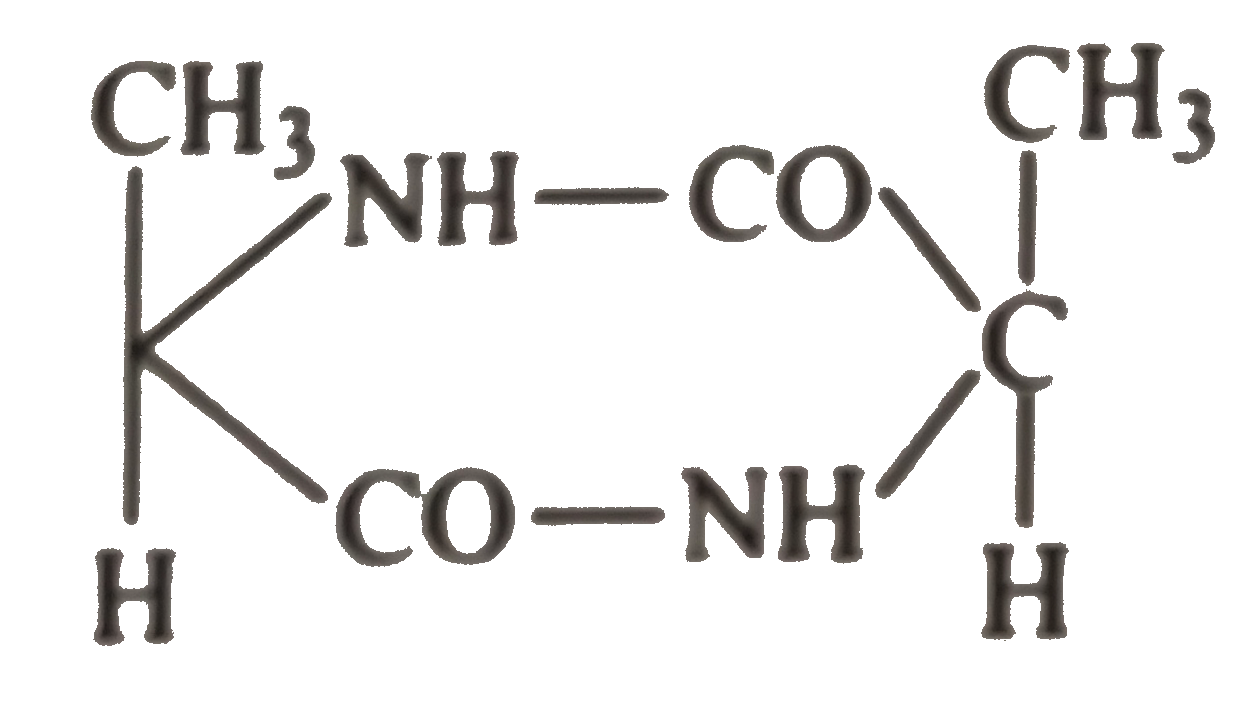
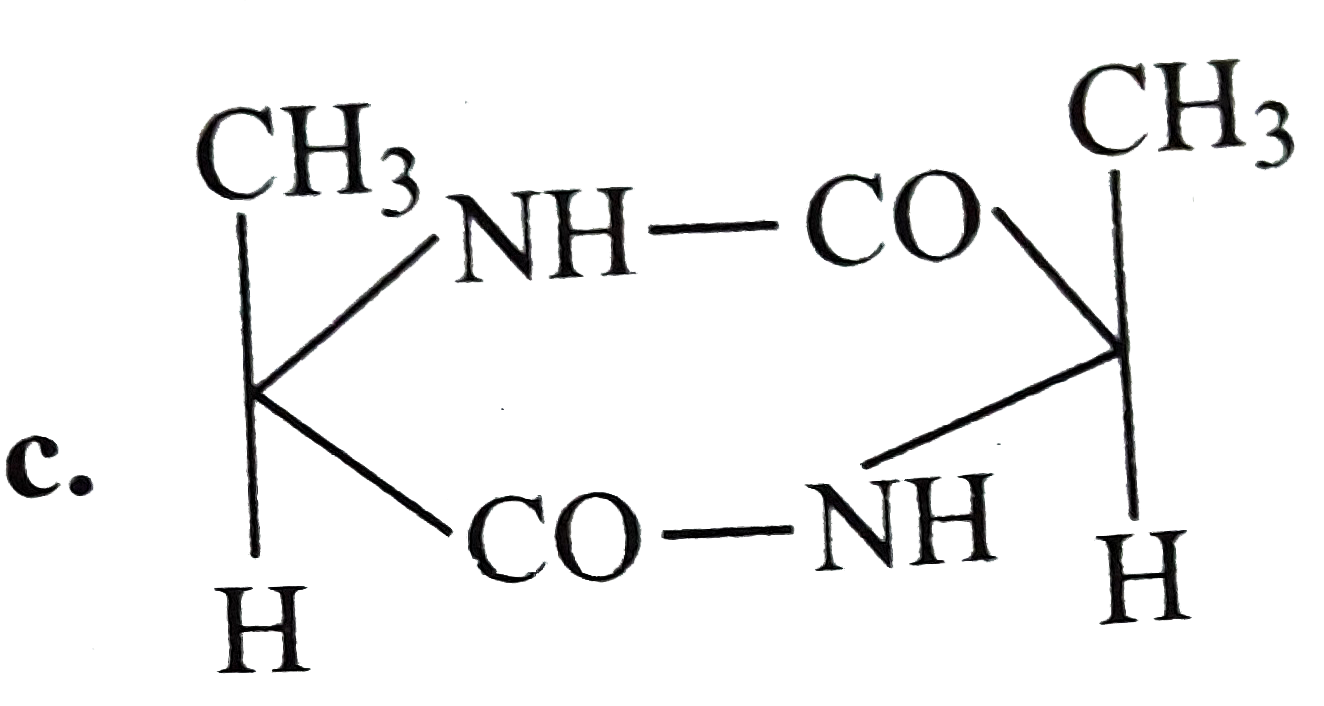
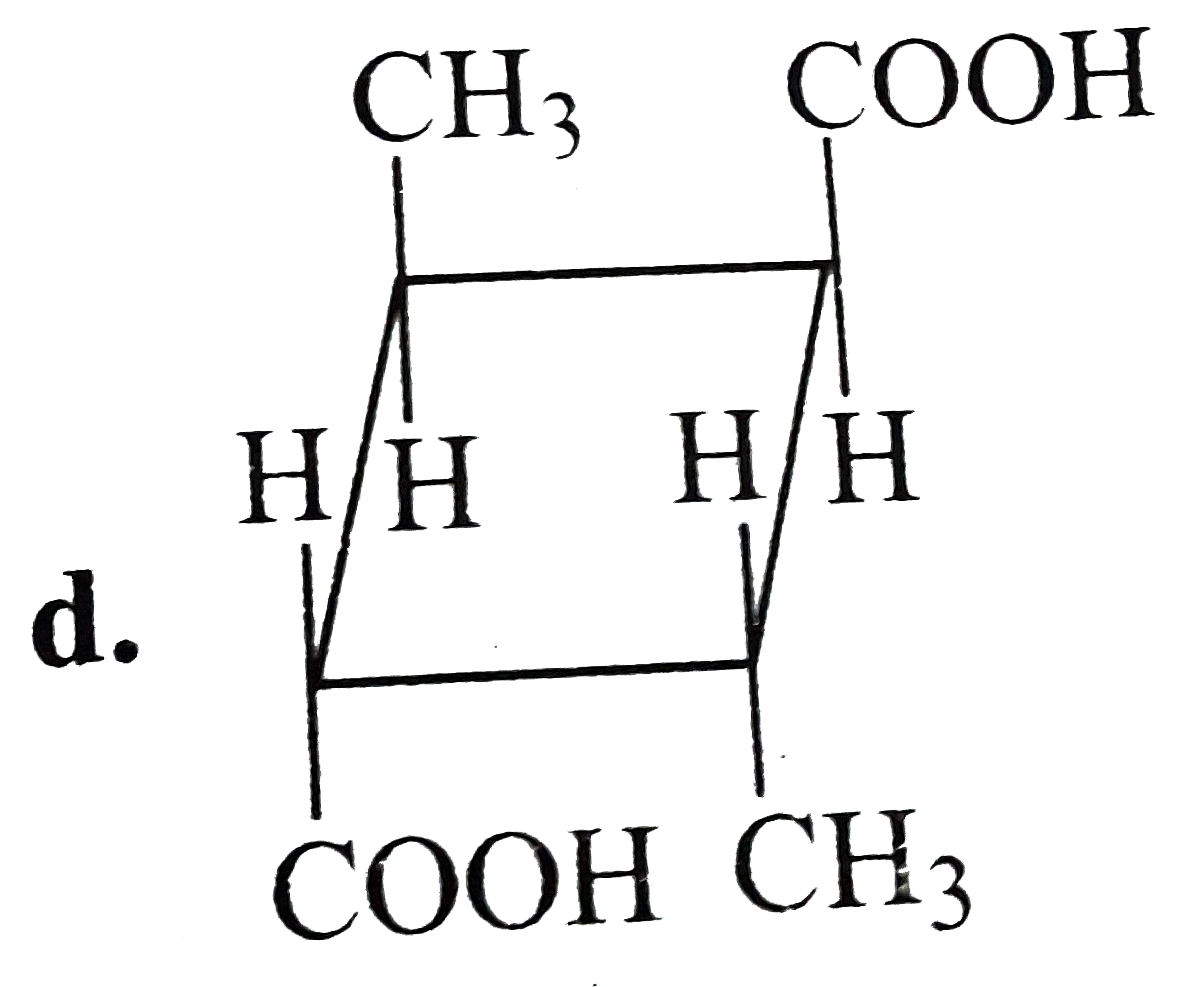
Which of the following are not resolvable?

A

`2,3-` Pentadiene

B

C

D

Text Solution

AI Generated Solution

The correct Answer is:

To determine which of the given compounds are not resolvable, we need to identify which of them are optically inactive. A compound is optically inactive if it is achiral, meaning it does not have a non-superimposable mirror image. Here’s a step-by-step analysis of the options provided: ### Step 1: Understand the concept of chirality and resolvability - **Chirality**: A molecule is chiral if it has a non-superimposable mirror image. Chiral molecules can rotate plane-polarized light and are considered optically active. - **Achirality**: A molecule is achiral if it is superimposable on its mirror image, meaning it does not rotate plane-polarized light and is considered optically inactive. ### Step 2: Analyze each option **Option A: 2,3-pentadiene** - Structure: This compound has a double bond and can exist in different configurations. - Analysis: 2,3-pentadiene can have different substituents on the double bond, making it potentially chiral. However, if the substituents are the same, it can be achiral. In general, 2,3-pentadiene is resolvable when the substituents are different. - Conclusion: This option is resolvable. **Option B: Another compound (not specified)** - Analysis: Without the specific structure, we assume it is a complex molecule that does not exhibit symmetry or identical groups. - Conclusion: This option is likely optically active and resolvable. **Option C: Identical compounds** - Analysis: If the compounds are identical, they cannot have different configurations and thus do not exhibit chirality. - Conclusion: This option is not resolvable. **Option D: Compound with a center of symmetry** - Analysis: A center of symmetry means that for every atom in the molecule, there is an equivalent atom at an equal distance on the opposite side. This leads to achirality. - Conclusion: This option is not resolvable. ### Final Conclusion Based on the analysis: - **Not resolvable options**: C and D. - **Resolving option**: A and B. Thus, the correct answer for the question "Which of the following are not resolvable?" is **C and D**.

To determine which of the given compounds are not resolvable, we need to identify which of them are optically inactive. A compound is optically inactive if it is achiral, meaning it does not have a non-superimposable mirror image. Here’s a step-by-step analysis of the options provided: ### Step 1: Understand the concept of chirality and resolvability - **Chirality**: A molecule is chiral if it has a non-superimposable mirror image. Chiral molecules can rotate plane-polarized light and are considered optically active. - **Achirality**: A molecule is achiral if it is superimposable on its mirror image, meaning it does not rotate plane-polarized light and is considered optically inactive. ### Step 2: Analyze each option ...
Promotional Banner

Topper's Solved these Questions

  • ISOMERISM

    CENGAGE CHEMISTRY ENGLISH|Exercise Single correct answer type|13 Videos
  • ISOMERISM

    CENGAGE CHEMISTRY ENGLISH|Exercise Single correct answer type (Exercise)|65 Videos
  • ISOMERISM

    CENGAGE CHEMISTRY ENGLISH|Exercise (Linked Comprehension Type)Exercise|13 Videos
  • IONIC EQUILIBRIUM

    CENGAGE CHEMISTRY ENGLISH|Exercise Archives Subjective|28 Videos
  • NCERT BASED EXERCISE

    CENGAGE CHEMISTRY ENGLISH|Exercise Chemical Equilibrium|73 Videos

Similar Questions

Explore conceptually related problems

Which of the following are resolvable ?

Which of the following cannot be resolved into enantiomers ?

Which of the following molecule can resolved into enantiomers ?

Which of the following compound can be resolved into enatiomers ?

The maximum number of rectangular components into which a vector in space can be resolved into is

"_____________" uses the chemical constituents of the plant to resolve confusions.

A : The resolving power of both miroscope and telescope depends on the wavelength of the light used. R : The resolving power of a lens is the ability to resolve the two images so that they are distinctly identified.

CENGAGE CHEMISTRY ENGLISH-ISOMERISM-Multiple choice questions (Exercise)
  1. Which of the following will not show geometrical isomerism?

    Text Solution

    |

  2. Which of the following will show geometrical isomerism ?

    Text Solution

    |

  3. Which of the following are not resolvable?

    Text Solution

    |

  4. Which of the following are resolvable ?

    Text Solution

    |

  5. Which of the following is/are optically active?

    Text Solution

    |

  6. The compounds are optically inactive because

    Text Solution

    |

  7. The stable conformer (s) of trans-1-4- dimethyl] cyclohexane is/are:

    Text Solution

    |

  8. The stable conformer (s) of cis-cyclohexane 1-3- diol is/are:

    Text Solution

    |

  9. Which form (s) of cyclohexane is/are free from angle strain?

    Text Solution

    |

  10. Which of the following statements is/are wrong, about the more stabili...

    Text Solution

    |

  11. Which of the following methods are used for resolution ?

    Text Solution

    |

  12. According to Baeyer's strain theory, which of the following is/are mos...

    Text Solution

    |

  13. The angle strain in cyclohexane is :

    Text Solution

    |

  14. Which of the following statements are correct?

    Text Solution

    |

  15. Which of the following statement regarding 1,2- dimethylcyclopropane (...

    Text Solution

    |

  16. Which of the following statements regarding 1,3- dimethyl cyclobutane ...

    Text Solution

    |

  17. Which of the following statements regarding 1,3- dimethl cyclobutane i...

    Text Solution

    |

  18. Which of the following statements regarding 1,2-dimethyl cyclo-pentane...

    Text Solution

    |

  19. The configuration of sugars is related to glyceraldehyde and that of a...

    Text Solution

    |

  20. Which of the following statement are true?

    Text Solution

    |
