Home
Class 11
CHEMISTRY
Which of the following is/are optically ...

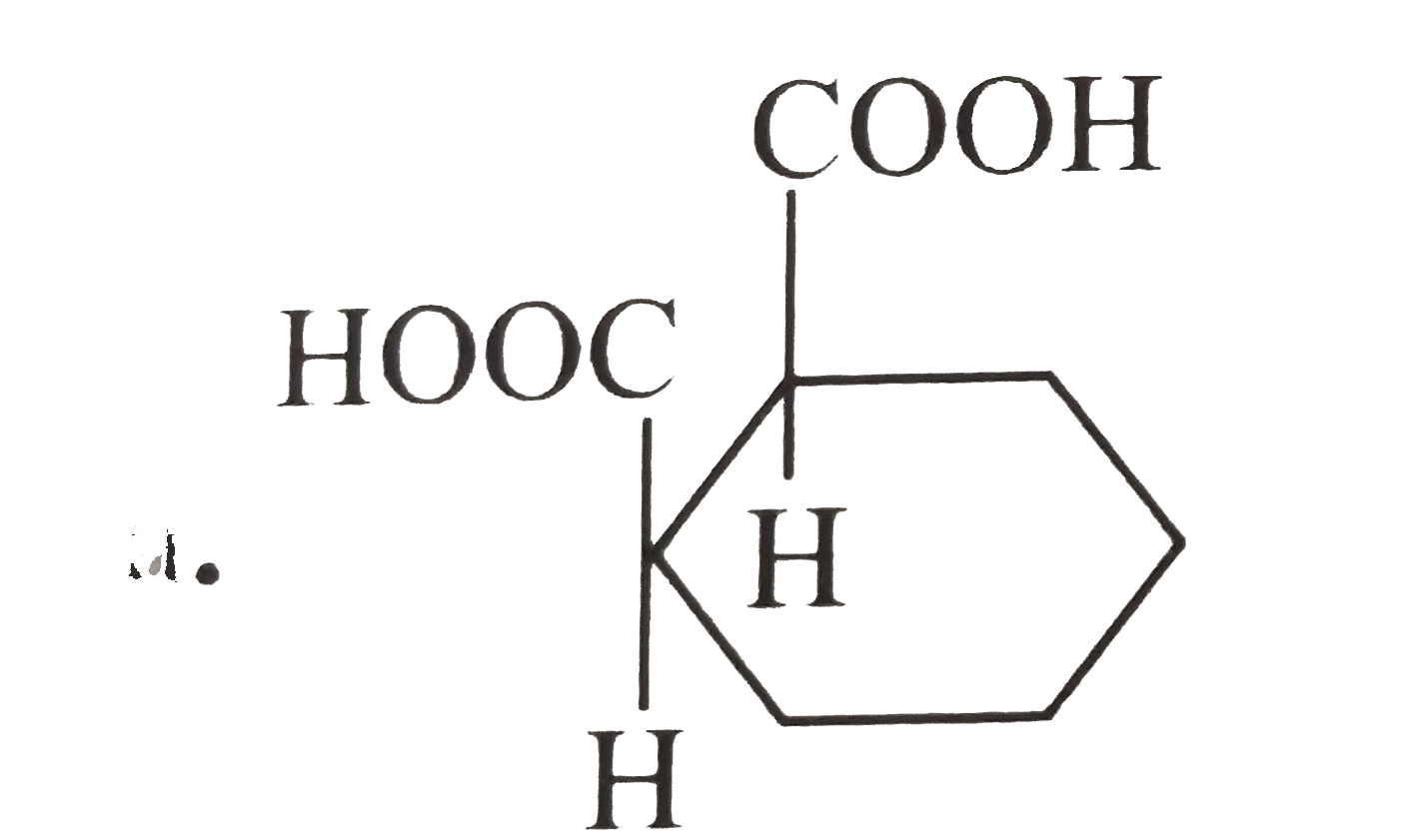
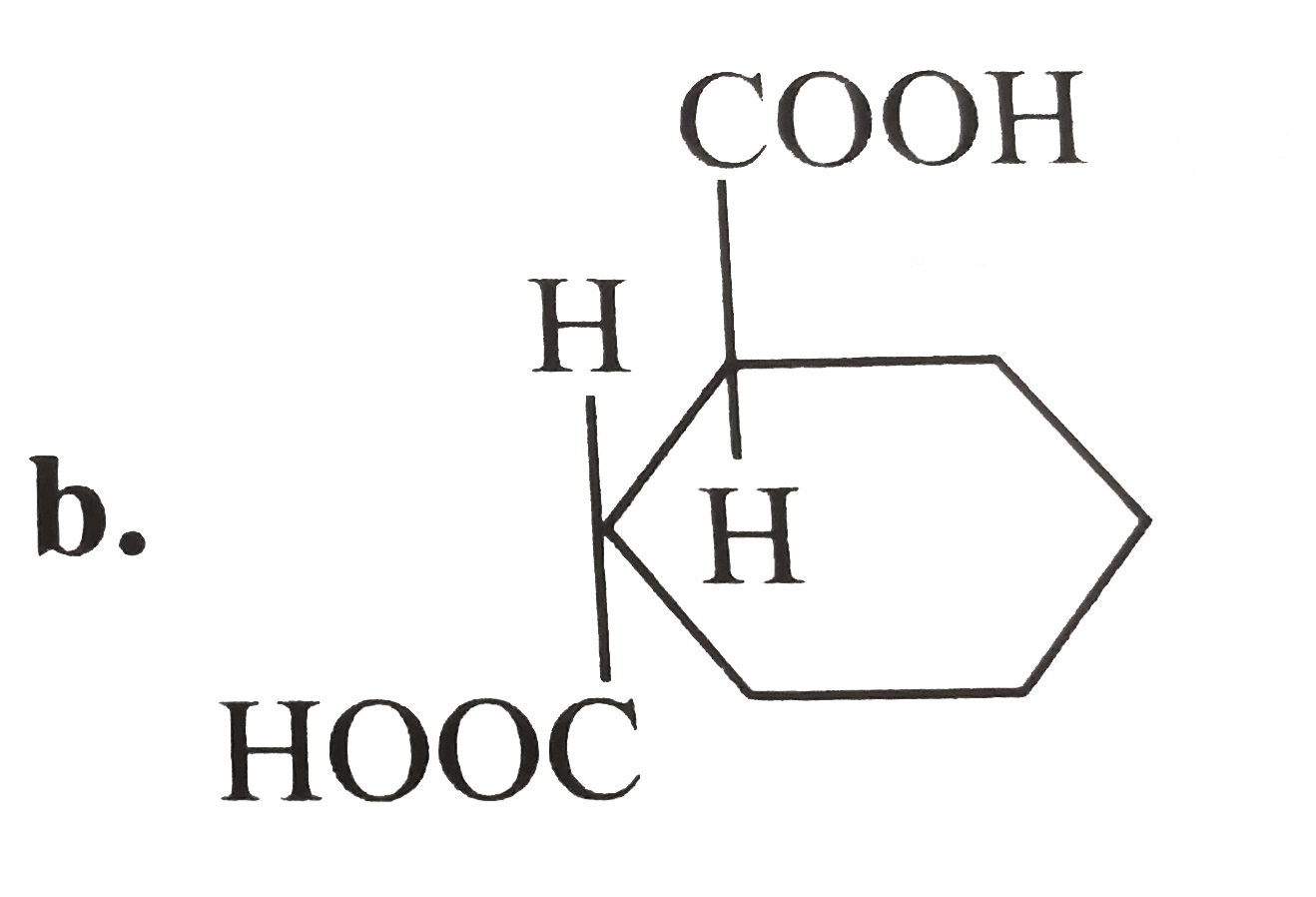
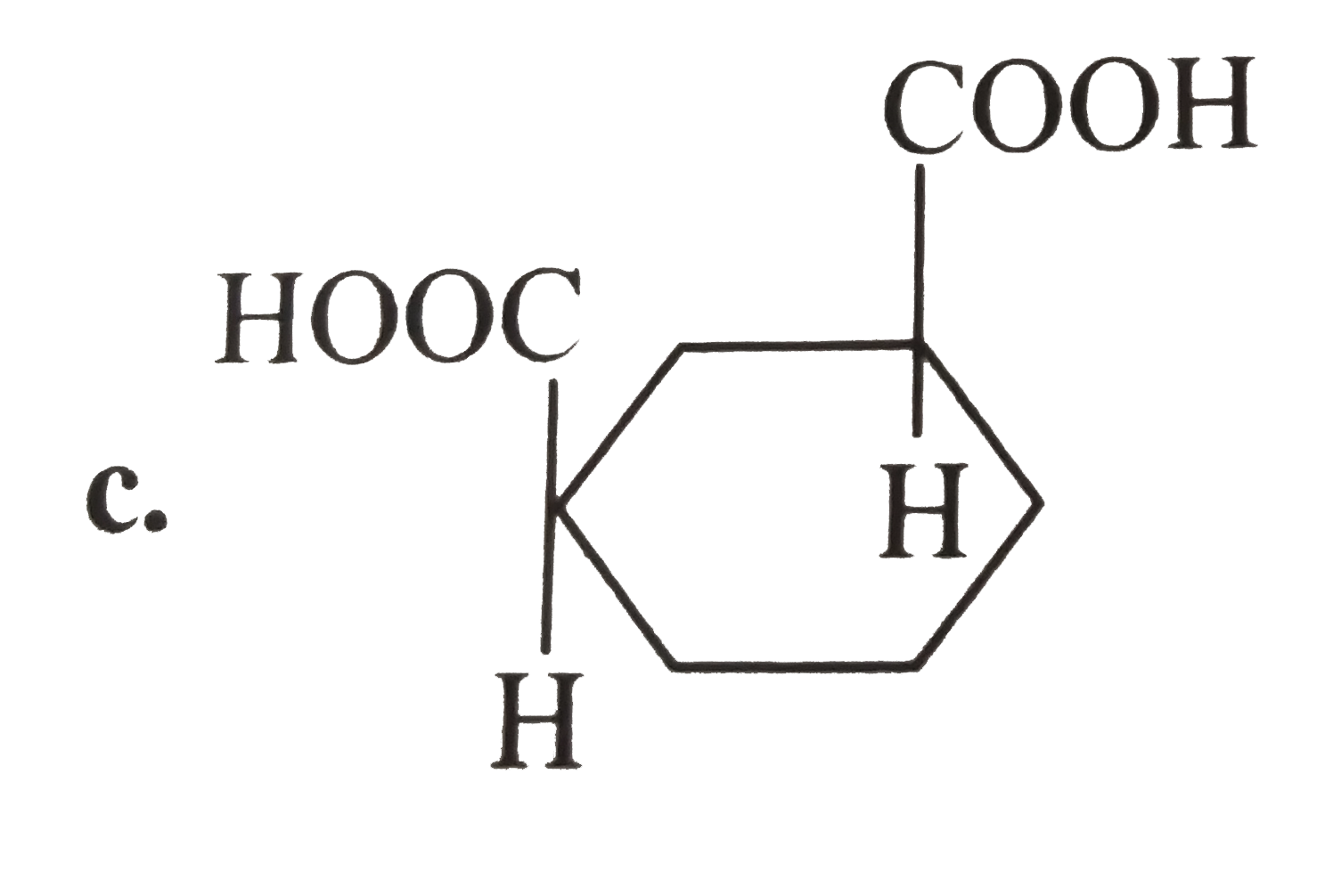
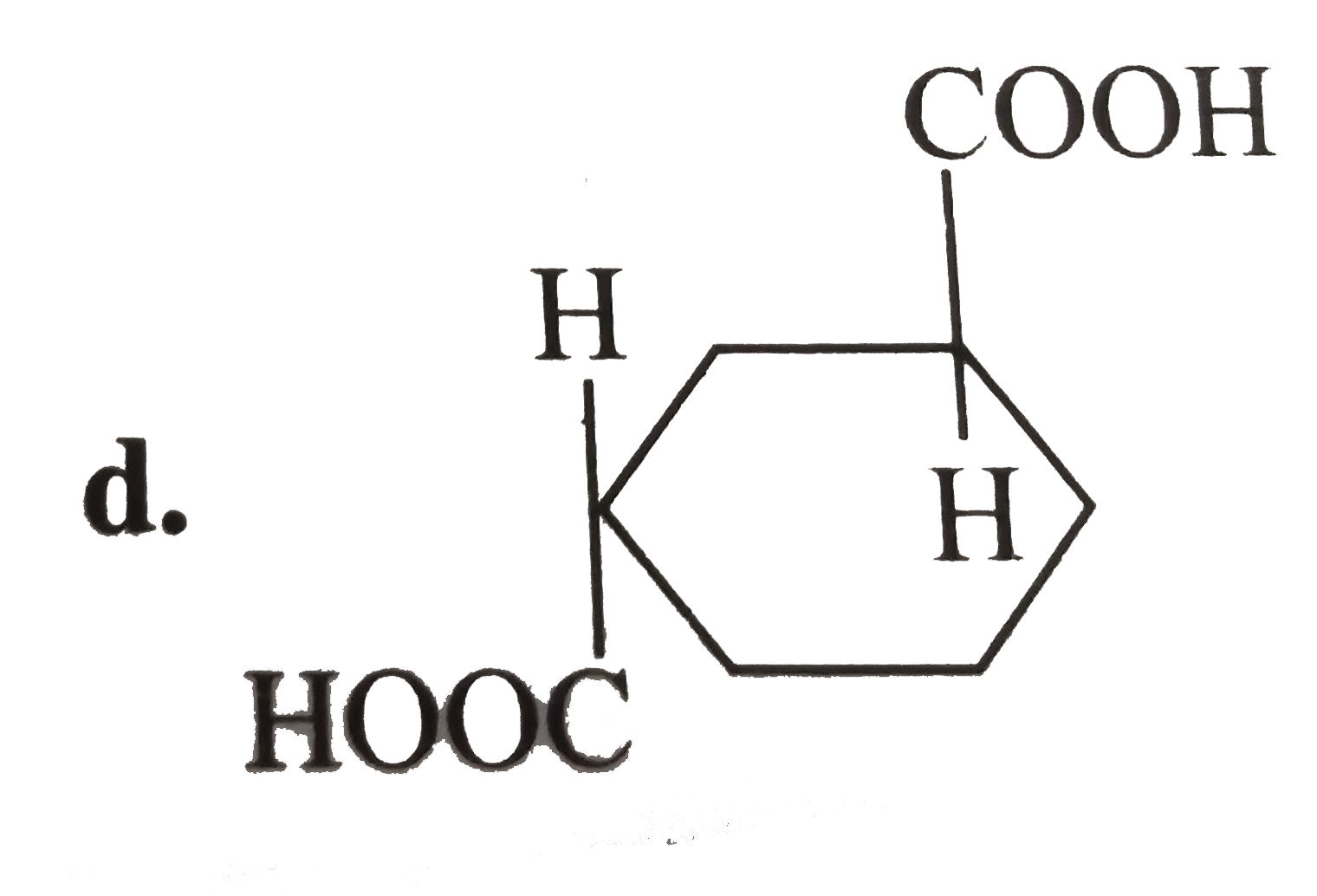
Which of the following is/are optically active?

A

B

C

D

Text Solution

AI Generated Solution

The correct Answer is:

To determine which of the given compounds are optically active, we need to check for the presence of a plane of symmetry in each structure. A compound is considered optically active if it does not have a plane of symmetry. ### Step-by-Step Solution: 1. **Identify the Compounds**: We need to analyze the structures of the compounds provided in the options. Let's denote the options as A, B, C, and D. 2. **Analyze Option A**: - Structure: COOH, H, COOH, H - Check for Plane of Symmetry: - If we draw a vertical line through the center of the molecule, we can see that one COOH group and one H atom are mirrored by the other COOH group and H atom. - Conclusion: There is a plane of symmetry present, hence this compound is **optically inactive**. 3. **Analyze Option B**: - Structure: (assumed structure based on context) - Check for Plane of Symmetry: - Upon drawing the structure, we find that there is no plane that can divide the molecule into two symmetrical halves. - Conclusion: There is no plane of symmetry, hence this compound is **optically active**. 4. **Analyze Option C**: - Structure: COOH, H, H, COOH - Check for Plane of Symmetry: - Drawing the structure reveals that if we draw a vertical line through the center, one H atom mirrors the other H atom, and one COOH mirrors the other COOH. - Conclusion: There is a plane of symmetry present, hence this compound is **optically inactive**. 5. **Analyze Option D**: - Structure: COOH, H, HCOOH - Check for Plane of Symmetry: - In this structure, if we draw a vertical line, the H atom does not mirror the COOH group, indicating no symmetry. - Conclusion: There is no plane of symmetry, hence this compound is **optically active**. 6. **Final Conclusion**: - The compounds that are optically active are **B and D**. ### Summary of Results: - **Optically Active Compounds**: B and D - **Optically Inactive Compounds**: A and C

To determine which of the given compounds are optically active, we need to check for the presence of a plane of symmetry in each structure. A compound is considered optically active if it does not have a plane of symmetry. ### Step-by-Step Solution: 1. **Identify the Compounds**: We need to analyze the structures of the compounds provided in the options. Let's denote the options as A, B, C, and D. 2. **Analyze Option A**: ...
Promotional Banner

Topper's Solved these Questions

  • ISOMERISM

    CENGAGE CHEMISTRY ENGLISH|Exercise Single correct answer type|13 Videos
  • ISOMERISM

    CENGAGE CHEMISTRY ENGLISH|Exercise Single correct answer type (Exercise)|65 Videos
  • ISOMERISM

    CENGAGE CHEMISTRY ENGLISH|Exercise (Linked Comprehension Type)Exercise|13 Videos
  • IONIC EQUILIBRIUM

    CENGAGE CHEMISTRY ENGLISH|Exercise Archives Subjective|28 Videos
  • NCERT BASED EXERCISE

    CENGAGE CHEMISTRY ENGLISH|Exercise Chemical Equilibrium|73 Videos

Similar Questions

Explore conceptually related problems

Which of the following is not optically active?

Which of the following is not optically active?

Which of the following is optically active?

Which of the following is optically inactive ?

Which of the following is an optically inactive compound?

Which of the following is optically active

Which of the following be optically active ?

Which of the following is optical active subtance ?

CENGAGE CHEMISTRY ENGLISH-ISOMERISM-Multiple choice questions (Exercise)
  1. Which of the following are not resolvable?

    Text Solution

    |

  2. Which of the following are resolvable ?

    Text Solution

    |

  3. Which of the following is/are optically active?

    Text Solution

    |

  4. The compounds are optically inactive because

    Text Solution

    |

  5. The stable conformer (s) of trans-1-4- dimethyl] cyclohexane is/are:

    Text Solution

    |

  6. The stable conformer (s) of cis-cyclohexane 1-3- diol is/are:

    Text Solution

    |

  7. Which form (s) of cyclohexane is/are free from angle strain?

    Text Solution

    |

  8. Which of the following statements is/are wrong, about the more stabili...

    Text Solution

    |

  9. Which of the following methods are used for resolution ?

    Text Solution

    |

  10. According to Baeyer's strain theory, which of the following is/are mos...

    Text Solution

    |

  11. The angle strain in cyclohexane is :

    Text Solution

    |

  12. Which of the following statements are correct?

    Text Solution

    |

  13. Which of the following statement regarding 1,2- dimethylcyclopropane (...

    Text Solution

    |

  14. Which of the following statements regarding 1,3- dimethyl cyclobutane ...

    Text Solution

    |

  15. Which of the following statements regarding 1,3- dimethl cyclobutane i...

    Text Solution

    |

  16. Which of the following statements regarding 1,2-dimethyl cyclo-pentane...

    Text Solution

    |

  17. The configuration of sugars is related to glyceraldehyde and that of a...

    Text Solution

    |

  18. Which of the following statement are true?

    Text Solution

    |

  19. Which of the following statements are correct?

    Text Solution

    |

  20. Which of the following statements are wrong?

    Text Solution

    |
